5 Everyday Habits That Secretly Worsen Dark Spots
It can feel unsettling to spot new dark marks when you’ve been so careful. What many people overlook is how easily the quietest daily routines can stir up hidden inflammation, and skin with more melanin tends to answer that irritation by laying down pigment right where the damage happens. The five habits below—gently pressing a blemish, wiping with a scented cloth, washing a little too often, resting a cheek on your hand while you read, or holding your phone against the same spot every day—seem far too small to matter. Yet each one sends a ripple of subclinical inflammation through the skin, and over weeks, those ripples leave stubborn dark spots. The patterns that follow will help you listen to what your skin has been trying to say, and the caring swaps are designed to soothe that irritation so your skin can settle into its own steady healing rhythm.
Which Pattern Describes Your Dark Spots?
Set aside a moment in natural light and look gently at your face. Choose the description that fits most closely—every pattern points to its own set of causes and remedies.
- Spots that sit exactly where a blemish healed. They’re flat, often a muted grey-brown or deep brown, and trace the outline of a past pimple.
- A diffuse, cloudy darkening that rolls across your cheeks or forehead. There’s no single starting point, just a gradual loss of clarity that makes your complexion look weary.
- One side noticeably darker than the other. The jaw, temple, or lower cheek on one side carries more pigment, even though your care is the same on both.
When Spots Appear Exactly Where a Blemish Healed
Post-inflammatory hyperpigmentation that mirrors a blemish’s footprint often means the inflammation didn’t come from the breakout alone—your hands brought reinforcement.
The Habit of Picking (Even That One Quick Touch)
You may not think of it as picking. Perhaps your fingernail just grazed the surface while you were lost in thought, or you pressed ever so lightly to see if it still hurt. That tiny pressure ruptures capillaries beneath the skin and calls in a fresh wave of inflammation. The melanocytes, being protective by nature, push out extra melanin to the site. To confirm, ask yourself if your hand ever wandered to that spot while on a call, reading, or standing at the mirror. If the spot is flat and darker than everything around it, this gentle contact is almost certainly part of the story.
Fix: Keep your nails trimmed short and smooth, so they’re less likely to catch. Cover the spot with a soft hydrocolloid patch the moment you notice it—it becomes a kind guardian that stops unconscious touching. If you absolutely must attend to it, wash your hands and the area first, then sooth with a cool, damp cloth afterward.
Expected result: New spots driven by touch should stop forming within a couple of weeks. The ones that are already there will begin to lighten with daily, loving sunscreen application, though full fading asks for patience over months.
Reusing Face Cloths or Fragranced Wipes
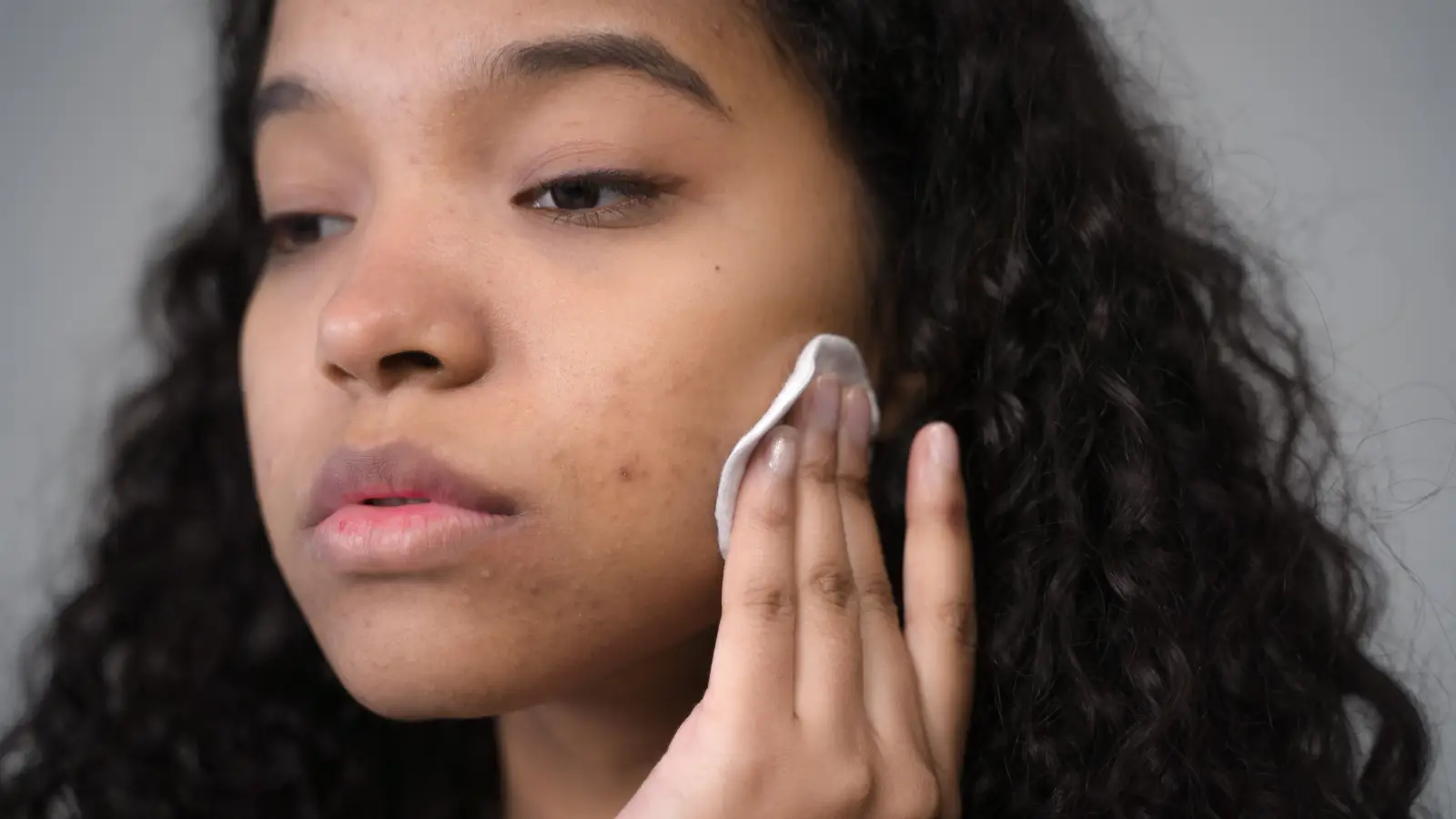
A damp washcloth hanging by the sink or a floral-scented wipe tucked in your bag can quietly gather bacteria and irritating compounds. When you sweep that across skin that’s trying to heal, you deliver a fresh dose of low-grade inflammation. Confirmation: your cloth rarely dries completely between uses, or your wipes list fragrance, denatured alcohol, or essential oils among the top ingredients.
Fix: Reach for a clean, dry, soft cotton pad or a fresh disposable tissue each time. If you love reusable cloths, keep a generous stack and wash them in fragrance-free detergent with the hottest water setting after every single use. Replace scented wipes entirely with plain water on a cotton round, or a fragrance-free micellar water stored in a gentle little travel bottle.
Expected result: Irritation-related PIH stops appearing. You may notice that a subtle tenderness or pinkness you’d grown used to also fades away within a week.
Aggressive Spot Treatments That Dry the Life Out of Skin
Applying a high-strength drying lotion or a benzoyl peroxide cream repeatedly, hoping to speed things along, can backfire. The spot dries, the barrier cracks, and inflammation escalates quietly. Confirm if the skin around the mark feels tight, flaky, or stings when you smooth on moisturizer.
Fix: Use only a pinpoint amount of your treatment—just enough to cover the active blemish, never the surrounding skin—and apply it only at night. Place a light, fragrance-free moisturizer underneath as a buffer. On evenings when the spot already looks dry, give it a rest and skip the treatment.
Expected result: Inflammation subsides, and the spot settles into a flat mark that can fade on its own without darkening further.
When Your Whole Complexion Looks Cloudy and Uneven
When the darkening has no clear home base and simply hangs over the skin like a tired veil, the culprit is often a daily habit that keeps the entire face in a quiet state of irritation.
Over-Washing with Stripping Cleansers
Washing twice a day—or more—with a foaming cleanser that leaves your skin squeaky clean strips the protective barrier. The skin, feeling exposed, mounts a tiny inflammatory response, and melanocytes stay on alert. Confirm this if your face feels tight or parched right after washing, even before you’ve applied anything else.
Fix: Wash no more than twice daily with a creamy or gel cleanser labeled sulfate-free. In the morning, often plain lukewarm water is enough, especially if you cleansed thoroughly the night before. Pat your skin dry with a soft towel—never rub.
Expected result: Within two weeks, your skin should feel calmer, and that weary, greyish cast should begin to lift. A healthy barrier allows any pigment-regulating products to work better later.
Fragranced Wipes and Toners That “Refresh”
Products marketed as soothing often carry fragrance, drying alcohols, or botanical extracts that the skin reads as an intruder. Each gentle sweep delivers a micro-dose of irritation. Confirmation: you tend to reach for a fragrant wipe midday a few times a week, and the darkening seems to deepen even though you apply sunscreen.
Fix: Swap every scented wipe and toner for unscented micellar water on a plush cotton pad. Store a small, clean bottle in your bag. If a label includes “parfum,” “limonene,” or “linalool,” it’s time to let it go with appreciation and move on.
Expected result: The chronic dullness lifts once the daily irritant is removed. Often, skin becomes less oily too, because it no longer needs to overproduce sebum as a defense.
Over-Exfoliating Without Rest
Using a granular scrub every day or layering exfoliating acids one after another wears down the outer layer, leaving it raw and inflamed at a microscopic level. The repair process calls in melanin, and spots darken. Confirm if even a simple moisturizer stings, or if your skin looks unusually shiny and thin.
Fix: Put all exfoliants aside for three full weeks to let your barrier knit back together. When you reintroduce, choose a gentle lactic acid or PHA product and use it just once or twice a week, always at night, and never on a day you’ve used a scrub.
Expected result: The barrier heals, inflammation quietens, and pigment stops being produced in response to injury. Any darkening that was purely irritation-based will start to fade naturally.
When One Side Is Noticeably Darker
Asymmetrical pigmentation often whispers “localized friction or pressure.” The side you sleep on, press your phone to, or lean your hand against receives a silent daily dose of mechanical stress.
Sleeping on a Cotton Pillowcase Night After Night
Cotton pulls and drags as you move during sleep, and if you favor one side, that side collects the friction. Fabric softeners or scented detergents add a chemical layer of irritation. Confirm: your darker side matches your most comfortable sleep position, and the line of pigmentation follows your jaw or temple.
Fix: Change to a silk or satin pillowcase—cool and smooth, with far less drag—and wash it every week in fragrance-free detergent. If you can learn to sleep on your back, wonderful; but the pillowcase swap alone often brings a meaningful softening of the difference.
Expected result: Over four to six weeks, asymmetry begins to even out, and new friction-related darkening halts.
Holding Your Phone Against the Same Spot
Pressing your phone to your ear during calls, while multitasking, or simply out of habit delivers friction plus any bacteria and product residue from the screen. Confirm: the darker side is the one you usually hold the phone to, and you rarely stop to clean the screen.
Fix: Use speakerphone or headphones for longer calls. At the end of each day, wipe the screen gently with an alcohol wipe. When you do need it against your ear, try to hold it just a breath away from the skin rather than jammed tight.
Expected result: The small, persistent inflammation from that single point of contact disappears, and pigmentation on that side stops deepening.
Resting Your Face on Your Hand Unconsciously
An unnoticed desk habit—chin in palm while you work, cheek on knuckles while you read—transfers oils, bacteria, and steady pressure. Confirm: you catch yourself doing it often, and the pigmentation sits precisely along your jaw or lower cheek.
Fix: Keep a small stress ball or a soft fidget object on your desk to gently occupy your hands. If you truly need to lean, place a clean, dry, soft cloth between your hand and cheek.
Expected result: Friction-driven PIH stops forming, and the skin in that area feels less tender and reactive.
A Soothing Reset for All Patterns
When subclinical inflammation is at the heart of the darkening, giving your skin a quiet break can help it stop overproducing melanin. For two weeks, pare your routine down to three kind products: a sulfate-free gentle cleanser (once or twice daily), a fragrance-free moisturizer, and a mineral sunscreen with SPF 30 or higher every morning. Set aside all wipes, toners, acids, and scrubs. This works beautifully when your primary trigger is the daily micro-irritation described above. If your spots come from deep, years-long sun damage or a hormonal pattern like melasma, this reset alone won’t clear them—it will calm surface inflammation but won’t reach pigment already settled in deeper layers. Use the reset as a way to listen: if your skin brightens even a little, you know behavior change is the right path, and you can build from there.
Everyday Choices That Keep the Damage from Returning
Safeguard the calm you’ve created with these small, steady acts—each one directly answers a cause you’ve already met.
- Put away every fragranced wipe and scented toner. In their place, keep only plain, unscented micellar water or a soft spray bottle of water and a cotton pad.
- Use a fresh face cloth or pad every single time. If you choose reusable, keep a caring stack of a dozen cloths so you never have to reach for a damp one. Wash them in fragrance-free detergent with hot water.
- Wash your pillowcase weekly in a gentle, fragrance-free detergent. Keep two silk cases and rotate them, so there’s always a fresh one ready.
- Clean your phone screen each day with an alcohol wipe. A tiny reminder on your nightstand helps this become a quiet ritual.
- Keep hands gently occupied away from your face. Trim nails short, and at the first whisper of a pimple, cover it with a hydrocolloid patch—it protects from both picking and inflammation.
- Choose a cleanser that leaves skin feeling cushioned, not tight. If your face feels drawn after washing, switch to a cream or gel cleanser without sulfates. Morning washing can often be just water, especially if you cleansed the night before.
When Gentle Swaps Aren’t Enough: What to Do Next
If you’ve faithfully tended to your skin with these changes for six to eight weeks and the spots remain unmoved, gather a quiet record before seeking help. Take a photo of the area in soft natural light each week, and keep a simple diary of every product and habit. Note any tingling, redness, or stinging, however slight. Then bring this log to a dermatologist who has experience caring for hyperpigmentation on melanin-rich skin. They may recommend a topical with a gentle tyrosinase inhibitor like tranexamic acid or kojic acid, a series of very superficial peels, or a delicate laser protocol. None of these will hold if the daily friction and irritation continue—so your caring swaps remain the foundation, and the professional treatments can safely build on the quiet, steady baseline you’ve created.
Pigment Curious
We are people who want to better understand skin pigmentation, dark spots, and how different skin tones respond to skincare and professional treatments. We look beyond simple beauty claims, focusing on scientific evidence, clear explanations, and practical knowledge that helps people make more informed decisions about their skin.