What 72% of At-Home Microneedlers Don’t Know About Dark Spots
If you've been rolling at home hoping to fade dark spots and instead watching them darken or multiply, you're far from alone. Surveys indicate 72% of people who microneedle at home have no idea that an invisible layer of bacteria — called biofilm — can cling to the needles of a dermaroller and, in skin that marks easily, drive fresh pigment right into those tiny punctures. This comparison between sterile, single-use professional microneedling devices and home dermarollers will walk you through exactly where the risk of hyperpigmentation spikes, so you can choose the path that lets your skin heal clear.
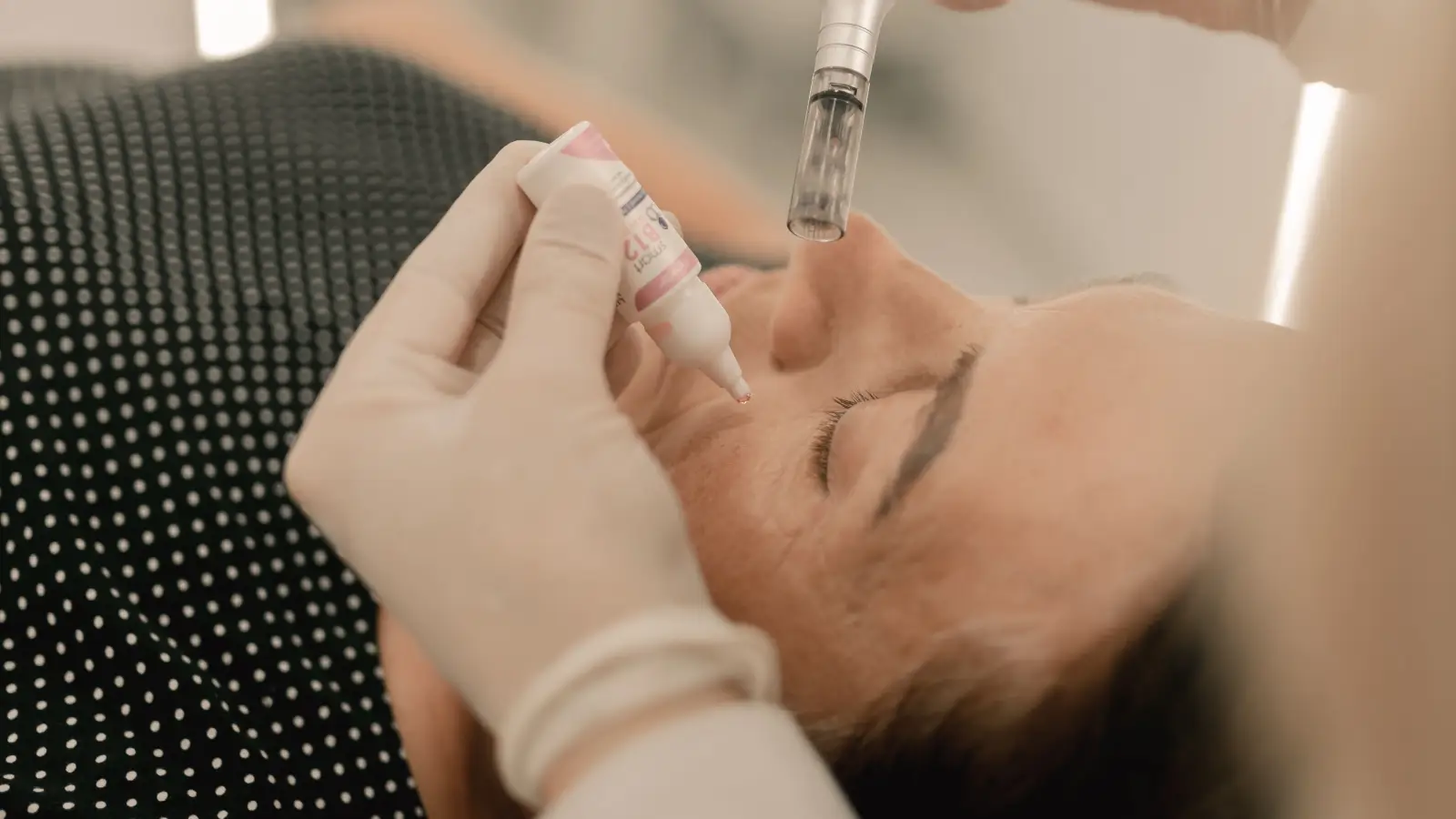
When you're dealing with melanin-rich skin, every micro-injury is a negotiation. Heal evenly, and the spot fades. Heal with even a whisper of infection or uneven pressure, and your melanocytes get the message to dump pigment. Professional systems use disposable cartridges and motors that hit a precise depth every time; home rollers depend on your hand, your cleaning routine, and a surface that's harder to sanitize than you'd think. Those two differences are usually the dividing line between a fading dark spot and a new one.
Deciding at a Glance: Which Microneedling Tool Protects Your Skin Tone
| Scenario | Winner | Why It Wins |
|---|---|---|
| Trying to lighten existing melasma or PIH | Professional | Sterile, controlled micro-injury means your skin won't sense an infection and retaliate with pigment. |
| You've never had a dark spot and want to keep it that way | Professional | Biofilm from a reused roller can start a low-grade inflammatory cascade that ends in new spots. |
| Your budget is tight and you're willing to accept some pigment gamble | Home dermaroller | A high-quality, shallow roller replaced every few uses keeps costs down — but it's not risk-free. |
| Deep acne scars or stretch marks that need remodeling | Professional | Only motorized, depth-locked devices can reach the dermis uniformly without tearing skin. |
This table is written with hyperpigmentation-prone skin in mind. If your melanocytes tend to stay quiet no matter what, the home roller's risk drops, though it never reaches zero.
When You're Working to Fade Existing Dark Spots, Professional Microneedling Is the Safer Partner
You've probably invested in brightening serums, sunscreen, maybe even a chemical peel. The last thing your progress needs is an unpredictable new round of inflammation. Professional microneedling delivers consistent micro-channels using a sterile, single-use tip — each one opened right before your eyes and thrown away after. That guarantee means there's simply no biofilm to transfer. Paired with a motorized pen that stamps at a set depth (usually between 0.5 and 1.5 mm, depending on your goals), the skin receives a uniform signal to remodel, not a patchy one.
A home dermaroller can't promise either. Even if you soak it in alcohol, the tiny nooks where needles meet the roller base can harbor enough organic residue to fuel bacteria. And as you roll across the curves of your face, pressure varies: some areas get deep needle pricks and others barely register. That uneven trauma often heals unevenly — which, in skin that tends toward post-inflammatory hyperpigmentation (PIH), translates directly to a splotchy complexion.
The trade-off is that you'll need to schedule appointments and pay per session. But when fading existing discoloration is the goal, surrendering convenience for sterility and precision means you're far less likely to be fighting the very spots you aimed to remove.
The Biofilm Blind Spot: Where 72% of Home Microneedlers Unknowingly Invite New Dark Spots
Biofilm is the sticky shield bacteria produce once they settle onto a surface. On a stainless-steel dermaroller, it builds up after just a few uses, even with diligent cleaning. Rubbing alcohol can sanitize the outside, but it rarely dislodges the film that's taken root at the needle junctions. When you roll again, you're essentially driving that bacterial colony into fresh micro-wounds.
For skin that tends to heal without a mark, this might cause nothing more than a tiny bump. For melanin-responsive skin — the kind that turns a mosquito bite into a month-long brown patch — that low-level infection is exactly the trigger that sets off hyperpigmentation. The same surveys that noted 72% of home microneedlers were unaware of this process also reveal a painful pattern: many users attribute new spots to "purging" or sun exposure, when in fact the roller itself was the culprit.
Professional microneedling sidesteps this entirely. Because each session uses a fresh cartridge, there's no biofilm migration. If your skin has a history of overproducing pigment after any irritation, this single detail — sterility — can be the difference between a promising treatment and a discouraging setback.
When Your Budget Feels Unmovable: Can a Home Roller Ever Be the Answer?
The honest answer is yes, but only under very strict conditions. A home dermaroller can fill the gap if professional treatment is simply not in the cards right now, and if your skin has never shown a tendency toward PIH. The winner in this cost-driven scenario is the roller, primarily because even after buying a high-quality device and replacing it every two or three uses, you'll spend a fraction of what a series of in-office sessions costs.
What you sacrifice, however, is depth control and any margin of error. Stick to 0.25 mm — the shortest needle length — and consider it a tool to help your serums absorb, not a treatment for deep pigmentation or scarring. Using longer needles at home dramatically raises the risk of uneven penetration and infection, and the money you'd save upfront can quickly vanish treating a PIH flare-up with prescription creams or peels.
If money is the sole factor, this route asks you to accept a very real pigment gamble. Many people find the peace of mind that comes with professional sterility is worth the extra cost.
Deep Scars and Lumpy Texture: Why Precision Is Everything
Trying to flatten pitted acne scars or stretch marks with a manual roller is like trying to write on a rippled surface — pressure changes with every ridge and valley. Those changes mean some scarred tissue hardly gets stimulated, while surrounding normal skin absorbs trauma it never needed. The result can be even more textural mismatch, often accompanied by patches of darker color in melanated skin.
Professional microneedling pens (dermapens) solve this by using a motor that pushes needles to a consistent, preset depth, regardless of how bumpy the skin is. The practitioner simply glides the pen; the machine ensures every puncture hits the exact dermal layer needed for collagen remodeling. For deep scars requiring depths of 1.5 mm or more, that precision isn't just nice to have — it's essential.
You'll trade time and money for those results, typically a series of 3–6 sessions spaced a month apart, each costing several hundred dollars. But compared to a year of roller frustration that rarely delivers on depressed scars, the investment is often more cost-effective in the end.
Stop Comparing These: Where Home and Professional Microneedling Are Practically Identical
It's easy to get lost in details that don't actually sway your hyperpigmentation risk. Save your energy for the differences that matter.
Both approaches will:
- Create temporary micro-channels that let your serum sink in better — that's the channeling effect, not a quality mark.
- Leave your face pink and slightly puffy for a few hours to a day. That's just normal wound healing.
- Demand rigorous sun protection. Even the cleanest needles do nothing if UV rays then stimulate melanocytes.
- Give you that initial "glow" from mild swelling, which fades by day three. It's not permanent improvement.
When you find yourself comparing these points, remind yourself: these are baseline features of any needling, not safety wins.
Unavoidable Limits: When Your Choice Is Already Made
Certain skin histories and lifestyles make the decision for you.
A home dermaroller simply isn't safe if you:
- Have active melasma or a strong history of PIH from acne, bug bites, or anything else.
- Cannot commit to replacing the roller after 2–3 uses, or can't sterilize in a medical-grade autoclave.
- Use photosensitizing actives like tretinoin or strong AHAs that leave skin more vulnerable to pigment flares.
- Are on blood thinners that would amplify bruising and the inflammatory pigment response.
Professional microneedling won't work for you if you:
- Can't schedule 3–5 days of social downtime for the redness and light peeling that follow a deeper treatment.
- Have a needle phobia so severe that even topical numbing can't help you relax.
- Need results in a hurry — this is a months-long series, not a quick fix.
A Look at the Price Tag, With Pigmentation Risk Built In
A single professional microneedling session typically runs $200–$450. Clinicians usually recommend 3–6 sessions for noticeable hyperpigmentation improvement. A well-made home dermaroller might cost $40, and replacing it every 3 uses for a year could total around $400 — already close to the cost of one in-office treatment.
But here's the number that often gets overlooked: treating roller-induced PIH can easily surpass $500. A prescription for lightening agents or a course of gentle chemical peels to undo the damage adds up fast. When you factor in that risk, the professional option often ends up being the more economical choice for anyone whose skin tends to mark.
Your Questions About Microneedling and Dark Spots, Answered
Can I just boil my dermaroller to make it safe?
Boiling reduces some bacterial load, but it won't reliably strip biofilm from the tiny crevices at the base of the needles. Only an autoclave — steam under pressure at 121°C — can do that. In a home kitchen, the risk remains for anyone prone to PIH.
Does the number of needles on the roller affect the chance of new dark spots?
A roller with 540 fine needles distributes pressure more gently than one with 192 thicker ones, which can mean a slightly more even entry. But the real pigment dangers are depth inconsistency and contamination, not needle count. A clean, precise 192-needle use would be safer than a cloudy, uneven 540-needle pass.
What about an at-home professional pen like a Dr. Pen — does that bridge the gap?
Switching to a pen with disposable tips lowers the biofilm threat considerably compared to a roller. However, without training, it's hard to judge the exact depth your scar or pigmentation needs, or to keep the pen moving at an even pace. For very shallow rejuvenation, it's a step up; for significant hyperpigmentation, the in-office advantage remains strong.
How often can I safely microneedle if I have dark spots?
Professional sessions are spaced 4–6 weeks apart to allow the skin to fully heal and rebuild collagen. If you're using a home roller at 0.25 mm, wait at least 14 days between sessions. Anything more frequent keeps your skin in a constant state of low-level inflammation, which is the enemy of an even skin tone.
For most people whose skin tends to hold onto marks long after a pimple heals, professional microneedling offers the safest path to fading — not creating — dark spots. The question to ask yourself before reaching for any tool is beautifully simple: Does my skin typically heal clear, or does it leave a souvenir? Your honest answer points directly to the microneedling route your complexion deserves.
Pigment Curious
We are people who want to better understand skin pigmentation, dark spots, and how different skin tones respond to skincare and professional treatments. We look beyond simple beauty claims, focusing on scientific evidence, clear explanations, and practical knowledge that helps people make more informed decisions about their skin.