The Hidden PIH Risk of Chemical Peels for Darker Skin Tones
Too many patients with darker skin are told simply: no chemical peels, ever. The caution is well-intentioned—a desire to protect against post-inflammatory hyperpigmentation. But a flat prohibition misses the real distinction: it is not the peel itself that threatens, but the depth of wounding, the absence of proper preparation, and the neglect of aftercare. When a superficial agent like mandelic acid is used with a disciplined pre- and post-peel protocol, the risk-benefit equation shifts, and many Fitzpatrick IV–VI patients can safely treat their hyperpigmentation rather than live with it. This piece walks through why the blanket myth persists, where the true danger sits, and the exact steps that turn a peel from a PIH trigger into a therapy.
The Real Trigger: Inflammation, Not the Peel Itself
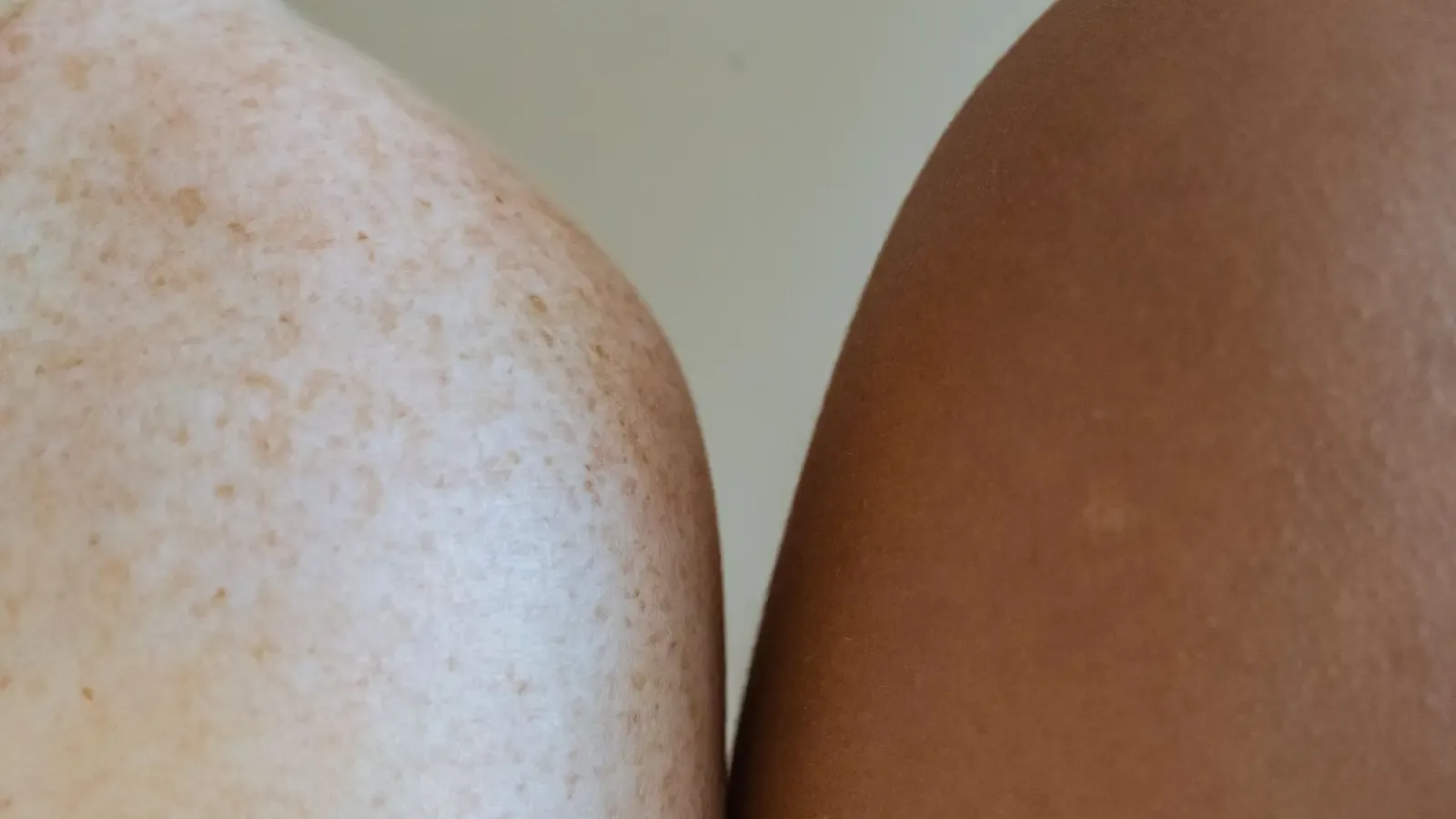
PIH in melanin-rich skin does not arise because a chemical was applied. It arises because inflammation crossed a threshold the skin could not handle. Melanocytes in darker Fitzpatrick types are biologically primed to react—their dendrites extend higher into the epidermis, and they release melanin readily when any insult, even mild, provokes them. If a peel leaves the skin with visible frosting, prolonged redness, or crusting, the inflammatory signal was too strong. That signal, rather than the acid itself, is what wakes the melanocytes and leads to stubborn dark marks weeks later. So the variable that deserves the most attention is not whether to peel, but how to keep inflammation below that critical line.
The Peel Depth Ladder: Where the Danger Escalates for Darker Skin
All chemical peels are not the same, and safety for types IV–VI collapses almost entirely into the superficial end of the spectrum. A very superficial peel that exfoliates only the stratum corneum—when executed with care—generates little inflammatory noise. Medium-depth peels that reach the papillary dermis force a wound-healing cascade that melanin-rich skin amplifies dramatically. Deep peels are contraindicated for darker tones; the risk of permanent dyschromia and scarring is simply too high. Recognizing this spectrum is what defuses the myth. The phrase “chemical peel” is not a single danger level—it is a gradient, and only the shallowest steps belong in the conversation for darker skin.
Quick Reference: Peel Depth and PIH Risk for Types IV–VI
| Peel Depth | Example Agents | PIH Risk | Suitability |
|---|---|---|---|
| Very Superficial (stratum corneum) | Glycolic 20–30%, Mandelic 20–40%, Salicylic 20–30% | Low when protocol is followed | First-line option for dark skin |
| Superficial (epidermal) | Glycolic 50–70%, TCA 10–15% | Moderate—higher with aggressive technique | Use only with tyrosinase inhibitor prep and careful post-care |
| Medium (papillary dermis) | TCA 20–35%, Jessner's followed by TCA | High—strong PIH provocation | Generally avoided in types IV–VI unless under strict expert control |
| Deep (reticular dermis) | Phenol, >35% TCA | Very high—often permanent dyschromia | Contraindicated for darker tones |
Mandelic Acid: The Superficial Peel with a Built-in Margin of Safety
Within the superficial category, mandelic acid earns its reputation for darker skin through physical chemistry, not marketing. Its molecule is large, which means it penetrates the stratum corneum slowly and evenly. There is less of a sharp sting—a gentler rise in irritation that stays beneath the inflammatory threshold more reliably. The acid also carries mild anti-inflammatory properties that further calm the melanocyte environment. Clinical consensus, reflected in dermatology treatment reviews and guideline discussions, increasingly positions mandelic acid as a first-line peel for Fitzpatrick types IV, V, and VI. It addresses post-acne marks, melasma, and stubborn uneven tone while keeping the PIH provocation low—provided the surrounding protocol is in place.
Pre-Treatment: The Foundation That Determines PIH Risk
A superficial peel on unprepared dark skin is a gamble. The weeks before the peel are the moment to quiet the pigment system so that any inflammation the procedure generates meets a less reactive baseline.
Tyrosinase Inhibition: Starting 2–4 Weeks Before the Peel
Agents that block tyrosinase—the enzyme at the heart of melanin synthesis—reduce the likelihood that inflammation will translate into visible pigmentation. Topical hydroquinone (prescription only), kojic acid, azelaic acid, or tranexamic acid, applied nightly for at least two weeks, are the backbone of pre-peel priming. In dermatology practices that regularly treat darker skin, omitting this step is considered a preventable error.
Retinoid Acclimation
A low-strength retinoid used in the weeks leading up to the peel smooths epidermal turnover and improves acid penetration, but it must be stopped 3–5 days before the procedure. Continuing retinoids right up to the peel day leaves the skin in a sensitized, vulnerable state that tips the inflammation balance in the wrong direction. This use-then-pause rhythm is a consensus detail often overlooked.
Photoprotection as a Pre-Requirement
Daily broad-spectrum SPF 30 or higher for at least two weeks before the peel is non-negotiable. UV radiation silently drives melanogenesis even without visible tanning, and a peel will unmask that hidden pigment activity. The skin should arrive at the appointment in its quietest possible state.
Post-Care: The Window Where PIH Is Won or Lost
The first 72 hours after a superficial peel hold critical vulnerability. The barrier is thinned, and any misstep—UV, friction, irritants—can amplify pigmentation pathways for dark skin.
Strict, No-Exception Sun Protection
An SPF 50+ mineral sunscreen (zinc oxide or titanium dioxide) applied every two hours outdoors, combined with wide-brimmed hats and shade, is the absolute minimum. Chemical filters are acceptable only if they cause zero stinging on compromised skin; mineral screens are often preferred for their inertness.
Soothing and Repair, Not Aggressive Exfoliation
The post-peel skin must be treated as fragile. Gentle cleansers only—no scrubs, no other acids, no alcohol-based toners. Ceramide-rich moisturizers and simple occlusives like petrolatum support barrier repair. In practices experienced with darker skin, a short, supervised course of a low-potency topical corticosteroid for 2–3 days may be used if post-peel erythema seems to be escalating, but this is never a self-directed measure.
Hands Off: Manipulation Creates PIH
Peeling sheets, picking at flakes, or even rubbing the face dry with a towel can create enough microtrauma to deposit melanin in darker skin. The skin must shed on its own timeline. A seemingly minor act—a too-vigorous towel—can convert an otherwise safe peel into a lengthy PIH episode.
When Even a Superficial Peel Is a Bad Idea
Even mandelic acid is not universally safe. Active inflamed acne, isotretinoin use within the past six months, active eczema or seborrheic dermatitis in the treatment area, recent deep sun exposure, or a personal history of keloid formation are all reasons to defer a peel. And if someone cannot realistically commit to the full pre- and post-care protocol—daily sunscreen, no picking, no other exfoliants—then the risk-benefit calculation shifts sharply negative. A peel placed on a patient who will skip sun protection is a PIH event waiting to happen.
Key Takeaways
- The blanket warning that peels are dangerous for dark skin hides the real lesson: uncontrolled inflammation from the wrong peel depth or missing protocols is what causes PIH.
- Superficial peels, particularly mandelic acid, are safe for Fitzpatrick types IV–VI when supported by methodical pre- and post-care.
- Pre-treatment tyrosinase inhibition, timed retinoid use, and strict photoprotection are not optional extras—they are the foundation that lowers PIH risk.
- Post-peel discipline with sun protection, barrier support, and zero manipulation determines whether the peel clears pigment or creates new dark spots.
- The safety of a peel is only as solid as the preparation and aftercare around it; skip either and a low-risk procedure turns into a PIH trigger.
Frequently Asked Questions
Can I do a mandelic acid peel at home if I have type V skin?
Home peels introduce uncertainty around concentration and contact time, and the crucial priming steps are often absent. A single careful at-home session is unlikely to cause severe PIH, but repeated unsupervised use can gradually erode the barrier and provoke pigmentation. Professional treatment with a clinician experienced in darker skin remains the safer path.
How long does PIH from a peel last on dark skin?
Left untreated, post-peel PIH can persist for six to twelve months or longer. With prompt tyrosinase inhibition and rigorous sun protection, visible fading usually begins within four to eight weeks, but complete resolution takes many months. The deeper the inflammation reached, the more stubborn the marks.
What Fitzpatrick type do I need to worry about peel PIH?
Types IV, V, and VI all carry the reactive melanocyte system that translates inflammation into prolonged pigmentation. Type III can also develop PIH but less predictably. Concern rises steeply from type IV onward.
Is there a safer alternative to peels for treating hyperpigmentation on dark skin?
Yes, topical depigmenting agents (hydroquinone, azelaic acid, tranexamic acid, kojic acid) combined with disciplined sun protection can clear pigment without a peel. Non-ablative lasers like low-fluence Q-switched Nd:YAG are another option but also demand careful protocols. Peels remain a useful tool, not a mandatory one.
The Single Most Important Next Step
Before any peel, sit down with a dermatologist who regularly treats darker skin and build a personalized pre-treatment plan that includes at least two weeks of a tyrosinase inhibitor and daily SPF 50+. That groundwork is what transforms a peel from a PIH gamble into a controlled, safe pigment-clearing treatment.
Pigment Curious
We are people who want to better understand skin pigmentation, dark spots, and how different skin tones respond to skincare and professional treatments. We look beyond simple beauty claims, focusing on scientific evidence, clear explanations, and practical knowledge that helps people make more informed decisions about their skin.
I finally tried a mandelic acid peel after reading this. I have type V skin, and my dermatologist had me on azelaic acid for three weeks beforehand. The peel was so gentle—barely any redness—and two weeks later my dark spots look noticeably lighter. I was always told peels were off-limits, so I’m really grateful for this breakdown.
I’m on tretinoin 0.05% for acne. You said to stop 3-5 days before a peel. Is that really long enough? My skin still peels from tret alone sometimes, so I’m worried it would be too sensitive for any chemical peel even after that break. Should I extend the pause, or does the type of peel matter?
That’s a very fair concern. The 3-5 day window is based on the typical retinoid skin effect wearing off, but everyone’s sensitivity differs. If your skin still feels tight, flaky, or stings with moisturizer after 5 days, it’s wise to wait a full week—or even talk to your dermatologist about doing the peel during a longer planned break from tretinoin. For very superficial peels like mandelic, sensitivity is less of a trigger than for glycolic, but it’s always better to err on the cautious side. Your provider can do a spot test if unsure.