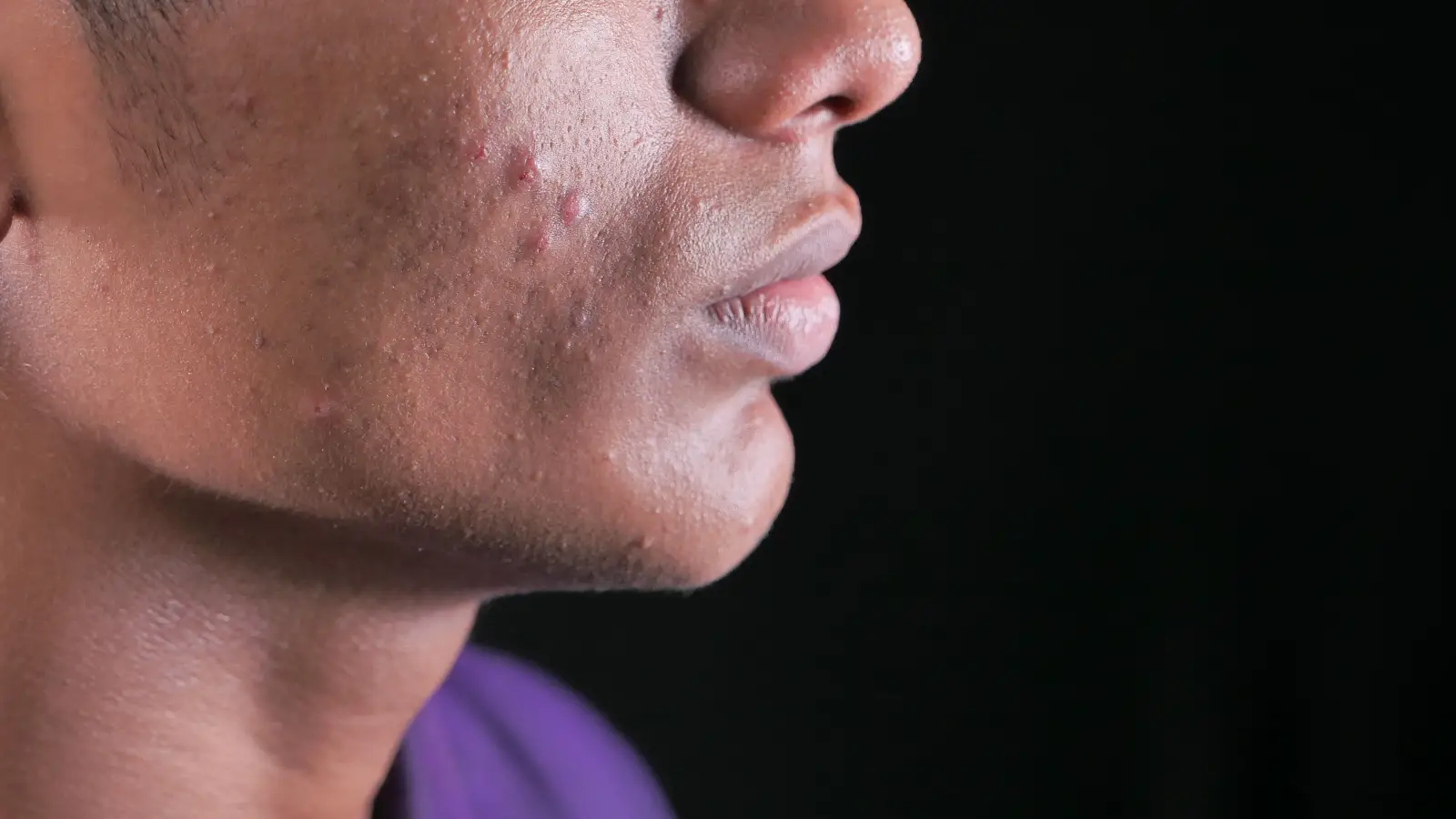
How Microneedling Finally Fades Acne Marks That Won’t Budge
For marks that simply sit there, unchanging, long after the acne has healed—microneedling works by stepping into a broken conversation between pigment-producing melanocytes and the skin cells they feed. It uses thousands of micro-injuries, precise and controlled, to interrupt a signaling loop that keeps depositing melanin where it no longer needs to go. The real lever is time: pigment trapped recently within the epidermis responds differently than pigment that has been carried deep into the dermis over a year or more. Matching the needle’s reach to that timeline is what turns a stubborn mark into a fading one.
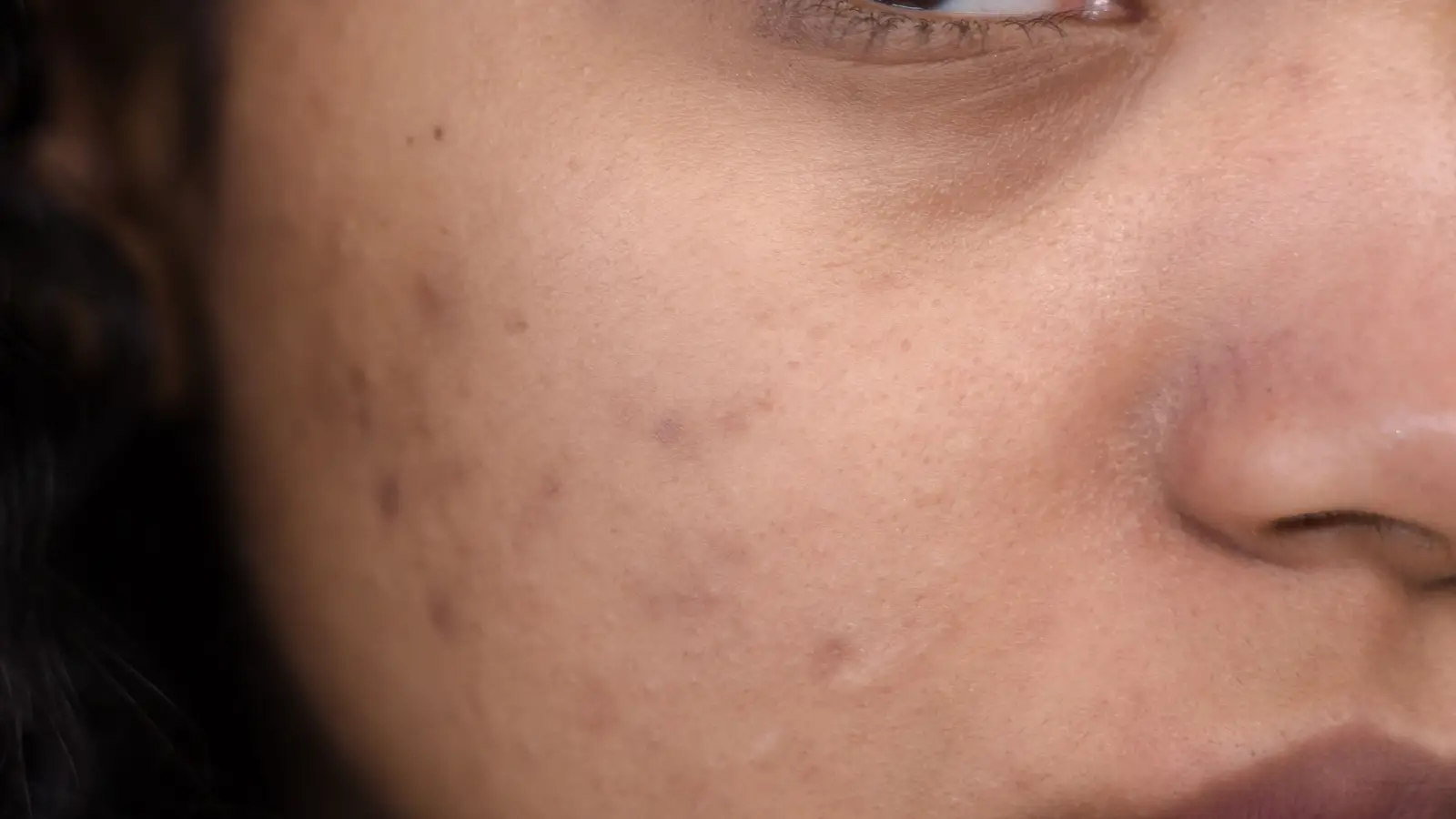
Which PIH Profile Matches Your Skin Right Now?
Fresh marks cleared less than 3 months ago, still dark brown or tan
Here the melanin sits high, still near the surface, and the melanocytes remain reactive from the original inflammation. Your route through this article follows how shallow needling can silence that active signaling before it hardens into a permanent spot.
Stubborn marks that have hung around 6 months or longer with minimal change
Pigment has been carried downward, locked inside dermal cells that do not shed quickly. Your route explains why needles must go deeper, why the treatment timeline stretches across months, and why patience is not optional—it is the treatment itself.
Darker skin tones (Fitzpatrick IV–VI) where any treatment carries a real risk of triggering more pigmentation
Your route prioritizes restraint: staying within the shallow-to-mid dermis, priming the skin diligently, and never chasing a quick fade at the expense of a lasting calm.
First, Confirm It’s Pigment, Not a Scar or Redness
This stage exists because chasing the wrong problem with microneedling can leave the skin irritated and no closer to an even tone. Post-inflammatory erythema (redness) and atrophic scars need different strategies, and mistaking either for hyperpigmentation wastes the window when the treatment can work most cleanly.
The clearest action is a blanching test. Press a clear glass slide or transparent spoon against the mark. A brown mark that stays brown, without lightening under pressure, points firmly to melanin. If it pales, even slightly, there is a vascular component that microneedling alone will not address well. In deeper skin tones, the mark may appear bluish-gray, and that unmoving color under pressure signals melanin seated deep.
You can move on when several marks in the same zone all refuse to blanch, and their color reads as brown, gray-brown, or dark brown—not pink, not red.
Matching Needle Depth to the Age of Your Hyperpigmentation
The goal here is to stop treating all PIH as if it lived at the same depth. A mark that formed 8 weeks ago and one that has been sitting there for 8 months need different instruments and different expectations.
For PIH under 3 months, the excess pigment clusters around the basal epidermis and the very upper edge of the dermis. A needle depth of 0.25–0.5 mm is often sufficient to trigger the repair signals that quiet hyperactive melanocytes, while also opening micro-channels that let lightening serums reach where they are needed.
For PIH that has passed the 6-month mark, melanin has been carried deeper—trapped inside dermal macrophages that the skin cannot easily exfoliate away. Needle depths of 0.75–1.5 mm become necessary to physically break up those pigment nests and recruit fresh macrophages to clear the debris. Depths this deep belong in professional hands, never in an at-home device.
The sign that you are ready to proceed is a provider who has examined your skin’s thickness across every facial zone and written a protocol that assigns a depth range to each area, with the oldest marks receiving the deeper passes.
Priming Your Skin to Quiet the Melanocytes Before Microneedling
Microneedling creates a wound that the body must answer. If melanocytes are already agitated, that answer can be another surge of pigment—exactly what needs to be avoided on skin that forms PIH easily. Priming breaks that cycle by calming the pigment machinery before the needles ever touch the skin.
For at least 2 weeks before the first session, apply a tyrosinase inhibitor—tranexamic acid, kojic acid, or a stable vitamin C—twice daily, morning and night. These agents slow the enzyme tyrosinase, the rate-limiting step in melanin production. Stop all acids, retinoids, and physical scrubs one week before the appointment to give the barrier time to recover fully.
You are ready when the treatment area looks even and settled: no active peeling, no rawness, no fresh acne papules. Sometimes the tyrosinase inhibitor alone will have already softened the marks slightly. That is a good sign, not a reason to skip sessions.
The Microneedling Session and the Crucial First 48 Hours
The session itself is straightforward: a pen device with sterile, disposable needle cartridges passes over the skin in a series of precise, overlapping motions. Pinpoint bleeding or a thin serous fluid is normal and signals that the upper dermis has been reached—exactly the level needed.
For 48 hours afterward, the priority is shielding the skin while its thousands of micro-channels seal. That means strict sun avoidance, even indoors near windows. Cleanse only with a gentle, non-foaming wash. Apply the recommended post-procedure balm or a plain hyaluronic acid serum. No vitamin C, no acids, no tinted makeup. UV radiation slipping into those open channels can deposit melanin directly into the healing zones, undoing the very signaling reset the procedure intended.
You are through this stage when the pinkness and tightness fully resolve, and there is no increasing redness, swelling, or yellow crust. That quiet healing is the first proof the skin accepted the injury without overreacting.
Why Microneedling Resets Melanocyte-Keratinocyte Crosstalk Over Weeks
Results never appear overnight, and that is by design. Microneedling does not erase pigment directly; it launches a wound-healing cascade that gradually reorders the way melanocytes and keratinocytes speak to one another.
The micro-injuries release growth factors, TGF-β prominent among them, which downregulate tyrosinase inside melanocytes. Simultaneously, the disruption breaks the abnormal keratinocyte signals that were still demanding excess pigment long after the original acne inflammation ended. Over 4 to 8 weeks, the skin rebuilds its basement membrane and pushes old melanin granules upward or packages them for macrophage clearance. The fading emerges in two waves: a soft lightening around week 3, then a clearer shift by week 6 to 8. For older PIH, multiple sessions spaced 4–6 weeks apart layer this reset, each round stabilizing melanocytes a little more.
The sign that you are ready to assess whether another session is needed is this: any temporary darkening from the last session has cleared, at least 4 weeks have passed, and there have been no new acne flares in the treated area.
The Signs That Tell You Each Stage Is Complete
- Multiple marks fail to blanch under a glass press, confirming true PIH.
- A professional has mapped depth ranges per facial zone, with older PIH receiving deeper settings.
- After priming, skin is even, calm, and free of active peeling or new breakouts.
- Post-session pinkness and tightness have fully faded, with no infection indicators.
- Any transient darkening from the previous session has resolved, and a full month of stable skin has passed.
Concerns to Postpone Until Later—and When to Revisit Them
“Microneedling will make my hyperpigmentation worse.”
On melanin-rich skin, this fear is well-founded but misplaced when the right steps are taken. The risk materializes when needles go too deep, priming is skipped, or active acne is still present. Set this worry aside until you have primed for at least 2 weeks and a professional has chosen a conservative depth for the first session. If temporary darkening occurs, it almost always fades within 6 weeks and does not signal a permanent setback.
“I’ll need dozens of treatments to see any change.”
This anxiety often comes from comparing microneedling to single-visit laser therapies. Postpone it until after the second session. By then, either a faint lightening or a lack of movement will tell you whether the protocol fits your skin. Most people achieve visible fading within 3–4 sessions when depth is aligned with PIH age.
“The needle depth sounds scary—what if it causes scarring?”
Scarring from professional microneedling is exceptionally rare when the device is handled correctly. The concern becomes relevant only if the provider attempts to treat through active cysts or uses contaminated equipment. If you have a personal history of keloids, revisit this before booking; otherwise, it is not the risk to fixate on now.
Can Anything Speed Up the Fading Process Safely?
Yes, but only after the foundations are solid. Pairing microneedling with growth factor serums or tranexamic acid during the session can accelerate pigment clearance. Growth factors nourish the same repair pathways the needles activate, while tranexamic acid blocks plasmin, a signal that otherwise tells melanocytes to produce more pigment after injury. These additions work when depth is correct, priming is respected, and sun protection is absolute. They speed the journey; they cannot replace the map.
Frequently Asked Questions About Microneedling for PIH
Can microneedling permanently fade post-inflammatory hyperpigmentation?
It can produce long-lasting fading, but future PIH from new acne is always possible. Once a specific mark’s pigment is cleared through repeated cellular turnover, that mark itself does not return. Maintenance hinges on consistent sun protection and early treatment of new breakouts.
How many sessions does it take to see a difference?
For PIH under 3 months, noticeable lightening often appears by session two or three. PIH that has lasted over 6 months usually needs 4–6 sessions, spaced roughly one month apart, before a lasting change becomes clear. Depth settings and skin type shape the timeline significantly.
Is at-home microneedling safe for PIH?
Tools with needle depths below 0.25 mm pose little risk but also deliver minimal impact on melanocytes—especially for older marks. Professional devices at 0.5–1.5 mm reach the compartment where PIH lives, and home use at those depths risks uneven injury, infection, and unintended post-inflammatory darkening on deeper skin tones.
What if my PIH gets darker right after a session?
A short-term darkening can happen, particularly in medium to dark skin. It usually reflects brief inflammation, not permanent damage. Begin to fade around week 3 and should resolve by week 6. If the darkness persists past 8 weeks, return to your provider for a reassessment of depth and priming.
The Final Picture: Steady Fading Without Rebound Hyperpigmentation
Reaching the end looks like marks that lighten predictably from session to session, with no new darkening cycles in between, and a skin tone that holds its improvement without constant intervention. For the person staring at marks unchanged for half a year or longer, the very first action is a face-to-face evaluation where a professional measures the age and depth of that pigment, and then writes a needle depth protocol that treats it where it actually lives.
Pigment Curious
We are people who want to better understand skin pigmentation, dark spots, and how different skin tones respond to skincare and professional treatments. We look beyond simple beauty claims, focusing on scientific evidence, clear explanations, and practical knowledge that helps people make more informed decisions about their skin.