The Light Spectrum Most Sunscreens Miss for Melasma
Most sunscreens guard against UVB and short UVA, but they ignore high-energy visible (HEV) light—the blue-violet range that drives melanin production independently of UV. For melasma, that gap matters. Tinted sunscreens with iron oxides absorb and reflect this visible light, providing protection that standard chemical and mineral formulas do not offer.
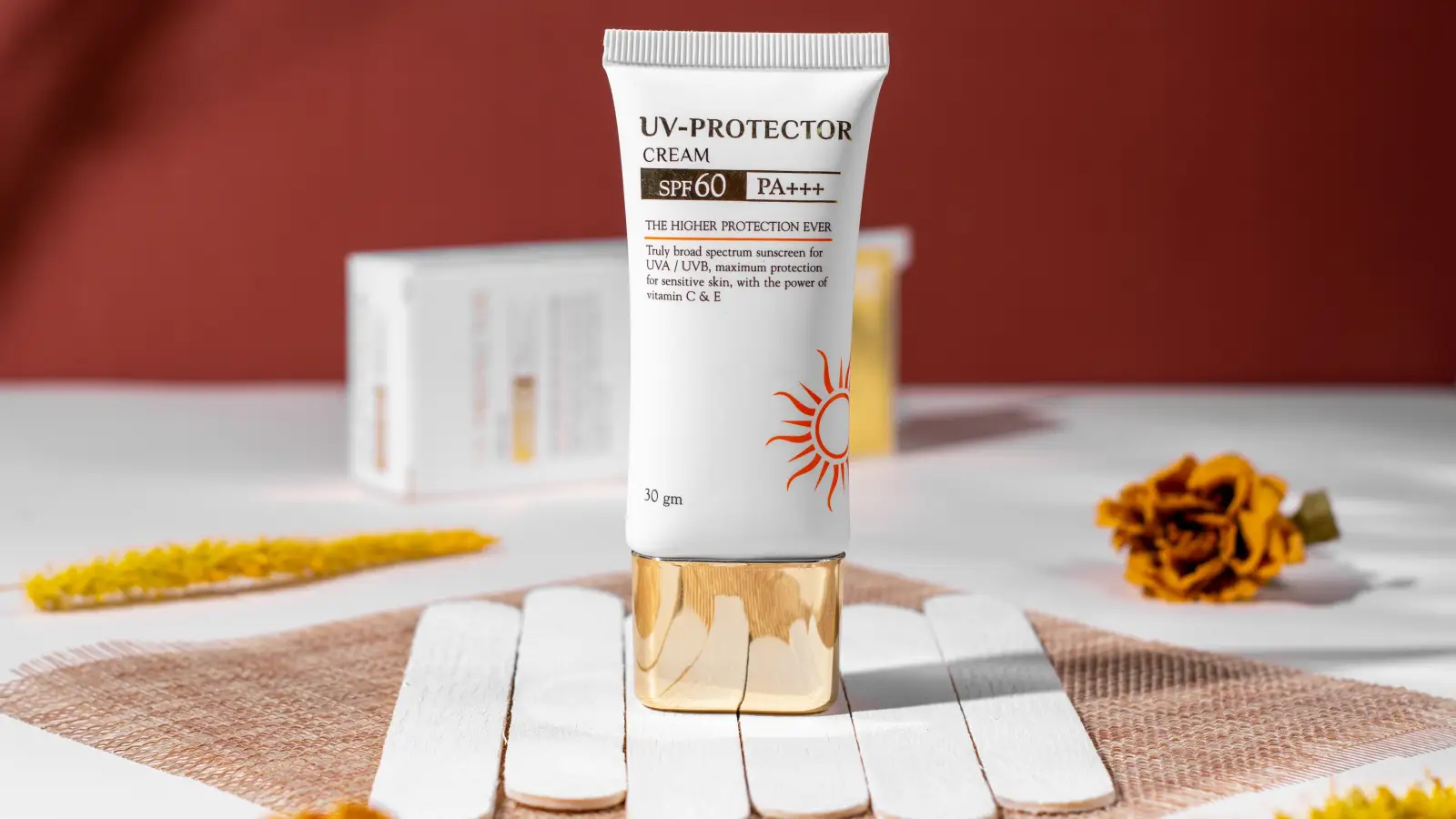
The Sunscreen Gap That Worsens Melasma
High-SPF protection alone misses a critical trigger. UVA radiation already maintains a chronic pigment cycle in melasma-prone skin. Visible light adds a second, parallel pathway that activates melanocytes through opsin receptors, not through DNA damage. The result: someone can apply SPF 50+ meticulously and still see darkening because the light hitting the skin between 400 and 700 nanometers goes unfiltered. Tinted sunscreens are not a cosmetic preference here—they are the practical tool for intercepting that spectral window.
The problem is not theoretical. A person with melasma who relies on an untinted sunscreen, avoids direct sunlight, and still experiences deepening patches is facing the visible light gap. Covering that gap requires a deliberate formulation choice, not just a higher SPF number.
How UVA and Visible Light Fuel Pigment Production
UVA’s Deep Reach and Pigment Reactivation
UVA accounts for the majority of terrestrial UV. It penetrates the dermis, where melanocytes sit, and generates oxidative stress that reactivates dormant pigment and stimulates new synthesis. In melasma, melanocytes are already hyper-responsive; UVA keeps them in overdrive independent of sunburn-level exposure. Window glass and cloud cover do not stop it, so the signal to produce pigment continues even when someone is indoors or in overcast conditions.
High-Energy Visible Light: The Missing Piece in Melasma Protection
Blue-violet light stimulates melanogenesis through a distinct mechanism—likely via opsin photoreceptors on melanocyte membranes—that leads to prolonged pigment production. Unlike UV, visible light does not require a sunburn reaction to trigger this response. It can darken melasma patches even when all UV wavelengths are blocked. The effect is most documented in skin types III–VI, but the underlying biology suggests any melasma-prone skin will react given enough cumulative exposure.
Why Most Sunscreens Fall Short Against Visible Light
Chemical sunscreens are transparent to visible light. Mineral sunscreens with zinc oxide or titanium dioxide do reflect some visible wavelengths, but only when particle sizes are large enough to scatter longer wavelengths. Most cosmetic formulations use micronized particles to eliminate whitening, which drops visible light reflectance substantially—often below 30%. Without iron oxides or other pigments, the visible light gap persists regardless of SPF or critical wavelength claims.
Tinted Sunscreens and Iron Oxides: Closing the Protection Gap
Iron oxides function as broad-spectrum visible light filters. They absorb and scatter across the visible range, and when combined with zinc oxide or titanium dioxide, they can reduce visible light transmission by over 90%. The tint itself is the active protective element, not a color-matching add-on. Deeper shades typically contain higher iron oxide concentrations and offer proportionally greater visible light attenuation, but all tinted formulations provide some level of coverage that untinted ones do not.
Common Misunderstandings About Sunscreen and Melasma
SPF 50+ Is Enough to Prevent Melasma Flare-Ups
SPF measures only UVB protection. A high number says nothing about UVA balance or visible light attenuation. For melasma, the metrics that matter are critical wavelength over 370 nm and the presence of a visible light blocking agent. A product can carry an SPF 100 and still allow the wavelengths most relevant to pigment production to pass through.
Any Mineral Sunscreen Blocks Visible Light
Not in practice. Micronized zinc oxide and titanium dioxide are designed to be transparent on the skin, which means they transmit most visible light. Only when iron oxides or larger pigment particles are present does a mineral sunscreen offer meaningful visible light protection. A label that says “mineral” is not enough; the ingredients need to include iron oxides or a stated tint.
Visible Light Only Matters for Darker Skin
Darker skin types show a stronger melanogenic response to visible light, but all melasma involves hyperactive melanocytes. Lighter skin tones may take longer to accumulate visible pigment changes, yet the underlying stimulus operates similarly. Ignoring visible light means accepting a daily driver of pigmentation that will eventually compound, especially when other triggers like hormones or heat are already present.
Frequently Asked Questions About Visible Light and Melasma
Does visible light make melasma worse?
Yes, through a pathway separate from UV. Visible light stimulates melanin production even when UV is fully blocked, and it can darken existing patches and trigger new ones. The effect is independent of sunburn.
Can I just use a regular sunscreen if I stay indoors?
UVA and visible light pass through most windows. Indoor lighting and screens emit visible light as well, though at lower intensities. For melasma, cumulative exposure from these sources matters, so tinted protection indoors is advisable when there is prolonged time near windows or under bright artificial light.
Are all tinted sunscreens effective against visible light?
Effectiveness depends on iron oxide concentration and the shade depth. A sheer universal tint may provide less protection than a formulation matched to a medium or deep skin tone. Checking the ingredient list for iron oxides and selecting a shade with adequate coverage gives a better indication of visible light performance.
How much iron oxide does a tinted sunscreen need?
Published data suggest meaningful visible light protection starts around 3% iron oxide content. Many effective tinted sunscreens contain between 3% and 10% iron oxides. Without mandatory labeling, looking for products that visibly coat the skin with pigment is a practical proxy.
What Tinted Protection Looks Like in Practice
A typical case: someone with melasma uses a high-SPF chemical sunscreen religiously but sees gradual darkening each summer. Switching to a tinted mineral sunscreen with iron oxides—applied to all exposed skin, not just the face—often leads to lightening within weeks because the additional wavelength coverage removes a trigger that the previous routine left unaddressed. This switch does not replace other melasma treatments; it prevents a driver that works against them.
Making It Part of Daily Melasma Management
Visible light protection is not an extra step. It means choosing a tinted sunscreen with iron oxides as the default photoprotection every day, indoors or out. Apply it as the final layer in the morning and reapply if near windows for hours. This layer works with—not instead of—tyrosinase inhibitors, antioxidants, and other treatments by cutting off a stimulatory pathway that conventional sunscreens leave open. The practical goal is not product complexity; it is closing the spectrum gap with the simplest formulation that can do it, and currently tinted sunscreens are the most direct tool available.

Pigment Curious
We are people who want to better understand skin pigmentation, dark spots, and how different skin tones respond to skincare and professional treatments. We look beyond simple beauty claims, focusing on scientific evidence, clear explanations, and practical knowledge that helps people make more informed decisions about their skin.