Why Your ‘Gentle’ Moisturizer Might Be Delaying Peel Healing
A moisturizer labeled "gentle" or "for sensitive skin" is not evaluated against the standards of a post-peel barrier. Those terms are marketing conventions, not regulatory definitions. After a chemical peel, the stratum corneum is partially denuded, the acid mantle disrupted, and the skin is in a state of acute inflammation that will either resolve or persist depending on the products applied. If that moisturizer contains fragrance, lanolin, or essential oils — common even in formulations sold for sensitive skin — it introduces a contact-irritant load that prolongs the inflammatory phase, delaying re-epithelialization and, on melanin-rich skin, raising the probability of post-inflammatory hyperpigmentation.
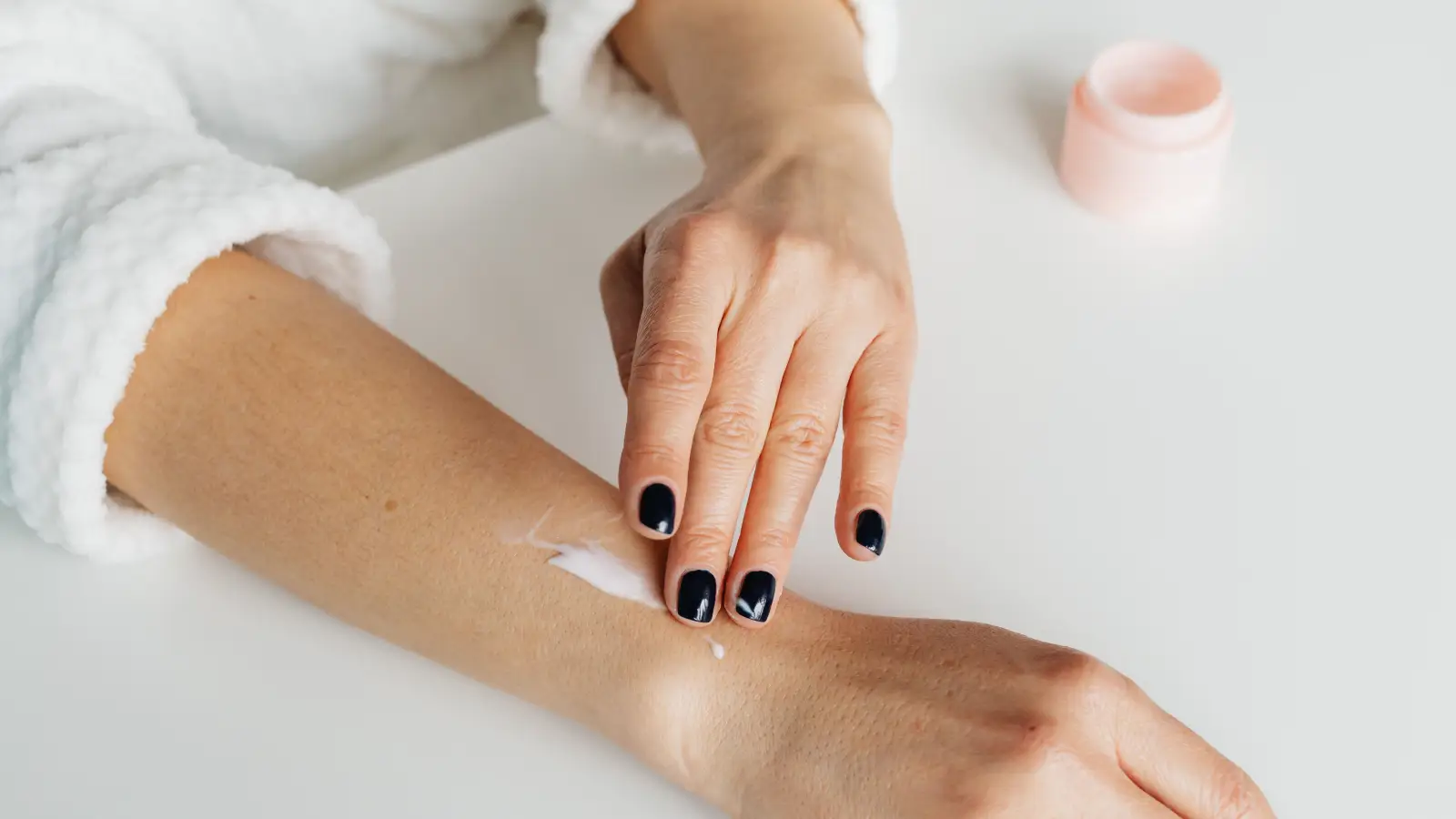
The problem, then, is not the concept of moisturization. It is the failure to distinguish between two fundamentally different mechanisms — humectant action and occlusive action — and to recognize that a product's marketing claim says nothing about its biochemical effect on wounded skin. The more rational approach: use a humectant to pull water into the surface, then an occlusive to arrest transepidermal water loss. This two-step sequence respects the altered physiology of peeling skin and cuts out the variables that make "gentle" products unpredictable.
The table below pairs common post-peel presentations with the moisture strategy that logic favors. It is a heuristic, not a prescription, but it is far more reliable than a product's front-label claim.
| Post-Peel Scenario | Winner | One-Line Reason |
|---|---|---|
| Skin is hot, stinging, visibly red | Humectant-only | Occlusives trap heat, prolonging vasodilation and discomfort. |
| Skin is flaking and tight, no stinging | Humectant under occlusive | The humectant supplies water; the occlusive prevents its escape. |
| Moisturizer is "for sensitive skin" but contains fragrance, lanolin, or irritant plant oils | Neither — reformulate | Persistent low-grade contact dermatitis mimics normal peeling while delaying true repair. |
When skin is hot, stinging, or visibly red
The immediate post-peel state is characterized by vasodilation and a near-complete absence of barrier function. Occlusives — petrolatum, heavy waxes, thick butters — physically seal the surface. In doing so, they retain metabolic heat that the skin is actively trying to dissipate. The result is not merely discomfort; sustained hyperthermia and vasodilation can convert a transient erythema into prolonged vascular dilation, a precursor to the vessels becoming telangiectatic and, importantly, a driver of pigmentary alteration in melanin-rich skin where even subtle, protracted inflammation triggers melanocytic hyperactivity.
The logical solution is a humectant gel formula that adds water to the tissue without blocking heat exchange. Glycerin, panthenol, sodium PCA — these molecules have high water-binding capacity and are unlikely to irritate further, provided the base is free of alcohol and unnecessary botanical extracts. The trade-off is short-lived relief. Without an occlusive, the skin loses moisture rapidly through evaporation. However, in this acute phase, the priority hierarchy is: cooling > hydration longevity.
Avoid products with "cooling" agents like menthol or camphor. Their mechanism is to activate TRPM8 cold receptors, which creates the illusion of cooling while leaving the underlying thermal state unchanged. They can also add a stinging sensation that mirrors the very irritation they claim to soothe.
When skin is flaking and tight but no longer stinging
By day three to five — earlier for superficial peels, later for deeper ones — the inflammatory cascade has downgraded from acute to subacute. Stinging fades, and the skin transitions into a desquamatory phase where the primary obstacle to healing is transepidermal water loss and mechanical friction from dry, cracking scale.
At this juncture, a two-step approach is optimal. Apply a water-based humectant: glycerin is the most predictable choice because its hygroscopic behavior does not depend on a specific molecular-weight range, unlike hyaluronic acid, where very low-molecular-weight fragments can stimulate pro-inflammatory cytokine release in compromised skin. With the skin still damp from the humectant, layer a thin film of petrolatum or a high-silicone occlusive (dimethicone, cyclomethicone). The occlusive should not be thick enough to cause occlusion-related hyperthermia — a "barely there" layer suffices. This configuration maximizes moisture retention while minimizing interference with the heat dissipation still occurring at a reduced rate.
What you sacrifice is time — an extra thirty seconds between products. What you gain is a controlled moist environment that encourages organized desquamation and faster re-epithelialization. A peel that might otherwise drag into a second week often completes its visible shedding within six to eight days.
When the moisturizer says "gentle" but contains fragrance, lanolin, or essential oils
This is the mechanistic error that the article's title confronts. Products labeled "hypoallergenic," "dermatologist-tested," or "for sensitive skin" are not required to exclude common contact allergens. The U.S. FDA does not define these terms. Consequently, a cream can be marketed as gentle while containing fragrance compounds — linalool, limonene, geraniol — that oxidize on contact with air and become potent sensitizers. Lanolin, derived from sheep sebum, is an emollient with a patch-test-confirmed sensitization prevalence of roughly 1-3% in the general population, and significantly higher among individuals with active dermatitis. On a post-peel barrier, even a mild allergy to lanolin manifests as perifollicular erythema, subtle itching, or persistent roughness that mimics the normal peeling process. The clinician cannot always distinguish it by sight; the difference is visible only in time, as healing stalls.
On melanin-rich skin, this subclinical inflammation is not trivial. The same low-grade irritant stimulus that extends peeling by two days also activates the inflammatory arm of melanogenesis, increasing the risk of a hyperpigmented scar or mottled pigment that takes months to fade.
If your current aftercare product lists "fragrance (parfum)," "lanolin," "wool wax alcohol," "limonene," "linalool," or a high concentration of fragrant essential oils like lavender or citrus, discard it from your peel protocol. Neither humectant logic nor occlusive logic can override a continuous irritant signal. Replace it with a minimally formulated alternative — pure petrolatum, a dimethicone gel, or a cream explicitly tested under occluded conditions without these additives. Ingredient lists, not marketing text, are the basis for selection.
Where humectants and occlusives barely differ
Several variables that dominate discussions of moisturizer choice on intact skin are insignificant in the context of a post-peel barrier. The most important variable — the absence of irritants — swamps these fine distinctions.
- Perceived hydration sensation. Subjective moisturization feel does not correlate with transepidermal water loss measurements or healing speed. A product that "feels" more hydrating may simply be heavier, not better at barrier restoration.
- Non-comedogenic claims. On a surface that is shedding its entire stratum corneum at an accelerated rate, the risk of a occluded pilosebaceous unit is negligible. The comedogenicity rating of cyclomethicone or petrolatum is irrelevant during peel recovery.
- Hyaluronic acid molecular weight specifics. Unless the skin is known to react to low-molecular-weight HA with cytokine activation (a phenomenon described in some in vitro models but not uniformly replicated in vivo), the difference between a 50 kDa and a 1,000 kDa HA is largely academic when the goal is acute moisture management.
Stop weighing these. Devote attention to the ingredient list for known irritants and to the two-step timing protocol.
Deal-breakers that rule out one option immediately
Occlusives are automatically ruled out if:
- The skin felt hot for more than 12 hours post-peel and remains brightly erythematous. Trapping residual heat can push a superficial peel into a deeper tissue injury.
- A known allergy to wool alcohols, beeswax, or propolis exists. Many "healing balms" rely on these ingredients.
- The environment is hot and humid, and sweating is active. Heavy petrolatum can obstruct eccrine ducts, causing miliaria that adds an unnecessary inflammatory burden.
Humectant-only is automatically ruled out if:
- The ambient humidity is low (indoor heating, arid climate). Glycerin and HA pull water from the deep into the surface, where it evaporates more quickly in dry air, causing a net dehydration effect over hours unless sealed.
- The product contains propylene glycol in amounts above 20% (common in older gel formulations), which can sting on open skin.
- The user cannot commit to applying an occlusive within 60-90 seconds of the humectant. Without prompt occlusion, the water drawn into the surface is lost to evaporation, effectively wasting the step.
The cost of a coherent aftercare strategy
Price of individual products is a secondary concern. Petrolatum USP is consistently priced at $8–$12 per tube. A fragrance-free glycerin toner costs roughly $12–$18. This is a one-time investment per peel recovery. The true expense is the opportunity cost of a peel that heals poorly: extra days of visible flaking, increased risk of bacterial contamination, and, for melanin-rich skin, the potential cost of treating post-inflammatory hyperpigmentation — which can run into hundreds of dollars for hydroquinone, retinoids, and correctional peels. Contrasted against that, using an $8 occlusive over a $14 humectant is a straightforward economical decision.
FAQ: Questions that arise during peel recovery
Can aloe vera gel substitute for a humectant?
Fresh aloe leaf or a 100% aloe gel preserved with citric acid or potassium sorbate can function as a humectant. However, many commercial aloe gels contain denatured alcohol, menthol, lidocaine, or fragrance — any one of which will worsen post-peel inflammation. Check the full ingredient list. Even then, aloe lacks the molecular film-forming property of an occlusive, so it must be layered under petrolatum or dimethicone once flaking begins.
How soon after a peel is it safe to apply moisturizer?
With superficial peels, a plain humectant can be applied within the first hour if the skin is not weeping. Occlusive application should be delayed until the skin no longer feels hot — typically 6-12 hours, but this varies by peel depth and individual response. Applying an occlusive too early risks heat entrapment; in aggressive peels, this has occasionally led to a phenomenon resembling superficial thermal burn, as described in case series on TCA peels.
Is it necessary to use both a humectant and an occlusive, or will one suffice?
For the first two days, a humectant alone is sufficient and safer. Once desquamation starts, combining them becomes important because the humectant rehydrates the deeper layers while the occlusive prevents surface water loss. Using an occlusive alone on dry, flaking skin creates a seal over dead tissue without providing the water needed for enzyme-mediated desquamation; this can extend the visible peeling phase.
What if I have an allergy to lanolin or petrolatum?
True petrolatum allergy is extraordinarily rare — it is considered one of the most inert substances used in dermatology. If a patient reacts to petrolatum, it is usually due to impurities in non-pharmaceutical grades. Medical-grade petrolatum (USP) is highly purified. For lanolin allergy, confirmed by patch testing, the substitute occlusives are dimethicone, cyclomethicone, or squalane (derived from olive or sugarcane, not shark). Avoid any product listing lanolin, wool wax alcohol, or acetylated lanolin alcohol.
A logic-driven conclusion
The most common post-peel scenario — dry, flaking skin without stinging — is best addressed by a humectant immediately followed by an occlusive, not by either product type alone. To move from uncertainty to a data-driven decision, ask a single question: "Does this product's ingredient list contain fragrance, lanolin, or wool wax alcohol?" If the answer is yes, the product has no role in your peel recovery, no matter what the front label says.
Pigment Curious
We are people who want to better understand skin pigmentation, dark spots, and how different skin tones respond to skincare and professional treatments. We look beyond simple beauty claims, focusing on scientific evidence, clear explanations, and practical knowledge that helps people make more informed decisions about their skin.