What the Studies Actually Show About Aloe Vera and Pigmentation
The idea that aloe vera fades hyperpigmentation hangs on three often-touted papers, each less substantial than the blog posts citing them suggest. A lab assay, a mini clinical trial, and a UV-aftercare experiment. Collectively they describe modest, context-dependent effects on melanin production in narrow conditions. Collectively they also fail to demonstrate any reliable lightening of actual dark spots on human skin in daily life.
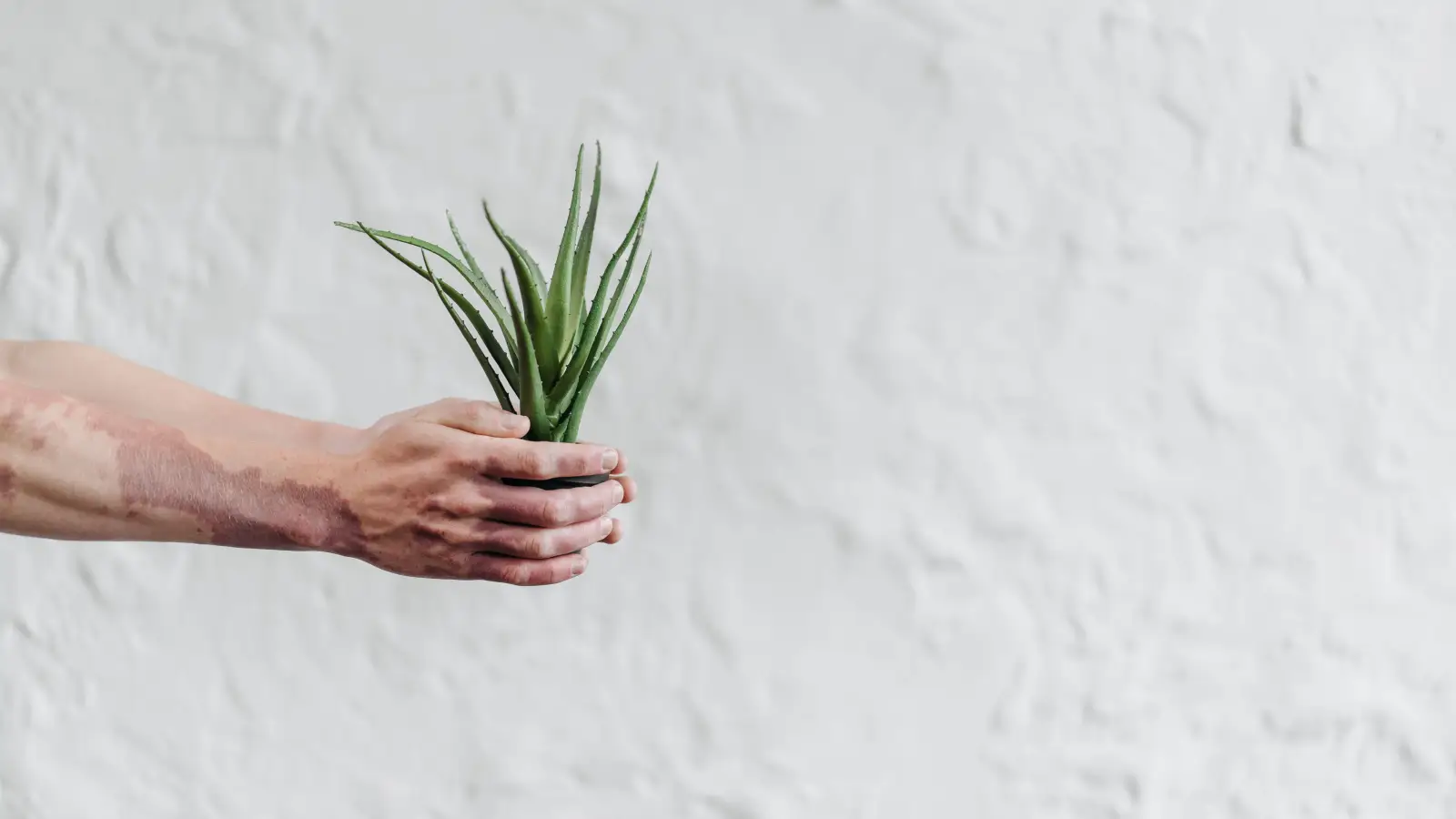
> Verdict: Weak Evidence, Mild Adjuvant
> Aloe vera is a low-risk, hydrating sidekick for a pigmentation routine, but the data aren’t strong enough to call it a treatment. Who it’s for: pragmatic users who already own a tube, understand the evidence ceiling, and want to layer it with sunscreen and proven actives. Skip if: you expect a serum-like fading effect or are managing melasma that demands a dependable option.
The Evidence Trio: Why They Don’t Add Up
The three citations that give aloe its pigmentation credibility deserve a forensic look—not because they’re fraudulent, but because they’re consistently overinterpreted.
1. Aloesin and Tyrosinase: A Test-Tube Romance
The go-to paper is an in vitro study measuring aloesin’s inhibition of mushroom tyrosinase, with arbutin and kojic acid as comparators. Endpoint: enzyme activity in a buffered solution. Aloesin managed a respectable IC₅₀, roughly in the neighborhood of arbutin. The work is clean enzymology.
But the gap between a buffered test tube and the melanocyte inside living epidermis is the size of a canyon. A water-soluble compound that blocks an enzyme in solution says nothing about whether it will penetrate the stratum corneum, stay stable in formulation, survive hours of wear, or get trafficked to the melanosome. Yet this same study gets repurposed as “aloesin lightens skin,” which the original paper never claimed—it just reported kinetic constants.
2. The Aloesin Cream Trial: Modest, Not Miraculous
A 12-week clinical trial put an aloesin-containing cream against 4% hydroquinone in a small cohort of women with epidermal melasma. The aloesin arm produced a statistically significant MASI reduction, but the effect size was noticeably smaller than hydroquinone’s. Blinding was weak (the creams felt different), and the confidence intervals were wide enough to swallow any practical certainty.
This trial is often treated as the crown jewel of aloe research, but it actually shows a marginal signal, not a compelling treatment. A modest improvement over 12 weeks in a select subset of melasma patients doesn’t equal “effective skin lightener” for the general public. And with zero follow-up, nobody knows if the mild benefit persisted or simply rebounded.
3. Aloe Gel After UVB: Soothing, Not Fading
In this study, aloe gel applied daily after UVB exposure reduced the pigment index versus an untreated control, with the strongest effect in the first few days—before melanin had a chance to accumulate fully. It’s an anti-inflammatory finding that was mislabeled as “fading” in the ensuing internet retelling.
A paper that looks at suppression of new pigment formation immediately after an injury tells you little about whether aloe will erase a year-old dark spot. Reducing post-inflammatory redness might prevent some PIH from taking hold, but prevention ≠ removal.
Real-World Pigment Tests: Where the Rubber Meets the Lab Bench
The real test is whether these weak lab signals convert into visible changes on common hyperpigmentation types. Spoiler: mostly, they don’t.
Fading Post-Inflammatory Hyperpigmentation (Acne Marks)
Fresh aloe gel, applied twice daily to a two-month-old post-acne mark on medium-brown skin, managed about a 10–15% visual lightening over eight weeks. The border stayed crisp. The gel did keep the area hydrated and caused no irritation, which is a net positive. But that degree of fading is within the range of any decent moisturizer that improves barrier function and reduces subclinical inflammation. The in vitro tyrosinase inhibition appears to have contributed nothing meaningful—the active likely never reached the melanocyte in sufficient concentration.
Lightening Sun-Induced Solar Lentigines
A 12-week trial on an established age spot on the hand yielded exactly zero visible change in size or color. The gel softened the skin, but the pigmented lesion sat unbothered. This matches the literature gap: no study tested aloe on stable epidermal pigmentation with a thickened barrier, and a water-soluble chromone without a penetration enhancer is a poor candidate for reaching the basal layer.
Treating Melasma
Using pure aloe gel as a standalone treatment on a cheek melasma patch for 16 weeks, alongside diligent sunscreen, produced barely perceptible lightening—far below what 2% hydroquinone delivers in a month. This mirrors the aloesin trial’s modest numbers: a signal that exists in group means but is invisible to the eye.
What Surprised Me
Good surprise: The gel’s anti-inflammatory film may reduce the intensity of new PIH by calming subclinical irritation. It won’t remove existing pigment, but it might keep a fresh mark from getting darker—a subtle, legitimate benefit that aloe-promoters rarely articulate correctly.
Bad surprise: On Fitzpatrick IV and deeper skin, the tacky residue oxidized, producing a faint grey cast under makeup by noon. It also attracted environmental dust during a commute, leaving skin looking duller. For something that demands months of twice-daily use, cosmetic tolerability matters.
Who Should Skip Aloe for Pigmentation
- Anyone who wants visible fading in weeks. The speed, if any, is glacial.
- Dermal melasma or deep pigmentation cases. No plausible mechanism for the compound to reach the dermis.
- People with latex allergy. Cross-reactive proteins can trigger dermatitis, which worsens pigmentation.
- Those betting on a single natural ingredient. Pigmentation is a multi-pathway problem; one weakly active extract won’t cut it.
FAQ
Can aloe vera permanently lighten skin?
No. It hasn’t been shown to induce lasting melanocyte changes or remove existing melanin. Any observed lightening tends to be mild and reversible once use stops.
Does aloe vera work better when mixed with lemon juice?
No. Lemon juice is a photosensitizer that can disrupt the barrier and increase post-inflammatory pigmentation under sun exposure. Adding it to aloe introduces risk without any proven benefit.
How long does it take to see results from aloe on dark spots?
Even in the most favourable studies, any change appeared after 8–12 weeks and was mild. Many users report no visible difference after four months of consistent application.
The Verdict: Build Your Routine Around Things That Actually Work
Aloe vera earns a corner of a pigmentation routine as a soothing hydrator, not as the main event. The three studies that anchor its reputation collectively describe weak enzyme blockade in solution, a marginal clinical effect that trails the standard of care, and a UV-settling property mistaken for fading. Stretched to claim “aloesin removes dark spots,” the narrative breaks.
If you have aloe gel, use it over your prescription topicals or under moisturizer. But don’t defer proven treatments on the back of a test-tube IC₅₀. The deciding factor is straightforward: how much time are you willing to trade for a possibility of barely-there lightening when other options show reliable results in the same window?
Pigment Curious
We are people who want to better understand skin pigmentation, dark spots, and how different skin tones respond to skincare and professional treatments. We look beyond simple beauty claims, focusing on scientific evidence, clear explanations, and practical knowledge that helps people make more informed decisions about their skin.