Why Your ‘Laser Spot Treatment’ Might Be the Wrong Laser
If your “laser spot treatment” has ever left behind darker pigment, consider this: IPL, Q-switched nanosecond, and picosecond devices fire pulses separated by orders of magnitude — milliseconds, nanoseconds, picoseconds. That gap decides whether a deep dermal spot shatters or simmers under the skin. For any pigment that looks blue‑grey, sits unchanged under a Wood’s lamp, or persists after topical therapy, IPL is useless. The tool you need is a Q‑switched nanosecond laser — or, more often now, a picosecond laser. The first delivers megawatt-level shockwaves to crack melanin. The second pushes peak power into the gigawatts, fragmenting pigment with so little heat that even very dark skin can heal without a post‑inflammatory hyperpigmentation flare.
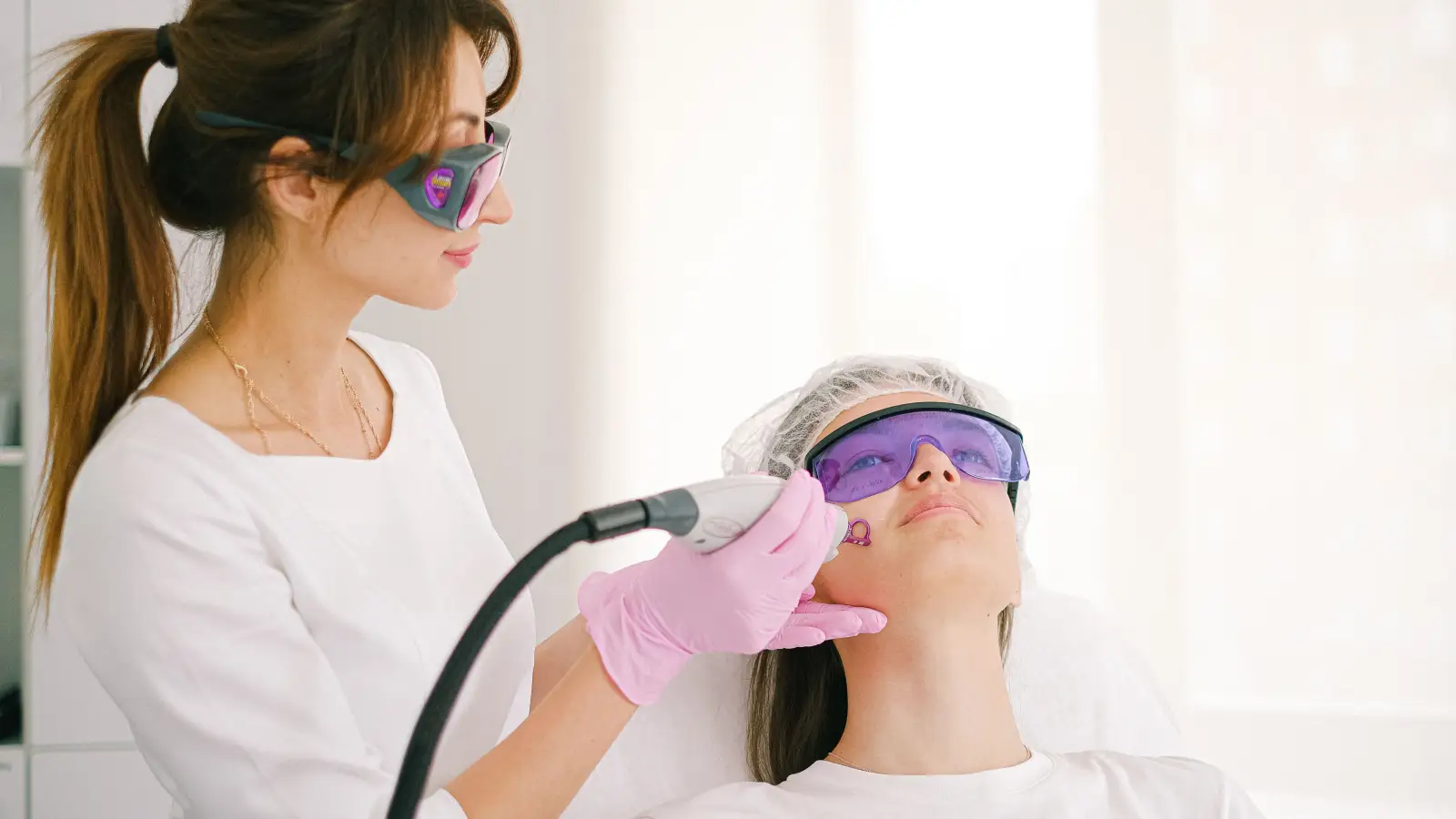
Stop Using IPL for Dermal Pigment: Here’s the Laser That Actually Works
Q‑switched nanosecond lasers (Nd:YAG 1064 nm, ruby 694 nm) are the standard for nevus of Ota, Hori’s macules, and deep acquired melanocytosis. IPL’s millisecond-long pulse and broad, unfocused light output simply heat the epidermis while the deep pigment sits untouched. Picosecond lasers raise the bar. Their pulse — 300 to 900 picoseconds — triggers a near‑pure photoacoustic effect. Melanin shatters into nanoparticles too small to re‑aggregate, and the risk of thermal collateral damage plummets. In skin of color, that difference is not subtle; it’s the difference between clearance and a dark, lingering mark.
IPL vs. Q‑Switched vs. Picosecond: Side‑by‑Side Comparison
| Criterion | IPL | Q‑Switched Nanosecond | Picosecond |
|---|---|---|---|
| Pulse Duration | Milliseconds | Nanoseconds | Picoseconds |
| Peak Power | Low | Megawatts | Gigawatts |
| Melanin Absorption Specificity | Poor (broadband) | High (single wavelength) | Very high (same wavelengths, shorter pulse) |
| Risk of PIH (Fitzpatrick IV–VI) | High | Moderate | Low |
| Best For | Fair‑skin freckles only | Dermal melanocytosis, deep lentigines | All dermal pigment, especially in darker skin |
| Typical Cost per Session | $300–$600 | $400–$800 | $600–$1,200 |
IPL for Spots: The Wrong Device for Anything Below the Epidermis
IPL is not a laser. It’s a flashlamp that pushes visible light across 500–1200 nm. The energy lands on hemoglobin, water, and melanin all at once, and none of it focuses sharply. A melanosome’s thermal relaxation time clocks in at about 1 microsecond; IPL pulses stretch for 1 to 100 milliseconds. That mismatch causes slow, diffuse heating that coagulates dermal proteins before it ever generates a shockwave. The deep pigment remains intact while the overlying skin reddens, crusts, then — on melanin‑rich skin — frequently darkens for weeks.
IPL has exactly one viable lane: superficial, epidermal lentigines on Fitzpatrick I–III skin. The moment a spot appears blue‑grey, lies flat below the skin surface, or resists topical lighteners, an IPL handpiece becomes a liability.
Q‑Switched Nanosecond Lasers: The Foundation of Dermal Spot Treatment
Q‑switching compresses the laser’s energy into a pulse so short that peak power jumps into the megawatt range. This isn’t gradual heating; it’s an explosive expansion. A 5–20 ns pulse from a 1064 nm Nd:YAG hits a melanosome, creates a pressure wave, and physically breaks the pigment into debris that macrophages can carry away. That mechanical action explains why Q‑switched devices reliably clear nevus of Ota over 5–10 sessions — and why they avoid the widespread burn IPL would cause.
The limitation: nanosecond pulses still leave behind some heat. In Fitzpatrick IV–VI skin, that stray thermal energy can rile melanocytes into overdrive, producing post‑treatment darkening. The operator must trade energy for safety, often stretching the series out further to keep the patient’s pigment stable. That trade‑off is precisely why the field moved to picosecond technology.
Picosecond Lasers: Where Speed and Safety Converge
A picosecond laser delivers a 300–900 ps pulse. At that duration, a 1064 nm beam can hit peak powers above 600 megawatts. The melanosome fails structurally before heat has time to spread. The result: pigment particles measured in nanometers — far finer than nanosecond fragmentation produces — and no significant thermal elevation in the surrounding dermis. Clinically, this shows up as immediate, transient whitening of the spot with minimal erythema and near‑zero crusting.
For skin of color, the safety advantage is decisive. Less heat means less melanocyte stimulation, translating directly to a lower rate of post‑inflammatory hyperpigmentation. The 1064 nm picosecond wavelength further spares epidermal melanin because it is absorbed weakly by melanin relative to 755 nm; yet it penetrates deeply enough to reach dermal deposits. In a head‑to‑head scenario for a deep dermal spot on Fitzpatrick IV–VI skin, picosecond 1064 nm wins on both speed and safety — it frequently clears lesions in fewer sessions than a Q‑switched laser, and the reduced thermal load lets dark skin heal cleaner.
Pulse Duration, Peak Power, and Melanin Absorption: The Science That Separates These Devices
Pulse Duration: Thermal Coagulation vs. Mechanical Disruption
Any pulse longer than a melanosome’s ~1 µs thermal relaxation time will heat and coagulate tissue. IPL, at milliseconds, sits entirely in that thermal zone. Nanosecond pulses reach 5–20 ns, still longer than the thermal relaxation time by a factor of 5–20, so some heat remains. Picosecond pulses at 300–900 ps are shorter than the relaxation time, flipping the effect almost entirely to photoacoustic — stress‑confined ablation — with minimal thermal component.
Peak Power: How Hard You Hit the Pigment
Peak power determines how forcefully the shockwave shreds melanin. A 1064 nm Q‑switched pulse of 100 mJ in 5 ns yields 20 MW. A picosecond pulse of 200 mJ in 300 ps yields over 660 MW. That order‑of‑magnitude difference translates into finer particles and fewer treatments. It also explains why picosecond lasers can generate visible “snow” (intracellular cavitation bubbles) without epidermal burn.
Melanin Absorption Curves: Selecting Wavelength for Skin Tone
Melanin absorption falls steeply from UV through visible to near‑infrared. Ruby (694 nm) is absorbed so avidly that it becomes risky in darker skin. Nd:YAG (1064 nm) sits on the lower‑absorption tail, penetrating deeper while sparing epidermal melanin — the safe choice for Fitzpatrick IV–VI. Picosecond platforms offer both wavelengths, enabling customization. IPL’s polychromatic output cannot be tuned this way, making it a blunt instrument.
Downtime and PIH Risk
IPL → erythema, mild crusting, plus a deep‑tissue burn risk. Q‑switched → pinpoint bleeding, scabbing, and a real chance of PIH in skin of color unless settings are conservative. Picosecond → brief whitening, mild erythema, fast resolution; the lowest PIH risk of the three because thermal stress is nearly absent.
Session Count
Epidermal spots: 1–2 sessions for IPL or Q‑switched. Dermal lesions (Ota, Hori’s): 5–10 Q‑switched sessions; often 3–6 picosecond sessions, though lesion‑specific. The real gain is reducing cumulative thermal injury, not just saving a few appointments.
Match the Laser to the Spot, Not the Spot to the Machine
Superficial Freckles and Sunspots
On Fitzpatrick I–II skin, both IPL and a 532 nm Q‑switched KTP laser work. IPL adds modest background redness improvement. On tanned or olive skin, IPL introduces an unacceptable PIH risk; a low‑fluence Nd:YAG Q‑switched or picosecond laser is safer.
Deep Dermal Lesions (Nevus of Ota, Hori’s Macules, Congenital Nevus)
Only Q‑switched or picosecond lasers deliver the required peak power. Picosecond 1064 nm is now the first choice in melanin‑rich patients because it clears faster and produces fewer pigment complications. Nanosecond 1064 nm remains a solid alternative when cost is a limiting factor.
Melasma: Tread Carefully
Laser is a second‑line adjunct to topical therapy. Low‑fluence Q‑switched or picosecond toning may lighten mixed‑type melasma, but IPL’s broad‑spectrum heat often reactivates it. No laser replaces rigorous sun protection and pigment‑stabilizing topicals.
Skin Tone Decides Everything
Fitzpatrick IV–VI: thermal damage is the enemy. Picosecond 1064 nm offers the widest safety margin. Q‑switched 1064 nm can work, but it demands a slow, conservative protocol. IPL has no place deeper than the epidermis in these skin types.
If the Spot Is Deep, the Laser Must Be Fast
A brown spot’s appearance tells you little about its depth. A Wood’s lamp or dermatoscopic exam reveals whether pigment sits in the epidermis, dermis, or both. Treating a dermal deposit with IPL — or with a Q‑switched laser at the wrong wavelength and fluence — can leave behind an angry, darker patch that takes months to resolve. The right device matches the pulse duration to the thermal relaxation time of the melanosome, delivers peak power high enough to shatter pigment without cooking the skin, and respects the patient’s melanin baseline. That rule eliminates IPL for almost anything beyond light‑skinned freckles, puts Q‑switched nanosecond lasers in the standard‑care slot, and pushes picosecond lasers to the front for anyone whose skin carries extra melanin.
Spot Treatment Laser FAQs
Is IPL ever the smarter choice for brown spots?
Only for superficial, epidermal freckles on Fitzpatrick I–II skin where the patient also wants some redness reduction. For any other situation, the risk‑benefit tilts sharply against it.
How many sessions will a deep dermal spot require?
Nevus of Ota typically needs 5–10 Q‑switched sessions or 3–6 picosecond sessions, spaced 6–8 weeks apart. Depth, density, and skin type all influence the total.
Does a picosecond laser hurt more?
The pain is comparable — a sharp, elastic‑band snap — but the absence of lingering heat often makes it feel more tolerable than a Q‑switched nanosecond pulse.
Can a laser make my pigmentation worse?
Absolutely. Especially when IPL or high‑fluence thermal lasers are used on darker skin. Post‑inflammatory hyperpigmentation is the most common complication; picosecond lasers reduce that risk dramatically because they generate negligible heat.
Pigment Curious
We are people who want to better understand skin pigmentation, dark spots, and how different skin tones respond to skincare and professional treatments. We look beyond simple beauty claims, focusing on scientific evidence, clear explanations, and practical knowledge that helps people make more informed decisions about their skin.