For Fitzpatrick IV-VI: The Safe Laser Wavelengths for Spots
The only laser technology worth your time and money for spots on Fitzpatrick IV-VI skin is a 1064 nm Nd:YAG, delivered as a picosecond or Q-switched pulse. Every other wavelength either burns you or does nothing at a safe dose. Forget IPL, 755 nm alexandrite, and anything short of near-infrared—the physics decides that for you.
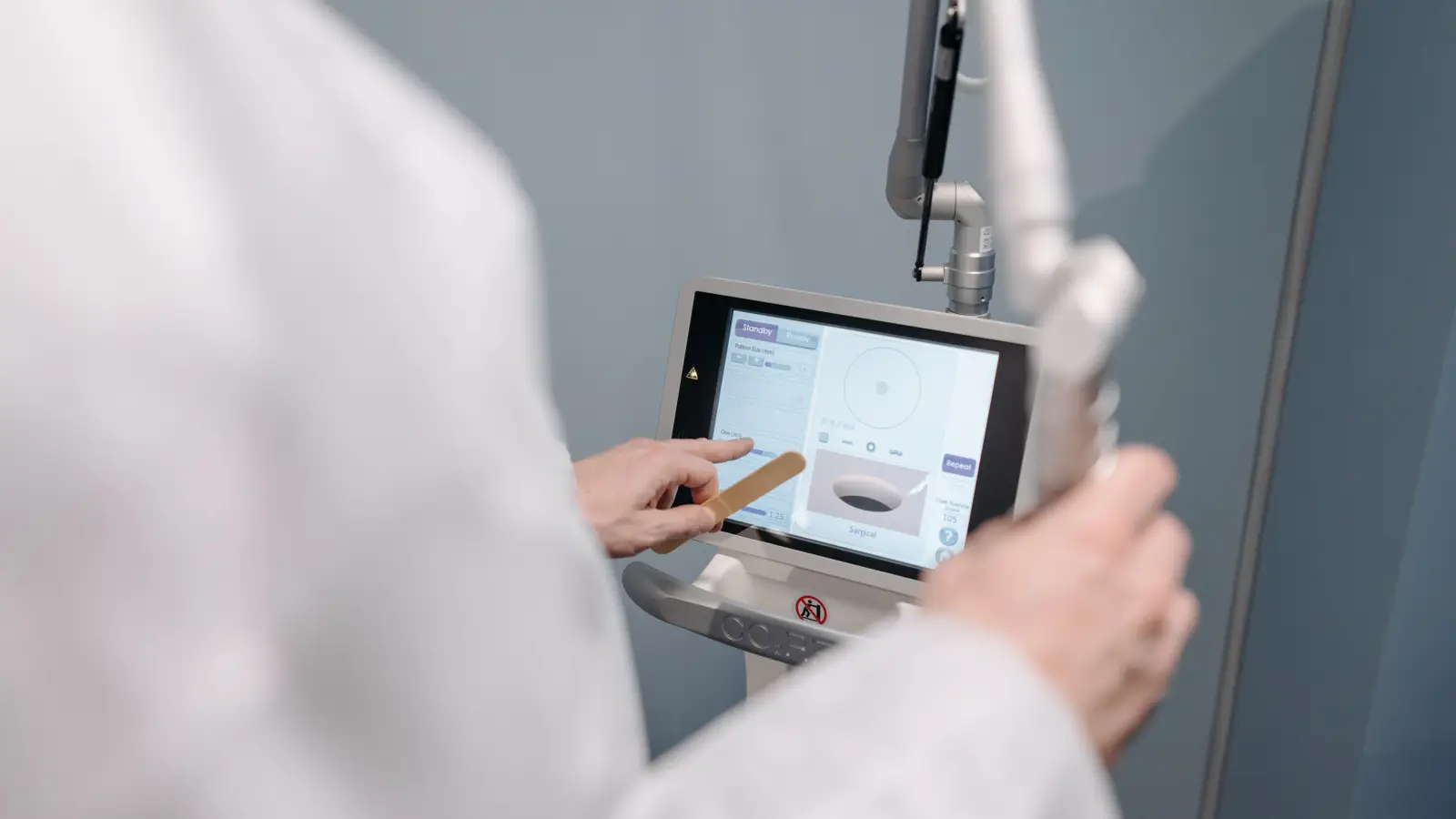
The reason is brutally simple: melanin gobbles up short-wavelength light. At 532 nm, absorption is roughly ten times what it is at 1064 nm. That longer wavelength glides through the heavily pigmented epidermis and deposits its energy where the spot lives, not where your skin’s natural protection sits. Combine that with a pulse duration that shatters pigment via a pressure wave before heat can leak out, and you have the safest mechanism modern physics can offer. This isn’t nuance; it’s the difference between clearing a spot and triggering a dark, angry scar that lasts months.
Laser Wavelengths at a Glance: Safety Profiles for Fitzpatrick IV-VI
| Technology | Wavelength (nm) | Pulse Duration Options | Melanin Safety for IV-VI | Best For | Contraindications |
|---|---|---|---|---|---|
| Nd:YAG (Q-switched, picosecond, long-pulsed) | 1064 | Nanosecond, picosecond, millisecond | Safe with proper settings | Lentigines, sunspots, stable melasma, PIH | Active infection, recent tan |
| Alexandrite (picosecond only) | 755 | Picosecond | Fitzpatrick IV with extreme caution; never for V-VI | Stubborn lentigines in type IV | Fitzpatrick V-VI, melasma, anyone without epidermal cooling precision |
| IPL (Intense Pulsed Light) | 500–1200 (broadband) | Millisecond | Never for V-VI; avoid for IV | None for skin of color | Any melanin beyond Fitzpatrick III |
| KTP (532 nm) | 532 | Nanosecond, millisecond | Criminal for IV-VI | Not applicable | All melanin-rich skin |
The Physics Behind 1064 nm Nd:YAG: Why It Is the Safest Wavelength for Dark Skin
Melanin’s absorption coefficient plummets past 700 nm and hits a floor around 1064 nm. At that point, the light is more interested in water and hemoglobin than in your epidermal melanin. The result is a therapeutic window wide enough that even a modest fluence can disrupt a melanosome without frying the basal layer.
Q-Switched vs Picosecond: Thermal Spread Stops Here
Q-switched 1064 nm pulses last billionths of a second—shorter than the time it takes for heat to leave a melanosome. That’s thermal confinement. Picosecond pulses go further: they are so brief that the primary damage mechanism flips to stress-induced fragmentation. The pigment shatters before it can even heat up significantly. For melanin-rich skin, that mechanical action slashes the chance of a PIH flare because you’re not cooking the surrounding tissue.
Long-Pulsed 1064 nm: A Niche Tool, Not a First Choice
A millisecond pulse heats tissue through accumulation, not confinement. For purely pigmented spots, this mode introduces unnecessary thermal risk. Save it for lesions where a vascular component can’t be ignored, and only when a specialist can dial back fluence to the bare minimum. It is not the workhorse; it’s the backup plan.
755 nm Alexandrite: A Calculated Gamble—and Not Worth It for V-VI
The 755 nm wavelength sits in a danger zone for darker skin. It’s absorbed three to four times more by melanin than 1064 nm. The math is clear: on Fitzpatrick IV, you can sometimes skate by with aggressive cooling and low energy, but you’re fighting the absorption curve the entire time. On Fitzpatrick V and VI, you lose that fight. Blistering, hypopigmentation, and horrific PIH are near-guarantees. No pulse duration can rescue a wavelength that’s fundamentally too hungry for melanin.
IPL: Why Broad-Spectrum Light Is Off the Table for Types V and VI
IPL isn’t a laser—it’s a flashbulb with a filter. That flashbulb still throws a mess of green and yellow light into skin, exactly where melanin’s absorption is highest. You can slap a cutoff filter on it, but you’ll either leave enough short-wave energy to damage the epidermis or filter so much that you get zero clinical effect. It’s a rigged game. Any clinic offering IPL spot removal on Fitzpatrick V-VI is betting your skin they can beat the laws of optics. They can’t.
532 nm KTP and Other Short Wavelengths: Zero Margin, Maximum Damage
At 532 nm, epidermal melanin acts as a lightning rod. Even a trivial fluence produces steam bubbles at the basal layer—visible as immediate whitening that precedes blistering and stubborn PIH. There is no “safe” setting for Fitzpatrick IV, V, or VI. This wavelength should be banned from every conversation about treating spots on melanin-rich skin.
Head-to-Head on What Matters Most
Melanin Absorption and Epidermal Safety
1064 nm Nd:YAG opens a genuine safety margin: you can increase fluence to reach a deep spot without crossing the epidermal damage threshold. Alexandrite 755 nm crackles at the edge. IPL and 532 nm give you no margin at all—the epidermis absorbs so much energy that by the time you get any effect, you’ve already burned the skin.
Pulse Duration: Q-Switched, Picosecond, or Long-Pulsed
For pigment destruction, picosecond 1064 nm is the physics frontrunner. It confines energy both in time and space, limiting collateral heating to a degree no nanosecond pulse can match. Q-switched 1064 nm works and works well, but it tolerates a bit more heat diffusion. Long-pulsed is an outsider: its heat builds up, making it a liability unless you’re deliberately targeting a vascular component.
Post-Inflammatory Hyperpigmentation Risk
PIH is the complication that makes this whole conversation personal. Wavelength is the heavyweight factor: shorter means guaranteed inflammation. Within the safe 1064 nm family, picosecond nudges ahead because the injury is mechanical rather than thermal—melanocytes are less provoked. That said, an experienced clinician can keep Q-switched PIH rates low with conservative settings. IPL and alexandrite on skin of color? PIH isn’t a risk; it’s a near-certainty.
Depth of Penetration and Spot Clearance
1064 nm penetrates deeper, which sounds like a drawback for superficial spots but isn’t. Epidermal lentigines still absorb enough energy because the melanosome density is high. Most spots clear in a few sessions. Alexandrite 755 nm might work slightly faster on some Fitzpatrick IV lesions, but that speed comes at a safety cost you don’t need to pay.
Cost and Practical Access
Expect to pay $250–600 per session for a 1064 nm picosecond or Q-switched treatment, depending on spot size and geography. Alexandrite may be priced similarly but shouldn’t be chosen on cost. IPL packages are often cheaper—and that low price is a red flag because the physics says it’s money flushed down the drain alongside your healthy pigment.
Which Treatment Fits Your Skin and Spot Type?
For Sun Lentigines and Freckles
Go straight to a 1064 nm picosecond or Q-switched Nd:YAG. Two to four sessions, 4–6 weeks apart, will lift most solar lentigines on Fitzpatrick IV-VI. Alexandrite 755 nm only enters the conversation if you’re Fitzpatrick IV and have a specialist willing to defend the decision—and you’re prepared to accept the risk.
For Melasma
Melasma demands restraint. Low-fluence 1064 nm picosecond toning, applied over multiple sessions without visible endpoints, can soften melasma on darker skin without triggering a rebound. Q-switched 1064 nm can work at sub-thermal threshold fluences; any hint of endpoint (frosting or graying) means you’ve already gone too far. IPL and alexandrite are non-starters.
For Post-Inflammatory Hyperpigmentation
Treating PIH with a laser is counterintuitive, but a very gentle 1064 nm picosecond session can fragment the dermal melanin left behind after a healed pimple or rash. The skin must be calm before you go in—no active redness or lingering irritation. This is an advanced, dermatologist-only protocol, not a casual spa treatment.
For Mixed or Recalcitrant Lesions
If a spot has both pigment and a persistent red component, a dermatologist might pair picosecond 1064 nm with a low-fluence long-pulsed 1064 nm beam, sticking entirely to the 1064 nm family. That strategy avoids the trap of shorter wavelengths and leverages the physics advantage across both targets.
Frequently Asked Questions
Is any IPL safe for Fitzpatrick V skin?
No. The broadband emission inevitably dumps energy into the melanin-absorbing region. Filters don’t fix the fundamental spectrum problem. Any provider claiming otherwise is either ignorant of the photobiology or willing to gamble with your skin.
Can a 1064 nm laser worsen melasma?
Yes, if you overshoot the fluence. Aggressive energy galvanizes melanocyte activity, sparking a melasma flare. Safe protocols keep fluence low, spot size large, and sessions spaced to allow the skin to forget it was treated. Expertise matters as much as the wavelength.
Are at-home laser or IPL devices an option for dark skin?
Absolutely not. Over-the-counter devices are engineered for the lowest common denominator—light skin. They can’t adjust wavelength or pulse parameters to the precision required for Fitzpatrick IV-VI. Using one will result in a burn, PIH, or worse.
How many sessions before spots fade?
Expect visible improvement after two to three sessions. Full clearance often takes four to six. Deeper dermal spots may need more. Maintenance visits every six to twelve months fend off new lentigines if sun protection slips.
Does health insurance cover laser spot removal?
Almost never. When spots are purely cosmetic, insurers classify the procedure as elective. Only a biopsy-driven treatment for a suspicious lesion qualifies. Always get a clear cost breakdown upfront.
The Bottom Line: The Physics Forces Your Hand
1064 nm Nd:YAG, preferably picosecond and secondarily Q-switched, is not just the best option—it’s the only physics-based option for treating spots on Fitzpatrick IV-VI skin. The absorption numbers don’t negotiate. IPL, 532 nm, and 755 nm on type V-VI are not “risky”; they’re wrong. Choose a clinician who understands wavelength-pulse dynamics and respects melanin-rich skin, because on your skin, the physics is either your shield or your enemy.
Pigment Curious
We are people who want to better understand skin pigmentation, dark spots, and how different skin tones respond to skincare and professional treatments. We look beyond simple beauty claims, focusing on scientific evidence, clear explanations, and practical knowledge that helps people make more informed decisions about their skin.