3 Peel Depths, 6 Fitzpatrick Types: A Safety Guide
Matching a chemical peel to Fitzpatrick type without a depth-appropriateness matrix invites permanent hypopigmentation. This guide specifies safe Fitzpatrick ranges for four agents—mandelic acid, salicylic acid, 20% glycolic acid, and 15% TCA—and documents why deep peels are contraindicated for skin types IV through VI due to irreversible melanocyte destruction.
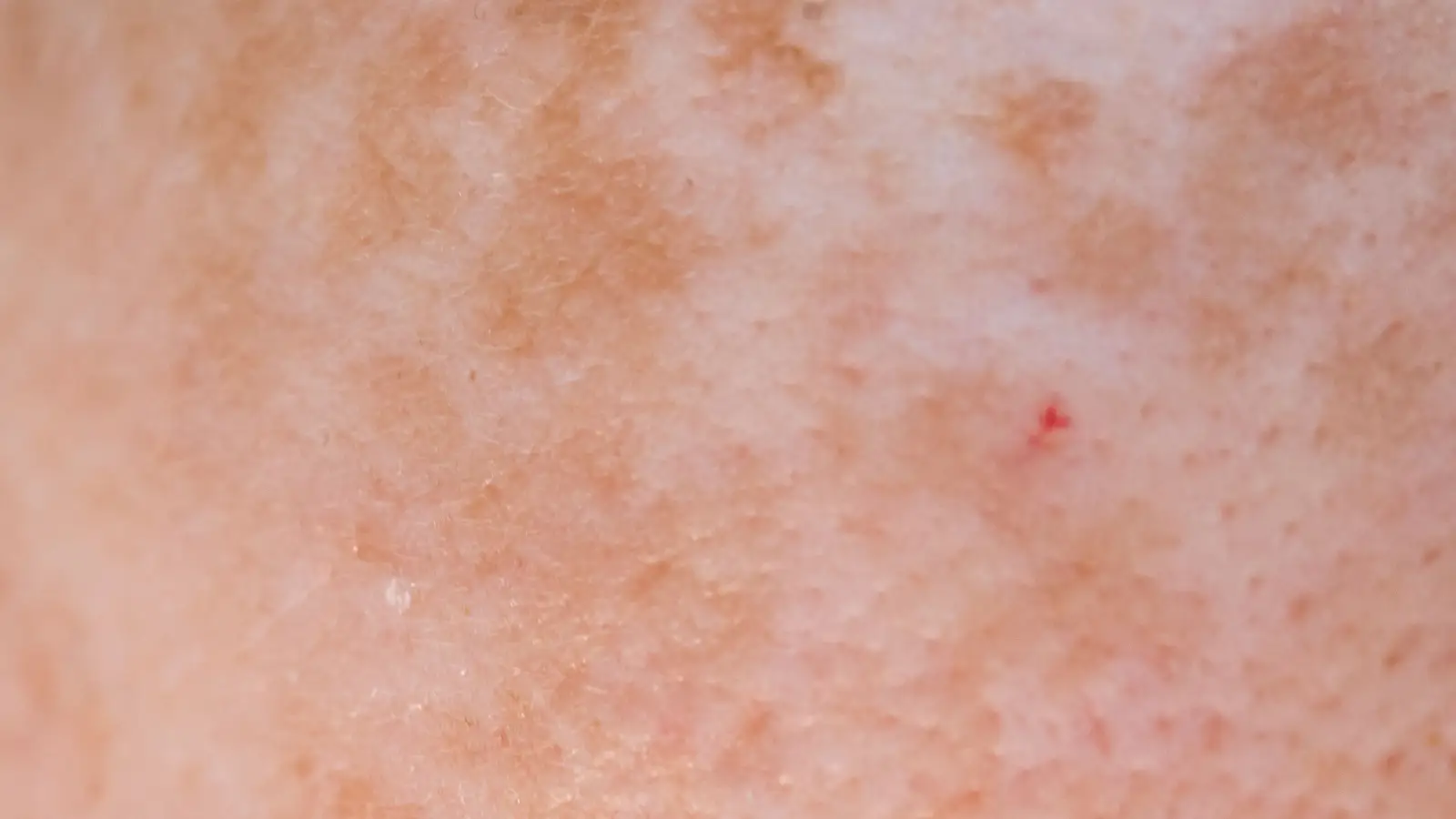
Three Depths, Six Tones, and the Non-Negotiable Ban on Deep Peels in Melanin-Rich Skin
Peel procedures operate at three wounding depths: superficial (epidermis), medium (papillary dermis), and deep (reticular dermis). The Fitzpatrick scale classifies six skin types by melanin activity and phototype. The intersection of depth and type yields a hard rule: on types IV, V, and VI, medium and deep peels risk permanent depigmented patches.
This is not a prohibition against all exfoliation. Superficial peels—mandelic, salicylic, and weight—tested glycolic—are safe across the full Fitzpatrick range when used correctly. Medium depth, anchored by 15% TCA, narrows the safe window to types I–III. Deep peels have no acceptable application on skin types IV and above. Knowing this matrix separates a controlled, even result from a hypopigmentation scar that no treatment can reverse.
The Depth–Skin Tone Safety Ladder: Four Sequential Checkpoints
Every peel choice should pass through four checkpoints in order. Miss one, and the risk of a pigment complication climbs on melanin-active skin.
Checkpoint 1: Determine the True Fitzpatrick Type Using More Than a Burn History
Do not rely on a simple sunburn questionnaire. Types IV and V often tan easily and rarely burn, leading to underestimation. Patients of African, South Asian, or Latin American descent typically fall into types IV–VI. The more reliable indicator is post-inflammatory hyperpigmentation (PIH): if everyday acne marks or scratches leave persistent dark spots, the skin is melanotically reactive. That alone should push the assumed Fitzpatrick type to IV or higher, regardless of basal color.
A practical rule: when in doubt, classify as the higher type and restrict peel depth accordingly.
Checkpoint 2: Map the Peel Depth to the Melanocyte Injury Curve
Each depth carries a distinct melanocyte risk profile.
- Superficial peels injure the upper epidermis only. Melanocytes remain intact. These are safe across all Fitzpatrick types when the agent is well-tolerated.
- Medium peels reach the papillary dermis. The inflammatory cascade can overstimulate melanocytes in types IV–VI, causing PIH, or directly destroy melanocytes, leading to permanent hypopigmentation. Safe only for types I–III.
- Deep peels destroy melanocytes throughout the reticular dermis. Repigmentation is impossible in melanin-rich skin because the pigment cell population cannot be restored. Contraindicated for types IV+.
This mapping functions as a gate: any agent that produces medium or deep wounding is automatically barred for melanin-rich skin.
Checkpoint 3: Assign the Agent Using the Depth–Fitzpatrick Matrix
Apply the four named agents against the mapped depth:
- Mandelic acid (superficial) — Its large molecule limits penetration depth. Safe for Fitzpatrick I–VI. It is the reference superficial peel for PIH-prone skin because the inflammatory stimulus is minimal.
- Salicylic acid (superficial, lipid-soluble) — Penetrates pores without dermal wounding. Safe for I–VI. Anti-inflammatory properties make it a default for acne in darker skin tones.
- 20% glycolic acid (superficial with concentration-dependent reach) — Still superficial, but higher penetration than mandelic. Safe for I–IV. For V–VI, use only with reduced contact time and a negative patch test; even then, risk of PIH is not zero.
- 15% TCA (medium depth) — Reaches the papillary dermis. Safe for I–III. At type IV, a very superficial application under frost monitoring may be considered by a specialist, but the margin for error is thin. Contraindicated for V–VI.
Checkpoint 4: Confirm Tolerance with a Patch Test and a 2-Week Observation Window
No chart replaces a localized test. Apply the chosen agent to a small area behind the ear or on the jawline. Wait a full two weeks—the typical window for delayed pigment changes. If any lightening or persistent darkening appears, the peel must be abandoned for that individual. After a full-face peel, monitor for hypopigmentation at 4–8 weeks; if it appears, stop the series permanently.
Peel Depth–Fitzpatrick Reference Table
| Agent | Depth | Safe Fitzpatrick Range | Critical Constraint |
|---|---|---|---|
| Mandelic acid | Superficial | I–VI | Minimal irritation; first choice for PIH-prone skin |
| Salicylic acid | Superficial | I–VI | Anti-inflammatory; preferred for acne across all tones |
| 20% Glycolic acid | Superficial | I–IV safe; V–VI only with cautious, shortened contact and confirmed patch test | Higher penetration risk; PIH possible on reactive skin |
| 15% TCA | Medium | I–III safe; IV with extreme caution and superficial technique only; V–VI contraindicated | Hypopigmentation risk escalates sharply beyond type III |
| Deep peel (>35% TCA, phenol) | Deep | I–III only; contraindicated for IV+ | Permanent depigmentation; melanocytes destroyed irreversibly |
Worked Example: Acne Peel for a Type III Patient vs. a Type V Patient
A clinician evaluates two acne patients.
Patient 1: Fitzpatrick III. Checkpoint 1 classifies skin as light brown, minimal PIH history. Checkpoint 2 permits medium depth. Checkpoint 3 selects 15% TCA. A patch test is uneventful. Checkpoint 4 confirms tolerance. The peel proceeds with single-layer application; healing is even, without pigment changes.
Patient 2: Fitzpatrick V. Checkpoint 1 notes deep pigmentation, extended PIH after blemishes. Checkpoint 2 immediately rules out medium depth. Checkpoint 3 directs to superficial agents. Salicylic acid 20% is chosen for its pore-clearance and anti-inflammatory effect. A patch test is clean. The peel yields visible improvement without depigmentation or PIH.
This case shows the ladder prevents a medium-depth wound on reactive skin and instead uses a depth-appropriate superficial alternative.
Common Failures in the Safety Ladder
Confusing Concentration with Depth: 15% TCA on Type V Skin
A 15% numerical label can mislead practitioners into believing the peel is mild. TCA at 15% is a medium-depth wound. On Fitzpatrick V or VI, it produces hypopigmented patches that appear weeks later and never repigment. The outcome is permanent.
Bypassing the Patch Test Because the Agent Has a Natural Origin
Mandelic acid (from bitter almonds) and glycolic acid (from sugar cane) sound benign. This can lead a user to skip the patch test. On hyper-reactive melanocytes, even a superficial peel can trigger a stubborn dark patch. A 1 cm test spot prevents a widespread complication.
Collapsing the Inter-Peel Pigment Recovery Window
Melanin-rich skin requires longer rest periods between peels—minimum 4 to 6 weeks for superficial peels, and longer after any deeper treatment. Repeating peels too quickly, while melanocytes are still in a repair state, significantly raises the odds of PIH or delayed hypopigmentation. Adherence to spacing is as important as the peel choice itself.
Direct Answers to Frequent Peel–Pigment Questions
Can I use 15% TCA if I am Fitzpatrick IV?
It is not advisable outside a physician-supervised setting. The medium-depth wound can destroy melanocytes, leaving permanent light spots. If a specialist attempts it, it is only as a single, very light pass with full disclosure of the depigmentation risk.
What is the safest peel for hyperpigmentation on Fitzpatrick VI skin?
Mandelic acid and salicylic acid. Both remain within the epidermis, minimize inflammation, and can reduce irregular pigment without endangering melanocytes.
Why does a deep peel cause irreversible hypopigmentation in darker skin?
Deep peels obliterate melanocytes in the basal layer and dermis. In types IV–VI, melanocytes are numerous and active, but they do not migrate effectively to replace destroyed cells, leaving a permanent pale area.
How can I tell whether I am type IV or V?
Assess both sun response and PIH history. Type IV tans easily, rarely burns. Type V tans deeply, never burns, and frequently develops dark marks that persist after acne or minor injury. Uncertainty should default to the higher type for peel planning.
The Hard Rule That Starts Every Peel Decision
Peel safety rests on matching wound depth to melanin activity. The Depth–Skin Tone Safety Ladder—classify type, map depth to melanocyte risk, assign the agent, and test—eliminates permanent hypopigmentation on types IV through VI. Begin by determining your true Fitzpatrick type using PIH history as a superior indicator; that first step sets the maximum allowable peel depth for your skin.
Pigment Curious
We are people who want to better understand skin pigmentation, dark spots, and how different skin tones respond to skincare and professional treatments. We look beyond simple beauty claims, focusing on scientific evidence, clear explanations, and practical knowledge that helps people make more informed decisions about their skin.