Laser Pigmentation Removal Costs $300–$1,200 Per Session—Here's What Drives the Price
A person searching for laser pigmentation removal costs usually encounters $300 to $1,200 as the per-session self-pay range in the United States and then wants to know what separates the bottom from the top. Those three hundred to twelve hundred dollars are not random. They shift according to where the clinic is located, the level of training the operator holds, and how many total sessions the skin will require. This breakdown makes those variables visible so a budget can be assembled without ever quoting a specific practice.
Breaking the $300–$1,200 Session Range into Three Realistic Tiers
| Plan Tier | Typical Price Per Session | What's Included | Who It Suits |
|---|---|---|---|
| Entry-Level Med-Spa Session | $300–$500 | One small spot or a limited area (one sunspot, for example), topical numbing cream, printed aftercare instructions | A person with a few superficial brown marks in a lower-cost region |
| Dermatologist-Directed Session | $600–$800 | Medium treatment zone (cheeks, forehead, or dorsal hands), medical-grade laser chosen by skin type, provider consultation, and a brief post-treatment check | Someone managing melasma or multiple scattered lesions who needs expert laser selection |
| Premium Cosmetic Surgeon or High-Cost Metro Session | $900–$1,200 | Full face or extensive area, combination or high-precision wavelengths, pre-treatment skin exam, a recovery kit with post-laser balm and mineral sunscreen | A person with deep dermal pigment or prior treatment failure who is willing to pay for subspecialist oversight in an expensive city |
All prices represent single-session self-pay rates. Purchasing a pre-packaged series usually reduces the per-session cost by 15–20%.
What Each Price Band Delivers—and What It Doesn't
$300–$500 Med-Spa Session
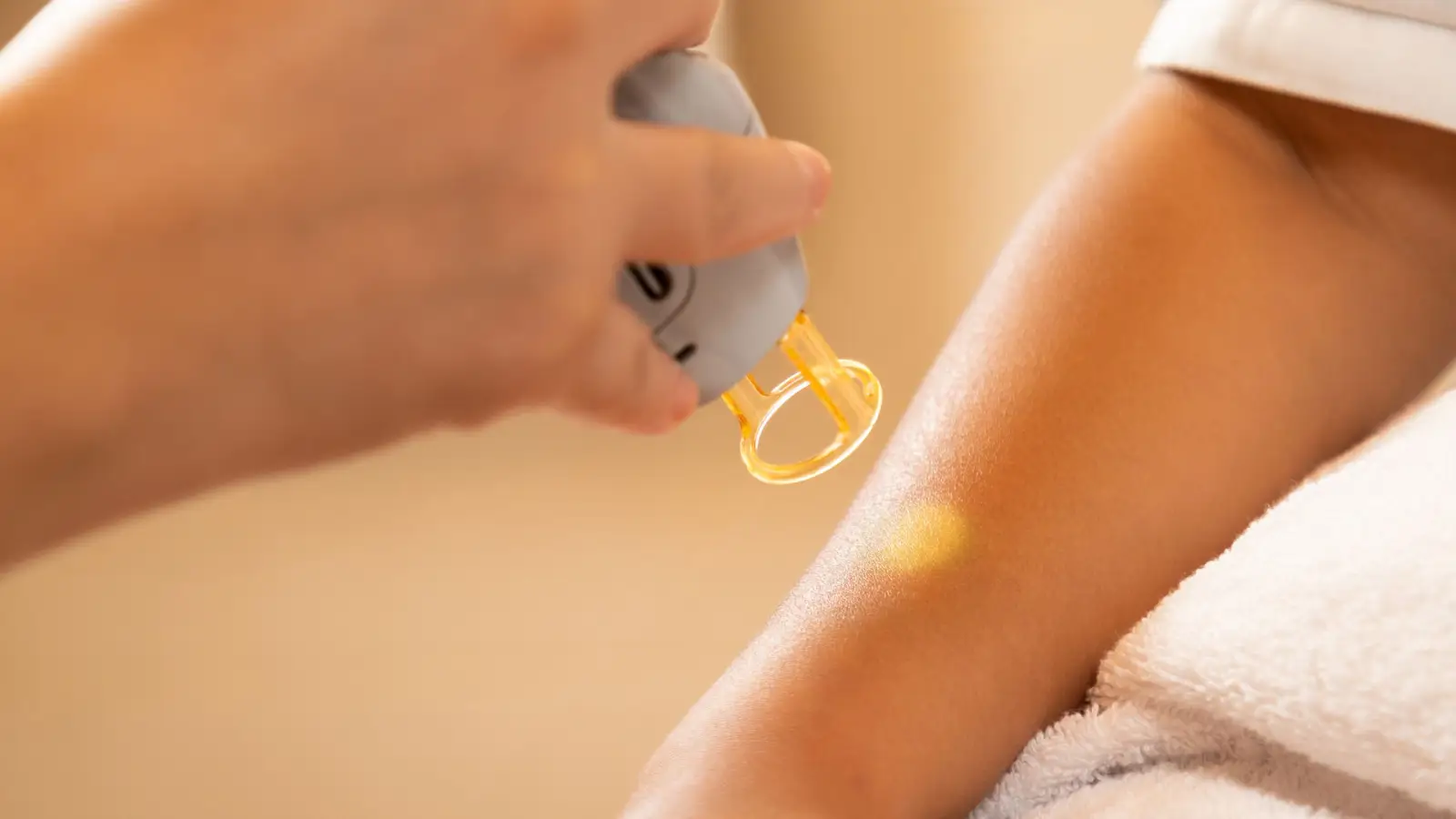
At this level, the procedure handles a discrete lesion: an isolated lentigo or a small cluster of sunspots. The device is typically an IPL handpiece or a basic Q-switched laser, and an aesthetician operates it under a supervising physician. The visit lasts under half an hour. What is missing matters: the spot is rarely examined with a dermatoscope to rule out a pigmented lesion that should not be lasered, and the wavelength is not fine-tuned to skin type. For light skin with superficial pigment, healing is quick and results often satisfactory after one session. For darker skin, the same setting can ignite post-inflammatory hyperpigmentation that may take months to subside. The risk sits squarely with the absence of a diagnostic step.
$600–$800 Dermatologist-Directed Session
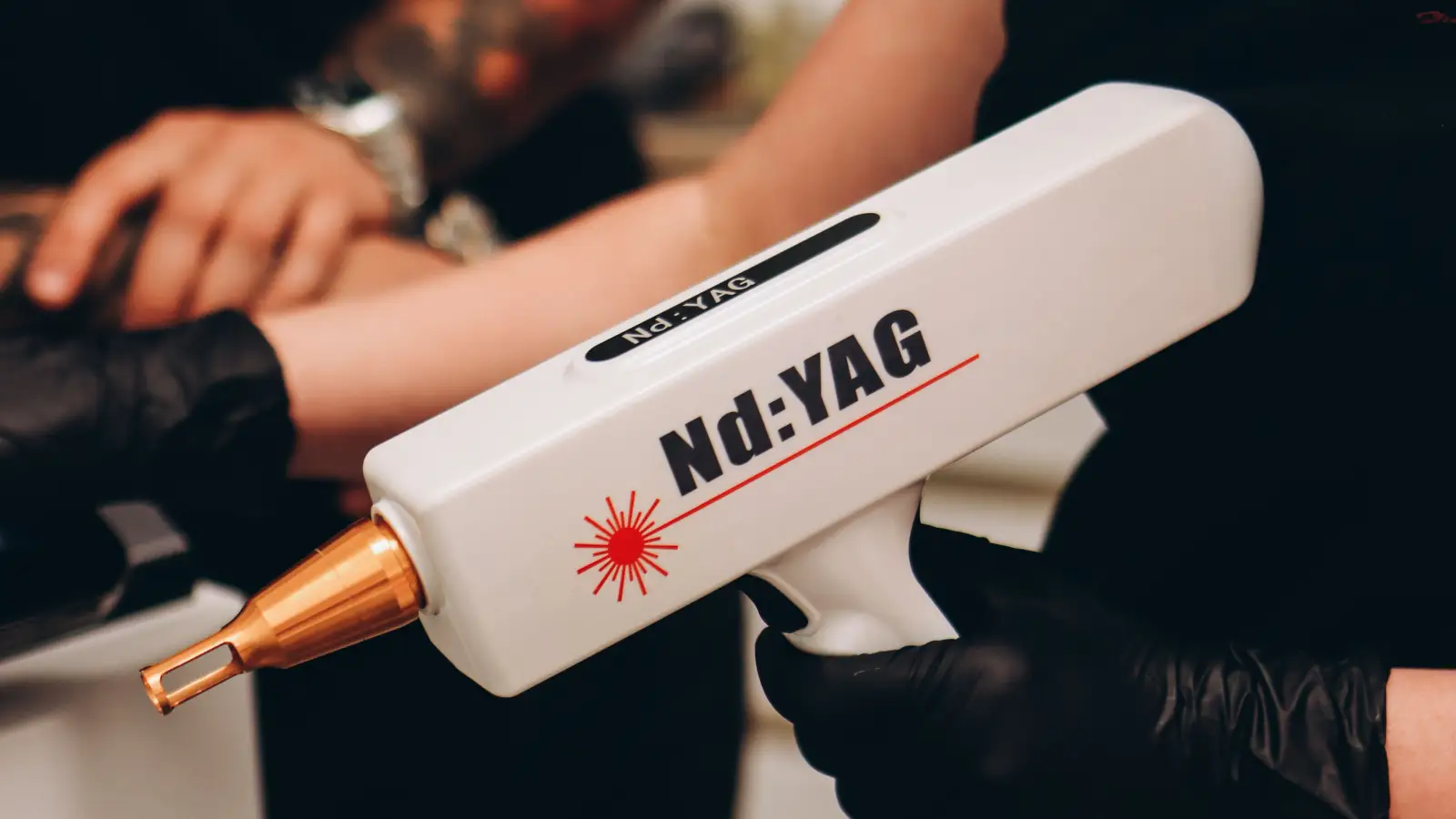
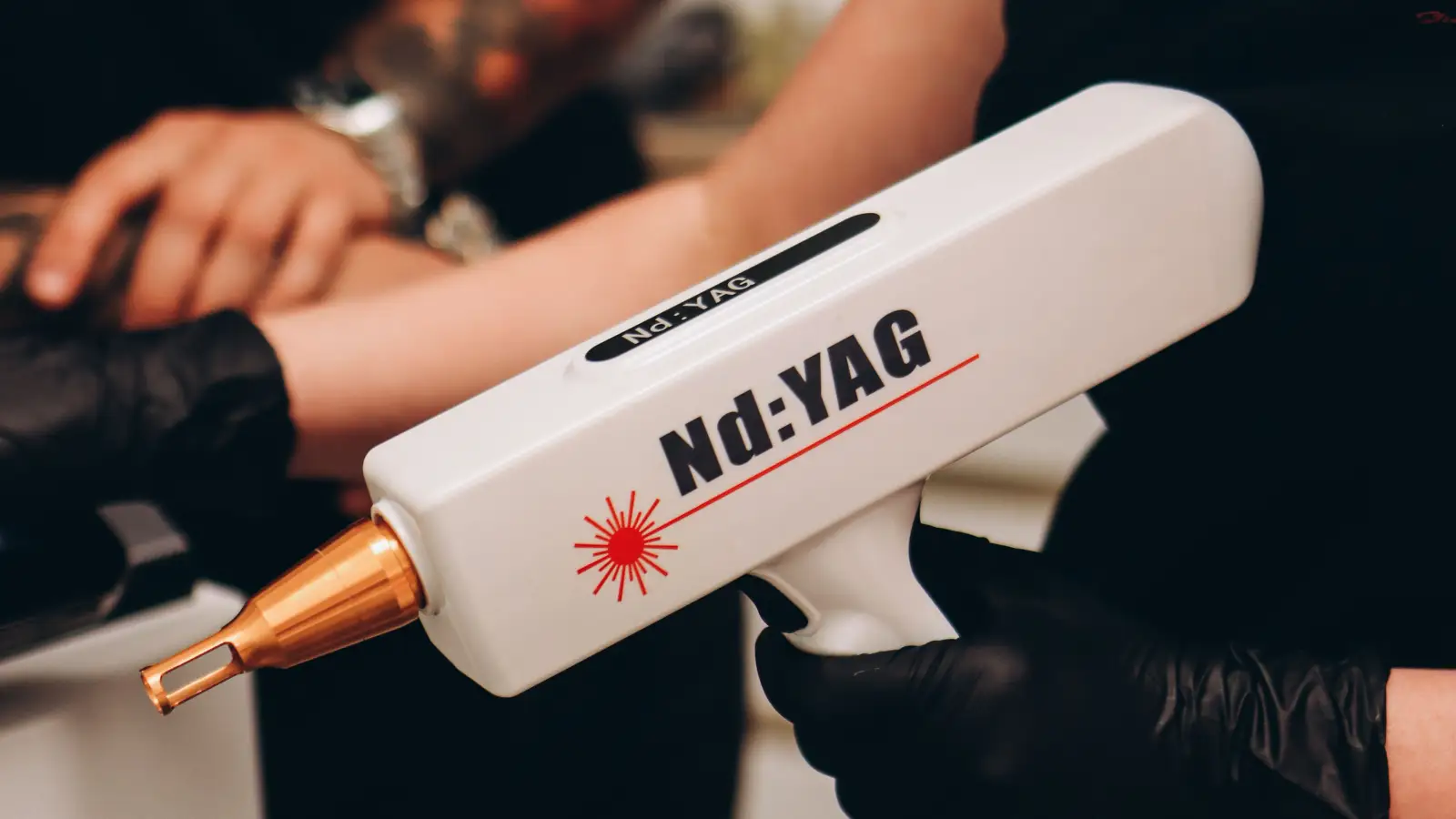
Moving into this tier means a board-certified dermatologist or a nurse practitioner under direct supervision selects the laser. Common tools are a 532 nm or 1064 nm Nd:YAG with a large spot and low fluence, or a picosecond device for resistant pigment. The pre-treatment consultation includes a Wood's lamp or dermatoscope exam to classify the pigmentation—melasma, solar lentigo, or post-inflammatory—because the category determines parameters. Immediate post-treatment assessment catches early signs of blistering or unexpected darkening. For melanin-rich skin, the ability to pick a 1064 nm Nd:YAG with conservative settings lowers the chance of adverse color changes. The value here is not cosmetic luxury; it is risk-adjusted protocol design.
$900–$1,200 Premium Session
Geography becomes a heavy cost multiplier. Cities with the highest commercial real estate—New York, Los Angeles, San Francisco—push per-session fees to the upper bound even for identical technology. The provider is often a fellowship-trained laser surgeon or a facial plastic surgeon who combines two wavelengths in a single visit to reach both epidermal and dermal pigment in one pass. Aftercare shifts from printed handout to a take-home kit: a lipid-heavy balm, a strict mineral SPF, and direct phone access to a clinical team. This tier makes financial sense when prior lower-cost attempts produced no meaningful fading or when the pigmentation is so deep that a single aggressive protocol, done correctly once, avoids a protracted series of touch-ups.
Costs Beyond the Stated Session Price
- Separate consultation charge: A first visit often costs $100–$200, which may or may not be deducted from the treatment total.
- Prescription numbing: If EMLA or a compounded lidocaine cream is dispensed, it adds $40–$70 that is rarely included in the base rate.
- Recovery supplies: Gentle cleanser, healing ointment, and broad-spectrum mineral sunscreen required for two weeks after treatment typically cost $50–$100 out-of-pocket.
- Package pricing pressure: Booking sessions individually can carry a 15–20% surcharge compared with a prepaid block of three to six treatments.
- Test spot fee: A small trial patch to gauge skin response is standard practice, yet some offices charge $50–$100 for it.
- Transport and time: If the most qualified provider is a multi-hour drive away, round-trip travel and a lost half-day of work add up with each visit.
Assessing Value by Pigmentation Type and Skin Risk
For One or Two Light Solar Lentigos on Fair Skin
A $350 med-spa session typically produces sufficient clearing. Increasing the spend to a dermatologist-directed visit does not change the outcome enough to justify the extra $400 because the inherent risk of a poor result is low in this scenario.
For Moderate Facial Melasma
Melasma is a reactive condition. Using an IPL or a short-wavelength laser can trigger a rebound flush of pigment that leaves the skin worse than before. The $600–$800 tier becomes necessary because the provider's expertise in selecting a low-fluence 1064 nm Nd:YAG protocol decides whether the face clears or darkens. A series of four to six sessions is standard, so the total outlay usually lands between $2,400 and $4,800.
For Deep Dermal Pigmentation on Melanin-Rich Skin
This is the situation where the top tier, $900–$1,200, shifts from optional to prudent. Deep pigment requires a wavelength that penetrates the dermis without overheating the epidermis; the margin for error is thin. Poor technique heals slowly and can leave textural scars or permanent hypopigmentation. Paying for a subspecialist who uses combination picosecond and long-pulse wavelengths can prevent a sequence of failed lower-cost treatments that, in aggregate, exceed the higher upfront price.
Lower-Cost Options That Address Pigmentation Without a Laser
For those who cannot or choose not to pay laser session prices, several alternatives exist, though they demand more patience:
- Prescription lightening creams (hydroquinone plus tretinoin): Roughly $60–$120 per month. Improvement appears over four to six months of consistent use.
- Medium-depth chemical peels (glycolic or TCA): $100–$250 per session, usually repeated monthly for six months.
- Microneedling paired with tranexamic acid or vitamin C: $200–$350 per session; favored for post-inflammatory hyperpigmentation on darker skin.
- At-home IPL devices: $250–$500 as a one-time purchase. Effective only on Fitzpatrick skin types I–II with superficial sun damage; not appropriate for melasma or darker tones.
These approaches rarely match laser speed, but the per-unit cost is substantially lower and the risk of laser-specific adverse events is eliminated.
Common Cost Questions About Laser Pigmentation Removal
How many sessions does pigmentation usually require?
Three to six sessions, spaced four to six weeks apart, cover most presentations. Superficial spots may clear in one or two treatments; refractory melasma sometimes requires eight or more. A realistic total-session estimate should come from the initial consultation, not from before-and-after galleries.
Is the consultation fee included in the treatment price?
Not always. Expect $100–$200 for a separate initial evaluation, sometimes applied as credit toward the first procedure but frequently not. Short follow-up visits may carry an additional $50–$150 charge.
Will insurance cover any part of laser pigmentation removal?
Cosmetic hyperpigmentation removal falls outside medical necessity almost without exception. Insurance does not pay for sessions, pre-treatment biopsies for benign spots, or recovery products. If a lesion is suspicious for malignancy, the evaluation and excision follow a different coding and coverage pathway.
Why does the same laser treatment cost $400 in one city and $1,000 in another?
The primary spread comes from commercial lease rates, the density of competing providers, and state regulatory requirements that shape who can own or operate a laser. A board-certified dermatologist in a suburban Midwestern practice may charge $550 for a full-face session; the same professional working in a downtown coastal metro often charges $1,000–$1,200 because real estate and labor overhead are three times higher.
Matching a Budget to the Pigmentation Problem
Start by anchoring the decision not to headline price but to the level of diagnostic and technical control that the skin condition demands. A light-skinned person with one small sunspot can reasonably budget $400 per session for a med-spa visit and repeat it once or twice, landing near $1,200 total. Anyone dealing with melasma or treating skin that tans deeply should plan on $700–$800 per session and multiply by five. The most expensive mistake is picking a session based solely on a low number, experiencing a pigment darkening that requires corrective work, and paying twice the original quote to fix a problem that a properly chosen tier would have avoided from the start.
Pigment Curious
We are people who want to better understand skin pigmentation, dark spots, and how different skin tones respond to skincare and professional treatments. We look beyond simple beauty claims, focusing on scientific evidence, clear explanations, and practical knowledge that helps people make more informed decisions about their skin.