Most People Don’t Know Hydroquinone Blocks This Tyrosinase Pathway
Hydroquinone stops melanin production at its origin. The molecule fits into the copper-binding active site of tyrosinase and outcompetes the natural substrate tyrosine. That direct competitive inhibition—unlike the indirect actions of most non-prescription agents—creates a potent enzymatic block that nothing in the OTC category can replicate. It’s the difference between shutting down the factory floor and sweeping up dust after the fact.
A Melasma Patch That Faded Because the Assembly Line Couldn’t Start
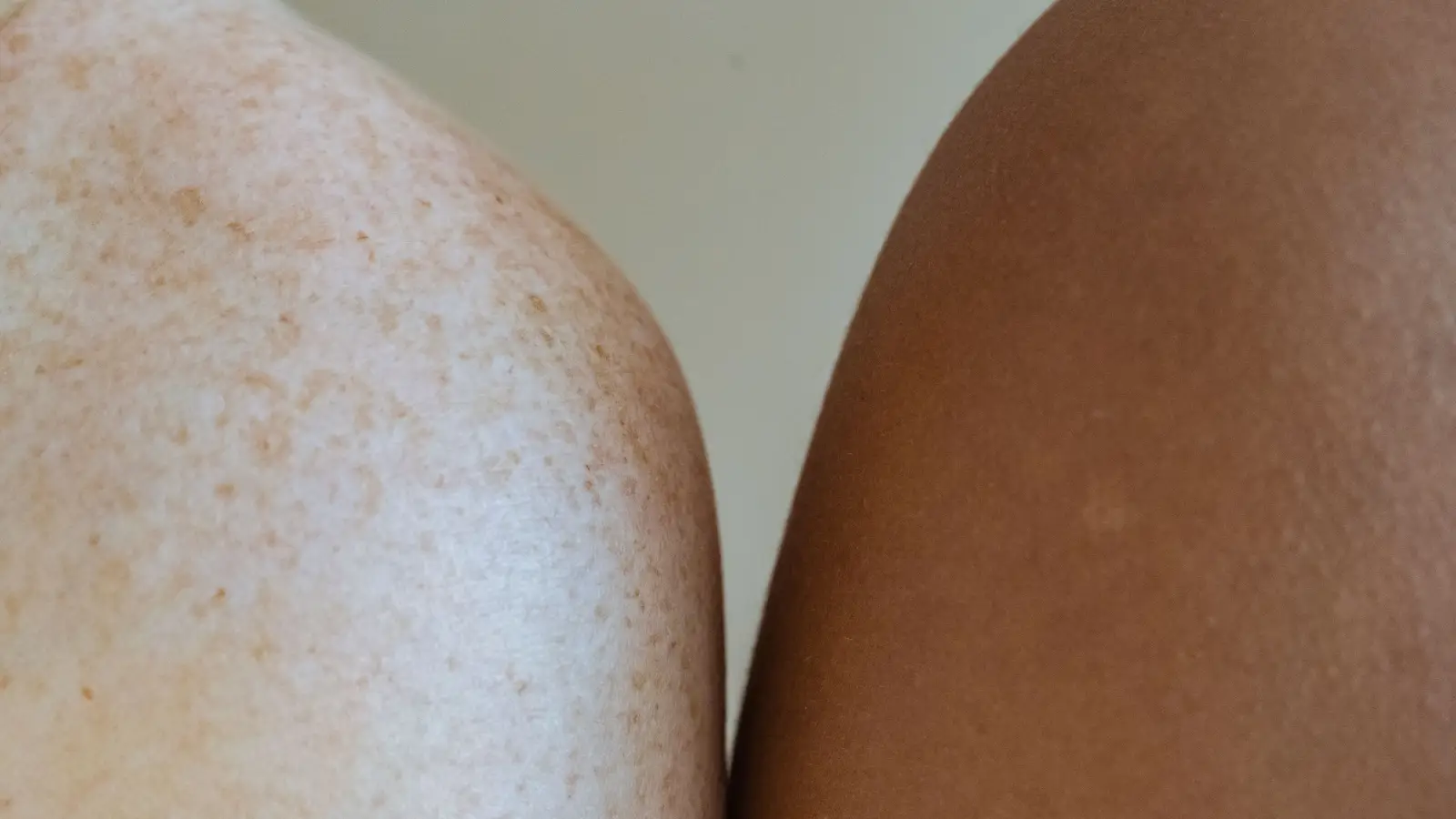
A 34-year-old woman with stubborn epidermal melasma on the forehead had used niacinamide and azelaic acid for months with minimal lightening. When her dermatologist prescribed a 4% hydroquinone cream, the pigment began to fragment within four weeks—not from surface exfoliation, but from a pause in internal melanin synthesis. Melanosomes inside her melanocytes were still being formed, yet the freshly produced organelles contained far less melanin. What changed was the very first chemical reaction in the melanin pathway.
The Step-by-Step Interruption, from Copper to Color
Copper Ions Are the Catalyst Tyrosinase Cannot Function Without
The tyrosinase enzyme embeds itself in melanosome membranes and relies on a pair of copper ions at its active site. Under normal conditions, the amino acid tyrosine positions itself so that the copper ions can catalyze its hydroxylation to DOPA and subsequent oxidation to dopaquinone. Without those copper atoms in place, tyrosinase becomes inert. The enzyme’s dependence on this metal makes it vulnerable to anything that can block access to the copper coordination sphere—exactly what hydroquinone exploits.
Hydroquinone Occupies the Active Site as a Structural Deceiver
Hydroquinone’s ring structure and hydroxyl groups let it mimic tyrosine closely enough to dock into the same binding pocket. Once inside, it positions near the copper ions but fails to undergo oxidation. The result is a classic competitive inhibition: each active site occupied by hydroquinone is one less site available for tyrosine, and the degree of inhibition depends on the relative concentrations of inhibitor versus substrate. Because a prescription-strength 4% formulation achieves a high local concentration in the melanocyte, it saturates enough tyrosinase molecules to reduce dopaquinone production to negligible levels.
Dopaquinone Starvation Halts the Entire Cascade
When dopaquinone output drops, the downstream chemistry that produces eumelanin and pheomelanin immediately stalls. Dopaquinone normally cyclizes into leucodopachrome and feeds into the dopachrome tautomerase pathway—none of that can happen without the precursor. Melanosomes continue to be assembled, but they become empty or lightly loaded. Over roughly one epidermal turnover cycle, the keratinocytes carrying these pigment-poor melanosomes replace the older, heavily pigmented cells, and the clinical lesion fades.
Existing Melanin Dilutes, It Does Not Dissolve
There is no chemical bleaching occurring. Hydroquinone doesn’t oxidize or break down melanin already deposited in keratinocytes. It only prevents new melanin synthesis. Consequently, the lightening effect tracks the skin’s normal desquamation rhythm. That temporal lag—visible improvement around week four—is a direct product of the competitive inhibition mechanism and the biology of epidermal turnover.
Where the Tyrosinase Block Appears in Clinical Practice
Prescribed Melasma and PIH Management
Dermatologists turn to hydroquinone when first-line options fail to clear post-inflammatory hyperpigmentation or when melasma displays a strong epidermal component. The usual approach pairs 4% hydroquinone with a retinoid and a corticosteroid in a compounded Kligman formula. The retinoid enhances penetration and accelerates turnover, while the steroid dampens irritation that could itself trigger more pigment. Here, hydroquinone’s competitive inhibition provides a hard stop: it doesn’t merely slow tyrosinase—it physically displaces tyrosine.
Compounded Higher Concentrations for Resistant Cases
In some practices, dermatologists prescribe concentrations above 4% (commonly 6% or 8%) under close monitoring. The rationale follows straight from competitive kinetics: a larger excess of inhibitor occupies a greater proportion of active sites, deepening the blockade. The trade-off is predictable—more inhibition brings more potential for irritation and, with prolonged use beyond 4–5 months, a heightened risk of exogenous ochronosis, particularly in darker phototypes where any dyspigmentation stands out and proves difficult to reverse.
Maintenance After the Course
Once a hydroquinone cycle ends, patients shift to non-prescription agents like cysteamine, azelaic acid, or ascorbic acid. These work through distinct mechanisms—copper chelation, tyrosine competition at alternative sites, or antioxidant reduction of dopaquinone—but none reproduce hydroquinone’s exact fit into the tyrosinase active site. The maintenance phase succeeds because the initial competitive inhibition resets the production floor to a lower baseline; the subsequent agents just keep the machinery idling.
What People Get Wrong: This Is Not Melanocyte Destruction
The most damaging misconception casts hydroquinone as a chemical that kills melanocytes, leaving skin permanently unable to tan or protect itself. In the forehead melasma example, the woman’s melanocyte density remains unchanged. Biopsy data consistently show no decrease in melanocyte count during appropriate hydroquinone use; what drops is tyrosinase activity inside those intact cells. The competitive inhibition is reversible—when the drug is withdrawn, tyrosine again gains access to the active site and melanin synthesis restarts. Believing the melanocyte-destruction myth can lead patients to reject hydroquinone for conditions it could safely resolve, or to misuse it as a permanent bleaching agent, which invites the real complication of ochronosis.
Frequently Asked Questions
How does hydroquinone block tyrosinase differently from arbutin or kojic acid?
Arbutin is a glycosylated hydroquinone that slowly releases the active molecule inside the skin, yielding a much lower effective concentration. Kojic acid chelates copper ions in the active site but does not occupy the tyrosine-binding pocket directly. Both interventions are partial. Hydroquinone, at prescription strength, competes directly for the substrate-binding site, producing a more complete enzymatic blockade.
Why can’t you get the same effect from a high-percentage arbutin product?
Even if an OTC product contains a high percentage of arbutin, its slow hydrolysis limits the instantaneous free hydroquinone concentration inside the melanocyte. Competitive inhibition depends on the ratio of inhibitor to substrate at the active site, not on the total amount applied. Prescription hydroquinone achieves a rapid, high peak concentration that outweighs local tyrosine levels, a kinetic profile arbutin simply cannot match.
Does hydroquinone permanently shut down melanin in the treated area?
No. Once the drug is cleared from the tissue, tyrosinase activity returns. The treated skin can tan, produce pigment after UV exposure, and relapse if the underlying stimulus for hyperpigmentation persists. The effect is dose-dependent and duration-limited, which is why treatment courses are deliberately finite.
What makes hydroquinone riskier for darker skin if it doesn’t kill melanocytes?
The primary risk isn’t cytotoxicity; it’s the potential for exogenous ochronosis after prolonged use. The ochronotic pigment deposits in the dermis are thought to arise from oxidized homogentisic acid accumulating when tyrosinase-related pathways are disrupted over many months. In richly pigmented skin, the resulting blue-black discoloration can be far more conspicuous and disfiguring than the original hyperpigmentation, and it tends to persist even after treatment stops. This risk alone justifies the prescription requirement and the strict time limits applied to each course.
The Mechanistic Bottom Line
Hydroquinone’s entire depigmenting power traces back to a single trick: it shoves tyrosine aside and sits on the copper-containing active site of tyrosinase. The melasma patch faded not because the melanocytes were injured, but because the enzyme that starts melanin synthesis had been competitively silenced long enough for fresh, unpigmented cells to surface. Understood that way, the drug’s potency and its limits become the same thing—a temporary, concentration-driven blockade that demands careful timing and respect for the rebound that follows.
Pigment Curious
We are people who want to better understand skin pigmentation, dark spots, and how different skin tones respond to skincare and professional treatments. We look beyond simple beauty claims, focusing on scientific evidence, clear explanations, and practical knowledge that helps people make more informed decisions about their skin.