Safe Laser & Peel for PIH Based on Your Fitzpatrick Type
The safest treatment for post-inflammatory hyperpigmentation (PIH) is determined less by what the dark mark looks like and more by your Fitzpatrick skin type. For lighter skin (types I through III), several lasers and peels have a solid track record. But if you have melanin-rich skin — types IV, V, or VI — the margin for error becomes wafer-thin. A choice that seems harmless, like an IPL session or a stronger peel, can ignite a darkening reaction that is far more stubborn than the original spot.

This guide walks you through a practical decision tree, lining up specific tools — Q-switched Nd:YAG at 1064 nm, pico lasers, glycolic acid peels, mandelic acid, and salicylic acid peels — against each Fitzpatrick category. It spells out why a device that works well on type II can turn disastrous on type V, and it puts the lowest-risk, highest-safety options first, especially for skin that already carries a heavy melanin load.
A Side-by-Side Look: Scenarios, Skin Types, and Safest Choices
| Scenario | Fitzpatrick Types | Safest Pick | One-Line Reason |
|---|---|---|---|
| Fast fading of surface-level brown marks (epidermal) | I–III | Glycolic acid peel (20–35%) or low-fluence Q-switched Nd:YAG (1064 nm) | Both target epidermal pigment safely; glycolic is cheaper, laser is faster. |
| Fast fading of deeper, blue-gray marks (dermal) | IV–VI | Pico laser (755/1064 nm) with low fluence | Shatters deep pigment without excessive heat; avoids melanin trigger. |
| You're on a strict budget but patient | I–IV | Superficial glycolic or lactic acid peel series | Least expensive per session; multiple sessions still safe. |
| You have sensitive or reactive skin | All types | Mandelic acid peel (20–40%) | Large molecule, slow penetration, minimal irritation. |
| You want to treat PIH and active acne at once | All types | Salicylic acid peel (20–30%) | Anti-inflammatory, oil-soluble, safe across Fitzpatrick spectrum. |
| You have dark skin (Fitzpatrick V–VI) and want the lowest risk | V–VI | Low-fluence Q-switched Nd:YAG (1064 nm) or superficial mandelic peel series | IPL and deep peels risk severe rebound hyperpigmentation on melanin-rich skin. |
Fast Fading for Epidermal PIH: Glycolic Peels and 1064 nm Lasers, Chosen Carefully for Your Skin
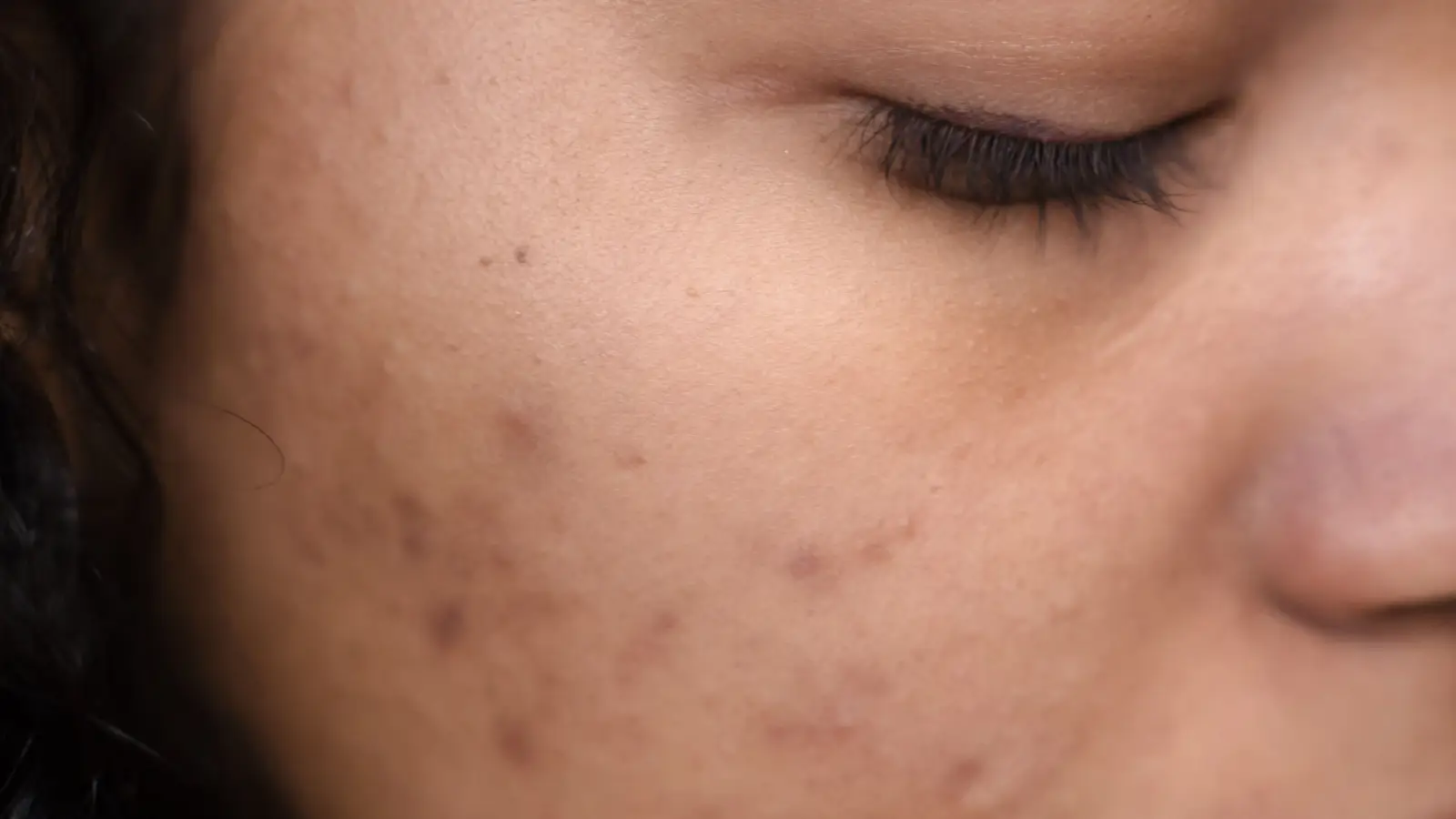
When PIH sits in the top layer — those flat brown marks left behind by a breakout — the goal is to coax that pigment out gently without waking up more pigment cells. For Fitzpatrick types I through III, superficial glycolic acid peels (20% to 35%) are a reliable, budget-conscious path. Four to six sessions, spaced a few weeks apart, gradually lift the discoloration. The main risk is mild stinging and flaking, and when done right, new PIH rarely follows.
Move up to type IV and beyond, and the calculation shifts. Even a well-diluted glycolic peel can irritate unevenly on melanin-rich skin, and that irritation can become its own trigger for fresh dark marks. That’s where the 1064 nm Q-switched Nd:YAG laser earns its place. Its long wavelength slips past the epidermis’ melanin and breaks up pigment deeper in the skin, all with minimal heat. A session feels like a rubber band snapping against the skin, and small pinpoint crusts may appear for a few days. Compared with the damage an IPL can do on these skin tones — uneven burns, unpredictable darkening — the laser’s predictability is safer and kinder to skin that has already been through inflammation.
When Pigment Runs Deep: Pico Lasers and the Dermal PIH Challenge
Some PIH has a blue-gray or smudgy purple cast. That’s the signal that pigment has lodged in the dermis, far out of reach of any peel. Pico lasers, which fire in bursts measured in trillionths of a second, can break apart that deep melanin without building up heat that alarms melanocytes. For darker skin types, the 1064 nm pico handpiece is the most cautious choice; a 755 nm tip at very low fluence can work, but a test spot on a hidden area is essential — never skip this step.
A Q-switched Nd:YAG laser can also target dermal pigment, yet the pico pulse produces even less heat, which dials down the risk of a post-treatment inflammatory flare. The trade-off: pico sessions cost more, and the area may look a bit ashen for up to a week. But for PIH that has refused to budge after months of creams and patience, one expertly delivered pico session may accomplish what four peels never could.
Special Consideration for Fitzpatrick Types V and VI: Why IPL and Deep Peels Are Simply Not Safe
IPL devices are often marketed as gentle, but on richly pigmented skin their broad band of light gets absorbed by melanin in an unruly way. The result can be burns, crusting, and a cascade of new, darker PIH that takes many months to calm. Deep chemical peels — TCA at 25% or more, or phenol — create a controlled wound. On skin types V and VI, that wound tends to heal with patchy, persistent hyperpigmentation instead of a smooth, even tone. These are not small risks; they are predictable, documented outcomes.
The path narrows to two principles for these skin types: either bypass epidermal melanin entirely (1064 nm laser) or exfoliate so superficially that the pigment cells stay quiet (mandelic acid, or very low-strength glycolic used with care). Many dermatologists also prep the skin for several weeks with a tyrosinase inhibitor — hydroquinone, kojic acid, or azelaic acid — to calm pigment activity before the first treatment. That extra step is not optional; it is a layer of protection against a setback that can feel discouraging.
Treating PIH and Acne Together: Salicylic Acid Peels Across All Skin Tones
When breakouts are still active, the focus shifts to a peel that can calm inflammation and clear pores while slowly fading old PIH. Salicylic acid, at 20% to 30%, fits that job. Because it is oil-soluble, it penetrates the pore lining to lift out debris; because it is anti-inflammatory, it soothes redness rather than stoking it. Practice and evidence show it to be safe across Fitzpatrick types I through VI when applied by a skilled clinician. The downside — and it’s a small one — is that pigment fades more gradually than with a laser. A series of peels blends the discoloration over weeks, not days. But when dual goals are in play, that steadiness often wins.
Budget-Driven Choices: Superficial Peels as a Consistent, Low-Cost Route
When money is tight but time is available, superficial peels — glycolic, lactic, or mandelic — are the most accessible door. A single session often falls between $75 and $150, and a package of six can cost less than one laser treatment. The limit is clear: these peels only reach epidermal PIH. Dermal discoloration will not respond, no matter how many are done. Still, for Fitzpatrick types I–IV with surface marks, this route is effective when paired with rigorous sun protection and a realistic timeline.
What Every Modality Shares: Non-Negotiables That Apply Regardless of Skin Type
A handful of rules stay the same, whether you walk out with a peel or a laser treatment:
- Sunscreen is the foundation. Any therapy that exfoliates or breaks up pigment leaves new skin cells exposed. UV can undo progress in a single afternoon.
- Multiple sessions are the norm. Moderate to severe PIH rarely clears after one visit, and expecting otherwise leads to disappointment.
- Active infection, recent isotretinoin (Accutane) use, or a fresh tan means waiting, no exceptions.
- Pre-treatment with a pigment-suppressing topical — hydroquinone, azelaic acid, or kojic acid — makes every modality safer.
These points matter, but they will not tip the scale between peel and laser. Treat them as givens.
Hard Stops: When a Laser or Peel Must Be Ruled Out Entirely
Certain red lines are absolute:
- IPL on Fitzpatrick V or VI: burns and severe PIH are so likely that no experienced clinician would proceed.
- Deep TCA (≥25%) or phenol peels on melanin-rich skin: unpredictable healing nearly always leaves behind persistent discoloration.
- Ablative lasers (CO2, erbium) on untreated darker skin: a test spot and a provider with deep experience are mandatory; even then, the risk rarely makes sense.
- Active eczema, psoriasis, or infection at the treatment site: must heal fully before any peel or laser.
- Pregnancy or breastfeeding: safety data are lacking, so most practitioners defer treatment.
If a provider skips this checklist and moves straight to scheduling, that silence is worth heeding.
The Cost Equation: How Much Do Peels and Lasers Really Cost?
Money often forces the final decision. Superficial peels cost about $75 to $150 per session; a full course (4–8 visits) can run from $450 to $1,200. Non-ablative lasers like Q-switched Nd:YAG or pico sit between $250 and $600 per session, with 2–4 sessions common, totaling $750 up to $2,400. The laser path costs more upfront but may need fewer visits. For dermal PIH, a peel course is money wasted, so the laser becomes the only clear spend. For surface-level PIH on a limited budget, a peel series fits better.
Questions You Might Be Asking
Can I use a laser and a peel in the same treatment session?
Most careful clinicians avoid combining them in one sitting. The risk of a burn or an unpredictable reaction jumps. Standard practice is to space them at least two to four weeks apart, usually giving a peel after the skin has fully healed from a laser.
How do I know if my PIH is epidermal or dermal?
Hold a bright light at an angle against the skin. A brown spot with a crisp edge usually sits in the epidermis. A spot that looks blue-gray, smudgy, or seems to come from deeper tissue is likely dermal. A Wood’s lamp examination in clinic confirms this, but a quick visual check often gives a working answer.
Are there any over-the-counter peels I can use safely at home for PIH on darker skin?
Home peels carry a real risk of misuse — too long a leave-on time, too many applications, or accidental mixing with other actives. On melanin-rich skin, that often triggers new PIH instead of fading old marks. The most cautious home option is a low-percentage mandelic acid serum (5–10%) once weekly, and only when the skin is calm. Even then, a professional series is far more predictable and far less likely to backfire.
The most common person walking into this decision has Fitzpatrick type IV skin and surface-level brown marks they want gone without a frightening rebound. For them, a series of superficial mandelic or glycolic peels, or a few carefully dialed-in 1064 nm laser sessions, land in the safest zone. The question to sit with before anything else: is the discoloration floating near the surface, or has it settled deeper where peels simply cannot reach?
Pigment Curious
We are people who want to better understand skin pigmentation, dark spots, and how different skin tones respond to skincare and professional treatments. We look beyond simple beauty claims, focusing on scientific evidence, clear explanations, and practical knowledge that helps people make more informed decisions about their skin.