Wait 15 Minutes Before Judging Any Foundation Swatch
Judge no foundation shade until it has sat on your skin for 15 full minutes. During the first five minutes, volatile ingredients are still evaporating and the wet film can look lighter, grayer, or more saturated than the true dried color; by 15 minutes, most formulas have oxidized and settled into the shade you will actually wear. Check the swatch at 0, 5, and 15 minutes in daylight, and compare photos, not memory.
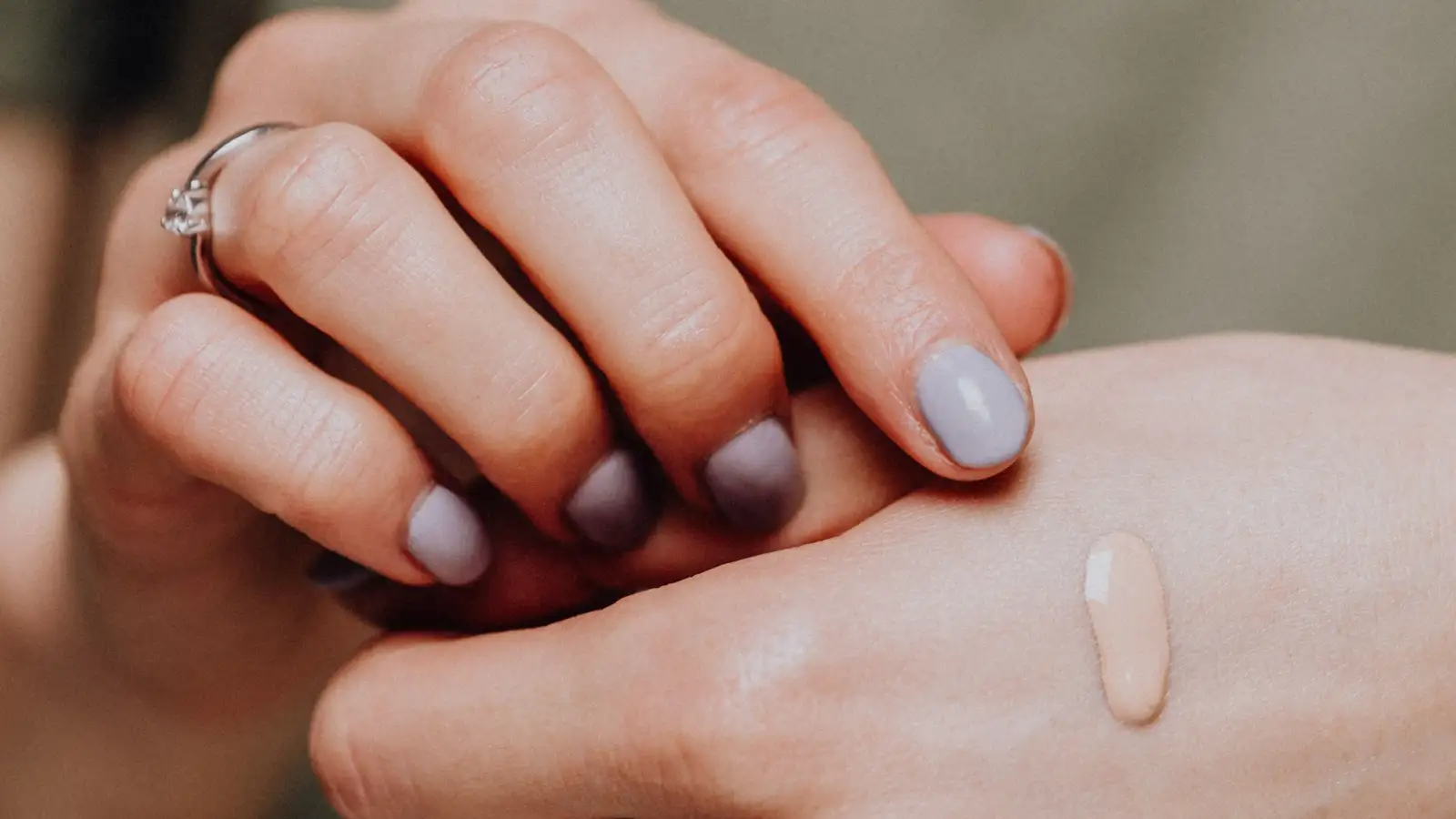
I learned this the hard way after buying a foundation that looked like a perfect warm brown in the bottle and under store lights, then turned a half-shade deeper and noticeably redder by the time I got home. The problem wasn't the brand. It was that I judged the wet swatch before it had a chance to dry down. Once I started waiting 15 minutes, I stopped having to "rescue" foundations by mixing three layers of other products over them.
The wet swatch is not the shade
A freshly applied foundation is a film with still-wet carriers: water, alcohol, and light silicones. Those volatile ingredients reflect light and keep the pigment suspended in a thinner, lighter-looking layer. As they evaporate during the first few minutes, the pigment particles pack closer together and the true depth starts to come forward. On melanin-rich skin, this shift can be dramatic. A shade that looks ashy or gray at minute zero can deepen into a true match, or a shade that looks perfect wet can dry down into something too dark or too orange.
This is not the same thing as oxidation, even though people use the word loosely. The early change is mostly drying. Oxidation happens when certain pigments, especially iron oxides, react with air and the oils on your skin and shift color permanently. You may not be able to separate the two in real time, but you can separate the result: a wet-color shift usually settles back toward the bottled shade as the shine dies. A true oxidation shift moves away from the bottle color and stays there.
0, 5, 15: the only swatch timeline that works
I test on the jaw and down the neck, never the back of my hand. The back of my hand sees more sun and is often a different depth and undertone than my face. On deeper skin, the center of the face, forehead, and jaw can also vary, so a streak from jaw to neck tells me more than a dot on the cheek.
At 0 minutes, apply a thin, even streak with your finger or a small brush. Do not buff it in. You want the film the way the formula lays down naturally. Note the initial depth and undertone, then photograph it with your phone's exposure locked and a strip of white paper in the frame. The white paper is not for comparing to your skin tone; it is for white balance later, when the light changes.
At 5 minutes, the wet shine should have calmed down, and the swatch should feel less slippery or tacky. Photograph it again from the same angle, in the same spot, with the same exposure. Write down whether the color has moved closer to the bottle shade or further away from it. Do not trust your memory. Even a 10-minute gap can make you second-guess whether it was really lighter before.
At 15 minutes, most liquid and cream formulas have reached a stability point. The volatile carriers have evaporated, the film has formed, and the main oxidation reaction has slowed enough that the shade stays basically where it will stay for the next several hours. Some very emollient or oil-heavy formulas may continue to deepen slightly for another 5 or 10 minutes, but if the shade is still visibly changing at 15, that is useful information in itself: the formula is not stable on your skin.
How to tell wet change from real oxidation
If the swatch looks too light at 5 minutes but matches the bottle's dried drop at 15, that was wet color. You can proceed. If the swatch looks right at 2 minutes and then turns orange, red, or a deeper brown by 15, that is oxidation. That shift will not reverse when the foundation "dries more." The 15-minute mark is exactly where that distinction becomes useful, because by then the wet lies have cleared and the true direction is visible.
I don't rely on the swatch on my wrist for this. Wrist skin can be lighter and cooler than the face, and oxidation can look less severe there. The jaw-to-neck streak gives a better read on both depth and undertone, especially if the skin has redness or hyperpigmentation around the mouth or cheeks.
What else to watch while the swatch dries
Texture is a clock. A glossy wet stripe that turns satin, demi-matte, or matte is drying down. A swatch that stays visibly wet or transfers heavily when lightly touched at 15 minutes has not fully set, and its color is still not final. But not every foundation dries matte. A dewy or radiant formula will keep some sheen; the question is whether the film feels dry to the touch, not whether it looks completely flat. If it still feels slippery or wet at 15, give it five more minutes and photograph again before judging.
Watch for finish changes too. Some foundations settle into a creamier, less reflective finish as they dry, and that can make the same pigment look richer or less ashy. On deep skin, a wet white cast can disappear into a natural satin by minute 10. If you judge at minute 2, you will think the shade is too gray when it was only wet.
Don't let changing daylight fake you out
Fifteen minutes is not a perfectly controlled lab window. The sun can move behind a cloud, the light can shift from cool morning to warm midday, and your skin can flush from warmth. That is why I photograph with the white paper in frame and lock the phone exposure before the first photo. Then at each interval, I compare the swatch's depth and undertone against the surrounding skin, not against the absolute color on the screen.
If the light changes dramatically, wait a few minutes for it to steady or move to the same spot you started in. A warm shift in the photo is not the same as oxidation. Oxidation shows as a deeper or more orange swatch relative to your bare skin at the same moment. The untouched skin next to the swatch is your control; if the bare skin also looks warmer in the photo, the light changed, not the foundation.
The real point of waiting
At 15 minutes, you are looking at the foundation you will actually wear after it has settled. If it matches then, the early ash or shine was noise. If it does not match then, no amount of hoping or extra blending will change the dried film. The 15-minute wait is cheap, but it has saved me from more bad foundation purchases than any undertone chart or store associate recommendation. It is the difference between judging the formula and judging the fantasy of the wet swatch.

About the author
The Undertone
The Undertone is a byline for people who learned foundation on brown skin by swatching, mixing, and checking color in real light. They share a practical focus: if the depth and undertone are right, the formula will follow.
More about us