Alexandrite vs Nd:YAG vs IPL: 2 Key Wins for Spots
Comparing alexandrite, Nd:YAG, and IPL for pigmented spots is a skin-tone-first decision. For fair skin (Fitzpatrick I–II) with solar lentigines, alexandrite delivers the fastest clearance — often a single session — and the highest spot removal rate. For medium to dark skin tones, Nd:YAG and IPL dramatically lower the risk of post-inflammatory hyperpigmentation (PIH) while still clearing spots effectively.
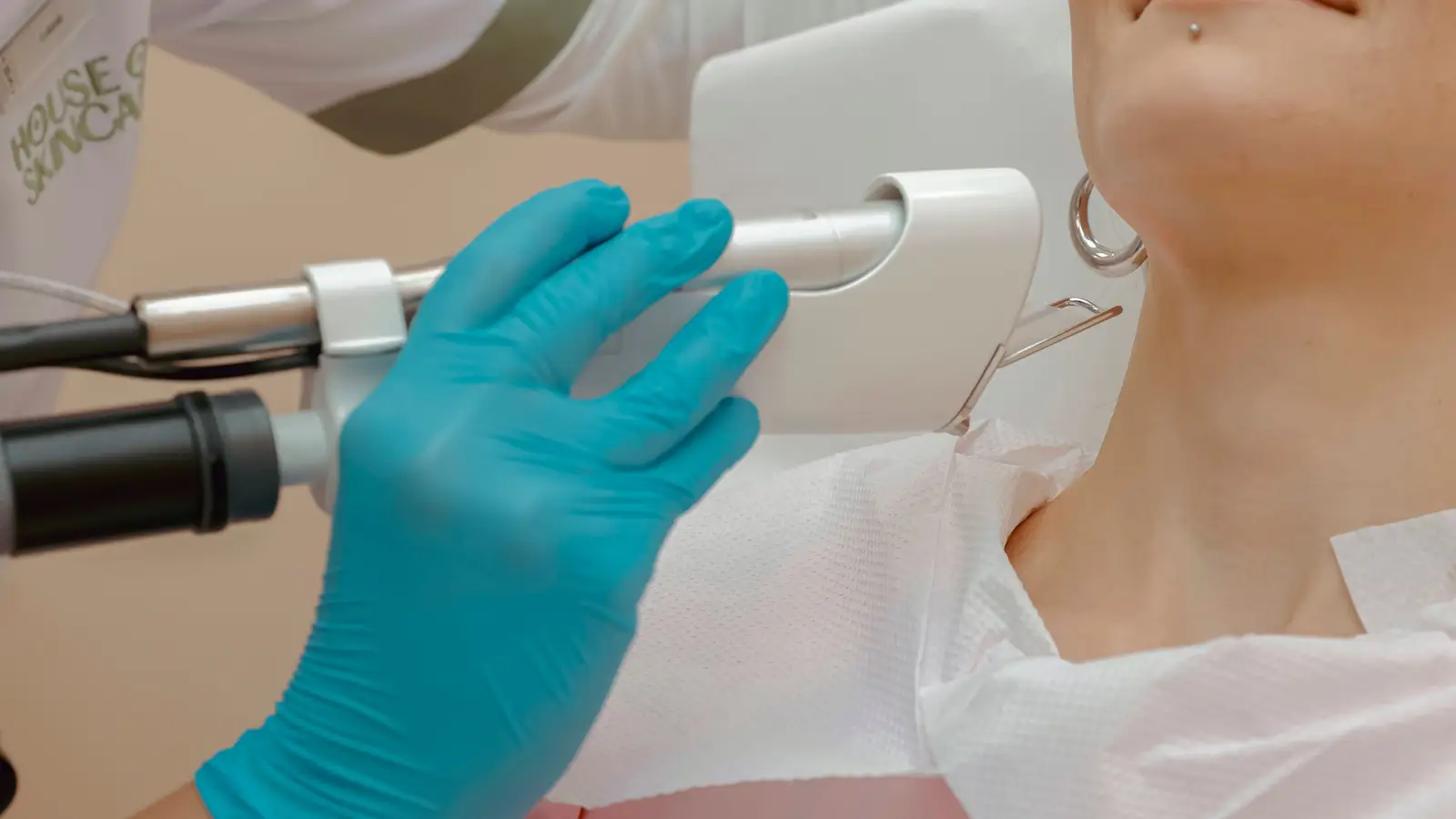
That’s why a Fitzpatrick-stratified decision table is the most efficient way to match device to patient. This article quantifies alexandrite’s two key wins — treatment speed and clearance rate — for light skin, then reveals exactly where it falls short for darker complexions, using a data-driven triage to guide your choice.
Alexandrite’s 2 Key Wins for Spots: Speed and Clearance, But Skin Tone First
For the most common solar lentigo case in the U.S. — fair-skinned patients with discrete brown spots — alexandrite is the fastest route to clearance. The two key wins: it removes a well-defined lentigo in 1–2 sessions, and the final spot clearance rate usually exceeds 90%. These wins come with a hard limit: on Fitzpatrick types IV–VI, alexandrite’s short 755 nm wavelength poses a significant PIH risk, turning a simple spot removal into months of new discoloration.
Quick Comparison: Alexandrite, Nd:YAG, IPL for Pigmented Lesions
| Criterion | Alexandrite (755 nm) | Nd:YAG (1064 nm) | IPL |
|---|---|---|---|
| Wavelength | 755 nm | 1064 nm | 500–1200 nm broad spectrum |
| Spot Clearance Speed (Fair Skin) | Very fast; 1–2 sessions | Moderate; 2–3 sessions | Slow; 3–5 sessions |
| Clearance Rate for Solar Lentigines | >90% on types I–II | 70–85% typically | 60–85% depending on filter |
| PIH Risk for Darker Skin (IV–VI) | High — often not recommended | Low — safest of the three | Moderate — safer than alexandrite |
| Typical Cost per Session (U.S.) | $300–600 | $250–500 | $200–450 |
| Best For | Light-skin solar lentigines, freckles | Dark-skin lentigines, dermal pigment | Mild pigmentation, overall skin rejuvenation |
Alexandrite Laser (755 nm): Fast, High-Clearance Workhorse for Light Skin
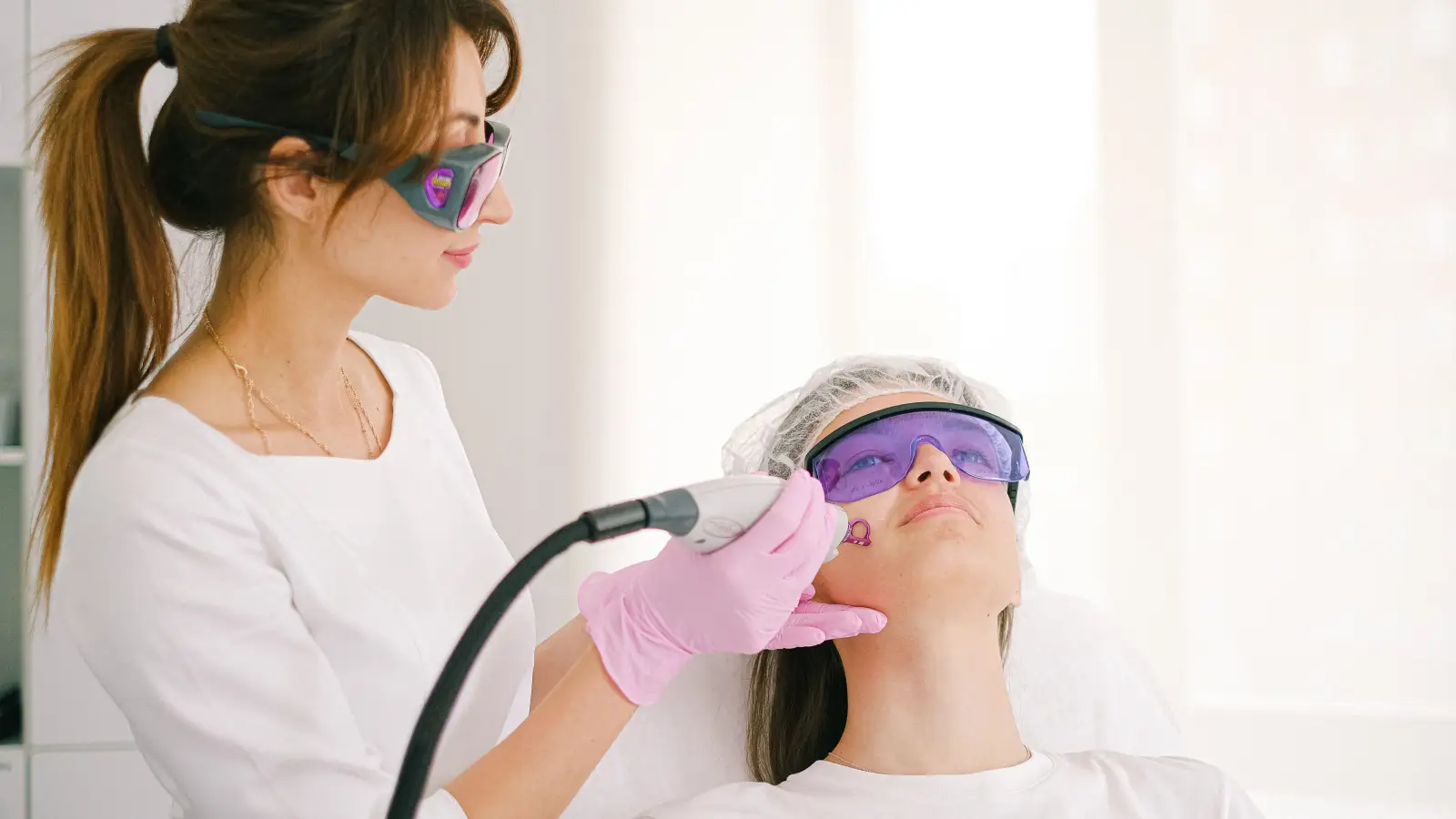
Alexandrite’s 755 nm wavelength sits near the peak of melanin absorption. That gives it a powerful advantage when the target is a superficial, melanin-rich lesion on skin that has little competing epidermal melanin — exactly the case with solar lentigines on Fitzpatrick types I–II. The light energy is absorbed almost exclusively by the dark spot, shattering pigment with minimal passes. In clinical practice, a single pass visibly lifts a lentigo; one or two sessions clear it.
The tradeoff is absolute. The same melanin absorption that makes it effective makes it dangerous for skin with higher baseline melanin. In types III–VI, the epidermal melanin competes for the light, generating heat that triggers PIH even when settings are dialed down. For this reason, many practitioners avoid alexandrite entirely on type V–VI skin and use it only with caution on type IV.
Nd:YAG Laser (1064 nm): The Safer Route for Melanin-Rich Skin
The 1064 nm wavelength penetrates deeper into the dermis and is absorbed less by epidermal melanin. That makes Nd:YAG the go-to for treating lentigines on darker skin tones, where the risk of PIH overrides the desire for sprint-fast clearance. The safety margin is substantially wider: even on types V–VI, properly selected fluence rarely causes new pigmentation issues. The downside is speed. A solar lentigo that would clear in one alexandrite session may require two or three Nd:YAG treatments. The final clearance rate is slightly lower — typically around 70–85%, depending on the spot’s depth — but for patients who cannot risk PIH, that tradeoff is non-negotiable.
IPL (Intense Pulsed Light): Broad-Spectrum Versatility, Less Precision
IPL is not a laser — it emits a broad spectrum of light that can be filtered to target different chromophores. For pigmented spots, a filter in the 500–600 nm range is used. This versatility lets a single device address both pigment and background redness, which is attractive for patients who want overall skin rejuvenation alongside spot removal. However, the lack of a single coherent wavelength means IPL is less precise. Spots take more sessions to clear — often 3 to 5 — and the final clearance rate trails both alexandrite and Nd:YAG for solar lentigines. On darker skin, IPL is safer than alexandrite if the operator uses longer filters, but it still carries a moderate PIH risk and demands careful test spots.
Head-to-Head: Speed, Clearance, and PIH Risk by Fitzpatrick Type
A straight comparison of devices without skin type is misleading. The table below quantifies how the same parameters shift depending on the patient’s baseline melanin.
| Fitzpatrick Type | Recommended Device for Solar Lentigines | Typical Sessions | Expected Clearance Rate | PIH Risk (Alexandrite) |
|---|---|---|---|---|
| I–II | Alexandrite | 1–2 | >90% | Very low |
| III | Alexandrite or Nd:YAG | 1–2 (Alex), 2–3 (Nd:YAG) | 85–90% (either) | Moderate |
| IV | Nd:YAG or IPL | 2–3 | 75–85% | High; alexandrite not recommended |
| V–VI | Nd:YAG | 3+ | 70–80% | Very high; alexandrite contraindicated |
Alexandrite’s two key wins — speed and clearance rate — are confined almost entirely to types I–II. For skin of color, Nd:YAG wins on safety, and IPL offers a middle ground for types III–IV when a broader photorejuvenation effect is desired.
Cost and Session Counts: What to Budget
Treatment pricing in the U.S. tends to follow the complexity of the device and the number of sessions needed. Alexandrite sessions are often priced at the higher end ($300–600) because of the capital cost of the laser, but the total treatment cost can be lower for fair-skinned patients since fewer sessions are required. A type I patient with a few discrete lentigines might pay $300–600 total. A type IV patient choosing Nd:YAG may pay $250–500 per session but need two or three sessions, pushing the total to $750–1500. IPL falls in the middle per session, but the 3–5 session requirement can make it the most expensive route over time.
Pricing is not the primary decision driver — safety and efficacy are — but factor in the total number of visits when choosing between a faster, riskier route and a slower, safer one.
Which Laser Should You Choose for Your Spots?
Fitzpatrick I–II with discrete solar lentigines: Alexandrite is the clear winner. The two key wins — rapid clearance (often one session) and the highest spot removal rate — are decisive, and PIH risk is negligible in this group.
Fitzpatrick III skin: The choice hinges on spot depth and PIH history. Shallow, well-circumscribed spots can be treated with alexandrite using conservative settings, but Nd:YAG is the safer alternative if there’s any history of post-inflammatory darkening. A test spot with alexandrite is a smart first step.
Fitzpatrick IV skin: Nd:YAG or IPL are the practical choices. Alexandrite’s high PIH probability usually cancels out any speed advantage. IPL with longer wavelength filters can work for mild pigmentation and associated redness, but Nd:YAG offers the best safety profile.
Fitzpatrick V–VI skin: Nd:YAG is the only reliably safe option among the three. Alexandrite is typically contraindicated, and IPL requires a highly experienced operator and a careful risk analysis. Expect more sessions, but the tradeoff is avoiding months of PIH that darkens the same spots you’re trying to remove.
Overall skin revitalization alongside spot removal: IPL fits light to medium skin tones (types I–III), where its broad spectrum addresses pigment, redness, and texture simultaneously. For darker skin, Nd:YAG remains the safer base treatment, and any overall rejuvenation must be approached with cautious parameters.
Frequently Asked Questions
How many alexandrite sessions does it take to clear a sunspot?
On Fitzpatrick types I–II, one session often lifts a superficial solar lentigo completely; a second session may be needed for stubborn or larger spots. The procedure itself takes only minutes for a few lesions.
Is Nd:YAG painful for pigmented spot removal?
Discomfort is typically mild to moderate. Most devices use a cooling tip or chilled gel to protect the epidermis, and the sensation is often described as a rubber band snap followed by warmth. Topical anesthetic is rarely necessary.
Can IPL make pigmentation worse on dark skin?
Yes, if incorrect settings are used. Broad-spectrum light can heat epidermal melanin in darker skin types, triggering PIH. However, with longer wavelength filters, gradual fluence, and test spots, the risk can be managed. Nd:YAG remains the safer first choice for types IV–VI.
Final Verdict
Alexandrite lasers win for treating solar lentigines on the lightest skin tones; the speed and clearance rate are unmatched. For anyone with Fitzpatrick type III or darker, those wins become liabilities, and Nd:YAG — or in select cases IPL — takes over as the smarter, safer path. A Fitzpatrick-stratified decision table consistently points to the same conclusion: match the device to the skin tone first, not just the spot.
Pigment Curious
We are people who want to better understand skin pigmentation, dark spots, and how different skin tones respond to skincare and professional treatments. We look beyond simple beauty claims, focusing on scientific evidence, clear explanations, and practical knowledge that helps people make more informed decisions about their skin.