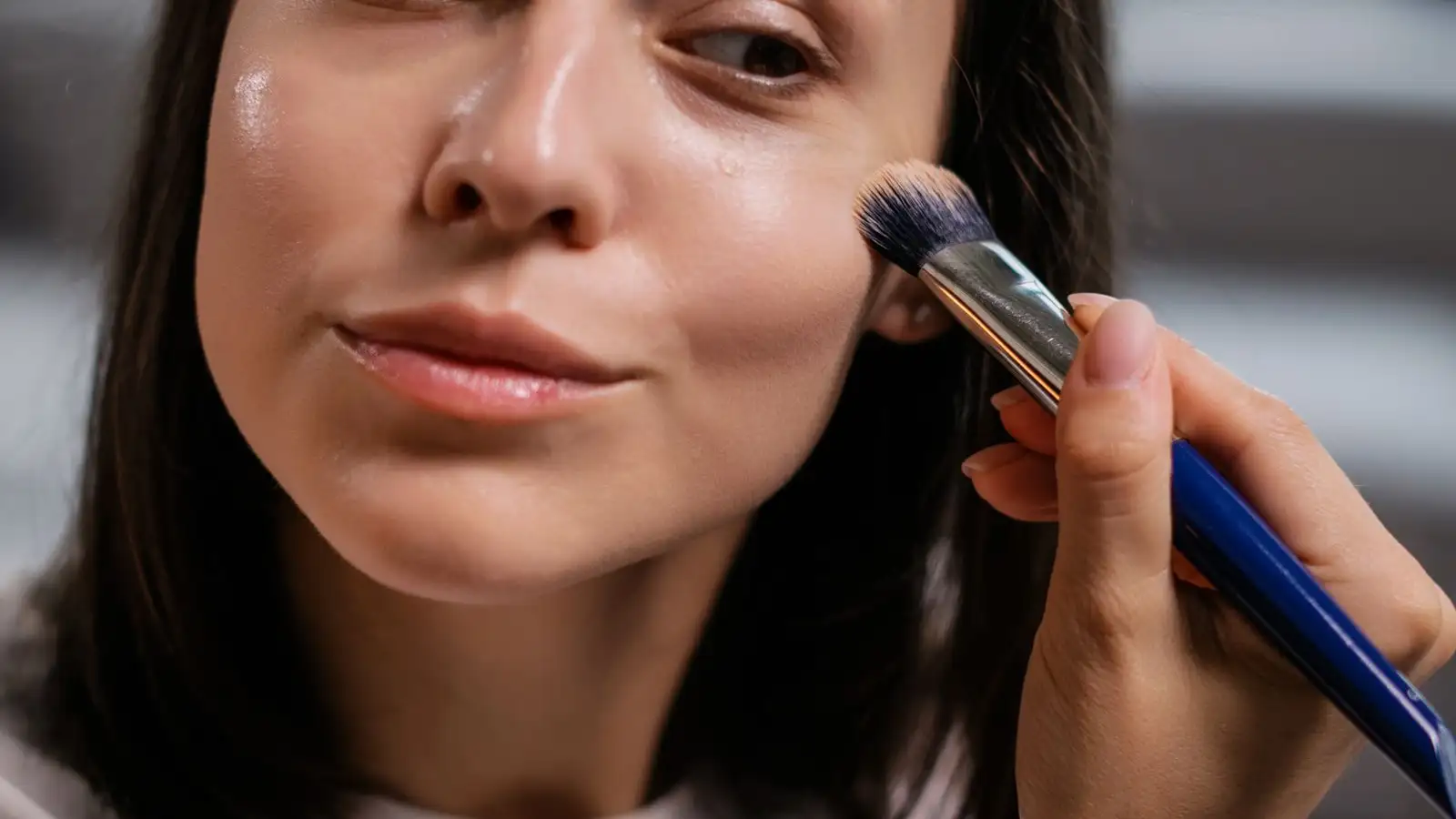
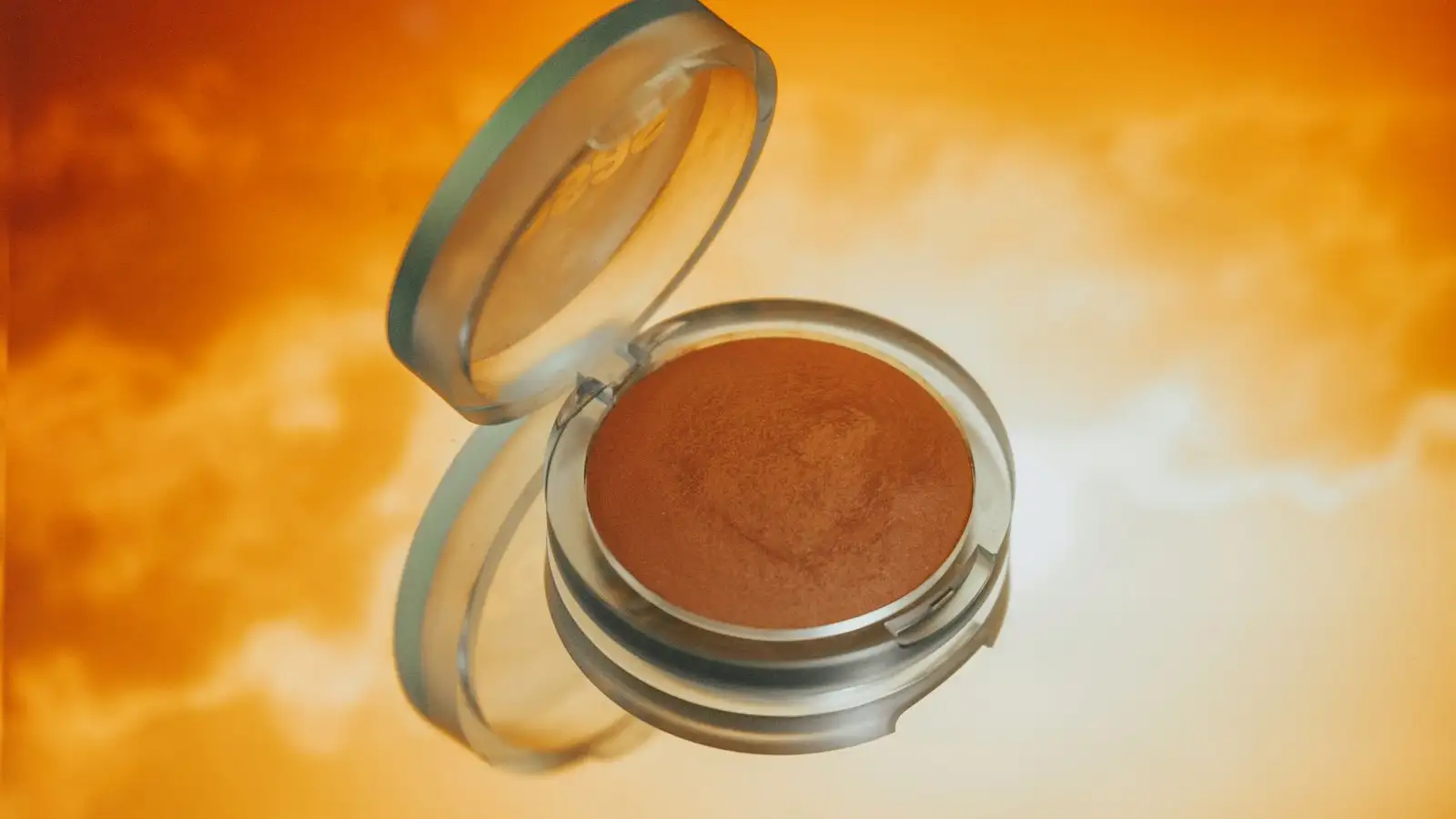
What Film Formers Actually Do for All-Day Foundation Wear
Film formers are the polymers that set into a flexible, water-resistant layer on the skin and hold pigment in place. They are the actual mechanism behind all-day wear, not the shade name or the copy on the bottle. Water, volatile silicones, and emollients are the carriers and the comfort agents around that film; once the volatiles evaporate, what stays on the face is film, pigment, and whatever oils have not been absorbed or wiped away. On melanin-rich skin, that leftover layer is also what decides whether the color still reads true at hour ten, which is why reading a base system tells you more about wear than any review can.
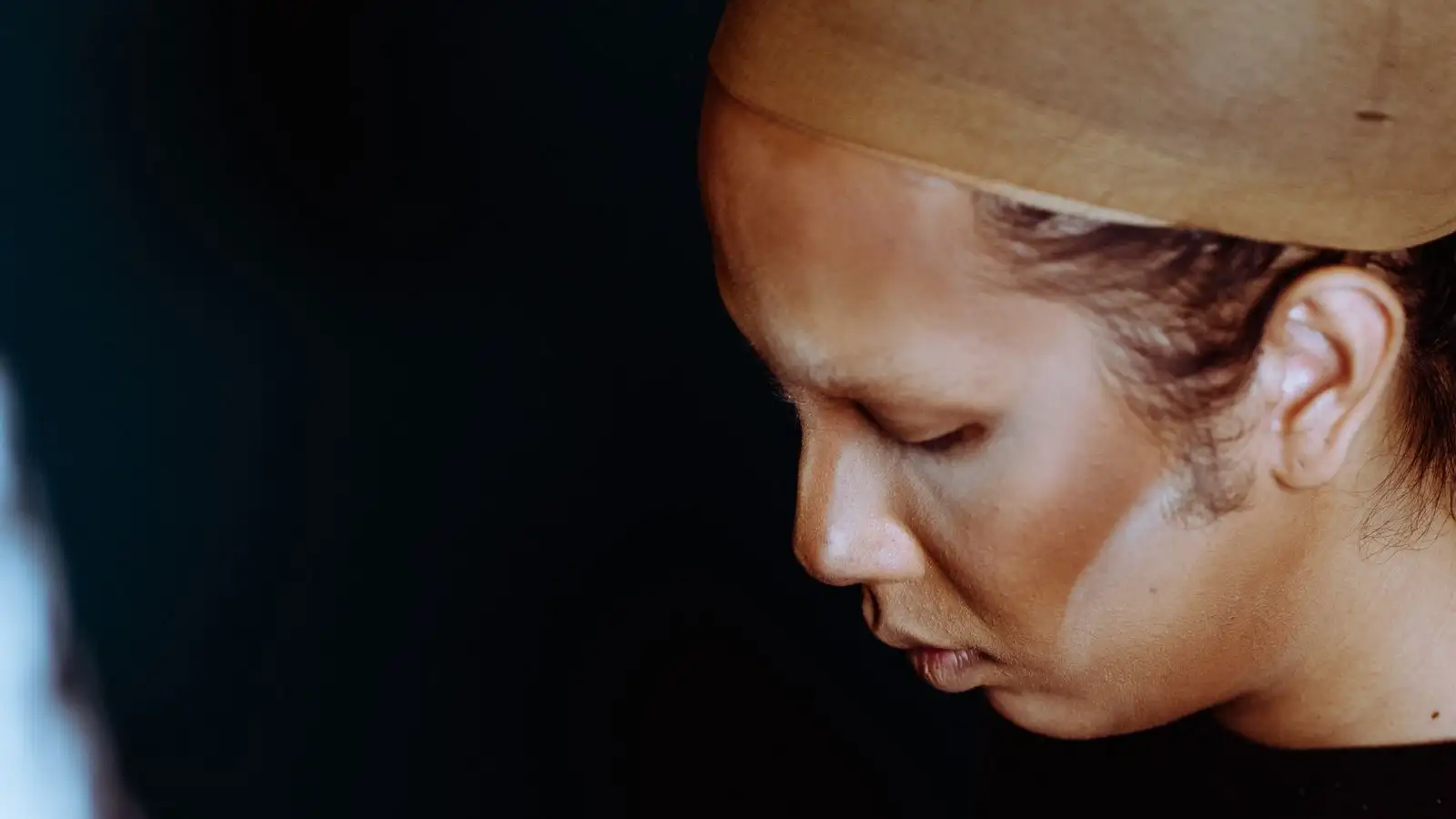
I figured this out the way most people do, by being annoyed.
It is 4:40 in the afternoon, I am sitting in a parking lot with the visor mirror down, and I am doing the thing I always do: turning my chin toward the window light. The foundation is still on my forehead and cheeks. It has completely left my jawline and the sides of my nose. There is a patch near my chin that has gone half a shade warmer than the rest of my face, and when I press a finger to it, the finger comes away with a soft ring of color. Nothing wore off evenly. My face divided itself into zones, and each zone behaved like a different product.
That used to send me back to the store. Now it sends me back to the ingredient list, because that parking-lot face is a diagram. The film, the pigment, and the oils each fail in a different pattern, and after enough afternoons I can usually tell which one quit.
What is actually left on your face after the water leaves
Most liquid foundations are an emulsion: water, silicones, pigments, film formers, emollients, and a preservative system. When you press it into skin, the water starts leaving almost immediately. Then the volatile silicones go. Cyclopentasiloxane and its relatives are designed to evaporate at skin temperature, which is why a foundation can feel wet for two minutes and then suddenly seem to set. That set is not the product drying into a crust. It is the carrier leaving, and the film formers and pigments concentrating into a thin layer on top of your skin.
The film formers decide everything that happens after that. Trimethylsiloxysilicate is a resin, and it lays down a water-resistant, transfer-resistant film that resists sweat and sebum about as well as anything in the category does. Acrylates copolymers, often paired with dimethicone, tend to be more flexible, which means the film moves with your face instead of fighting it. Neither one is better. They are different mechanical properties. A resin-heavy film is the one still sitting on you after a long day, and also the one that can feel tight and a little flat by hour eight. A flexible acrylate film stays comfortable and looks like skin longer, but it will hand some of itself to a phone screen.
The other thing worth knowing is that set does not mean fixed. It means the film has formed. Anything oily that arrives later can soften it again: your own sebum, a rich cream underneath, a cream blush pressed over the top.
Pigment load is the part almost nobody checks
This is the piece that matters most on deep skin and comes up least often.
The film is nearly clear. The color you see is pigment. That means the film can be completely intact while the color does something else entirely. If the pigment load is low, the film technically holds but coverage thins unevenly as your face moves, and on deeper skin that reads as patchiness, a mottled fade instead of a clean one. If the pigment load is very high, the film has less room to flex. It cracks, usually first around the mouth, in the smile lines, and near the eyes where the skin moves the most.
Then there is dispersion. Pigment that is not well dispersed in the base does not stay evenly spread as the film settles. It drifts into a slightly streaky or grainy pattern. On light skin you will not see it. On deep skin you will, because a base at that depth is carrying more pigment to move the color, so anything the pigment does as the day goes on has more to show.
Oxidation belongs here too. The classic complaint that a foundation turned orange is not one single reaction. It is usually the oils in the formula and the oils on your skin interacting with air over hours, plus the film's emollients blending with sebum. A base with a lot of pigment has more color available to shift, and if the base already runs warm, warm plus warm reads orange. That is why the mismatch tends to show up mid-afternoon rather than at application. It is also why I stopped judging a shade by the first five minutes.
Everything that makes it feel good makes it leave
Emollients, which means esters, oils, fatty alcohols, and the silicone fluids that stay instead of evaporating, plasticize the film. That word means exactly what it sounds like: they make the film softer and more pliable. That is why a comfortable foundation moves, transfers onto a collar, and settles into expression lines. A formula with almost no emollient will hold like paint and feel like paint too.
So long wear is not one property you either have or do not have. It is a ratio: how much film former, how much emollient, how much pigment, and which film former. Once I started reading labels that way, I could predict a lot about hour six before spending anything.
Water-based formulas, humidity, and re-wetting
Water-based foundations, where water is the first ingredient and the film former is something like an acrylates or PVP-type polymer, set by evaporation and stay re-wettable. That is the useful part and also the problem. In high humidity, moisture in the air softens the film from the outside, and it migrates. That is what separation actually looks like on a face: color breaking up around the nose and mouth, the base sliding off the jaw. If you live somewhere humid or you run hot, a water-based formula wants to be set. Loose powder pressed into the film while it is still slightly tacky gives humidity a drier surface to work against.
Silicone and volatile systems dry down more completely and do not re-wet as easily, which is part of why they hold up in humidity. The cost is comfort. More resin, less emollient, more chance of tightness, and more chance the base will outline any dryness you have. If your skin is dry and the air is dry, the formula that wears the longest is often the one that looks the least like skin by evening.
How I predict wear before I commit
- I time the dry-down. A dot on the back of the hand, touched at two minutes and again at ten. Still tacky at ten means emollient-heavy and it will move. Fully dry and slightly tight means resin-heavy; it will hold, and it may look flat.
- I match the base of the primer to the base of the foundation. A silicone primer under a volatile-silicone formula locks together. A water-based primer under that same formula gives the film nothing to grip, and it slides or pills. The reverse is true as well. A mismatched primer is one of the most common reasons a foundation that works beautifully on someone else does not last on you, and the foundation is not the problem.
- I wear a new one half-face on a day I have nowhere to be. Window light at three hours and again at six. The bare side is my control, and comparing the two tells me more about the film than a full face ever could.
- I powder less than I want to. Powder absorbs surface oil and gives the film a matte finish, but powder over an emollient-heavy film grabs and cakes, and powder pressed into a still-wet film around the nose is exactly what creates that separated ring. Powder is also where flashback lives. The silica, mica, and titanium dioxide that make a powder look bright in the pan can throw a pale cast in flash photography on deep skin. If I know I will be photographed, I go light or skip it, and I take one flash photo before I walk out the door.
- I carry the formula, not the powder, for touch-ups. More of the same foundation blends into the existing film. Powder on a softened film just makes a matte version of the same broken color.
The last thing, and the one I wish someone had explained years ago: when a foundation falls apart at hour eight, it is usually not lying to you. It is telling you what it is made of. The film held or it did not. The pigment stayed dispersed or it drifted. The emollients won or the resins did. Once you can read that from your own face in your own light, the shelf at the store gets a lot less mysterious.

About the author
The Undertone
The Undertone is a byline for people who learned foundation on brown skin by swatching, mixing, and checking color in real light. They share a practical focus: if the depth and undertone are right, the formula will follow.
More about us