Why Formulators Match Base Systems to Prevent Color Shift
Color shift is almost always a base-system problem before it is ever a shade problem. When a water-based foundation goes over a silicone-based primer, the two never merge into a single film — the pigment ends up sitting in a layer that slips, pills, or seals your own oil underneath it, and by early afternoon the same bottle reads warmer, darker, or grayer than it did when you put it on. Matching water-based to water-based and silicone-based to silicone-based is what keeps a color where you placed it.
I learned that at my bathroom sink, with the window cracked, because the light fixture in there is useless for anything but finding a toothbrush.
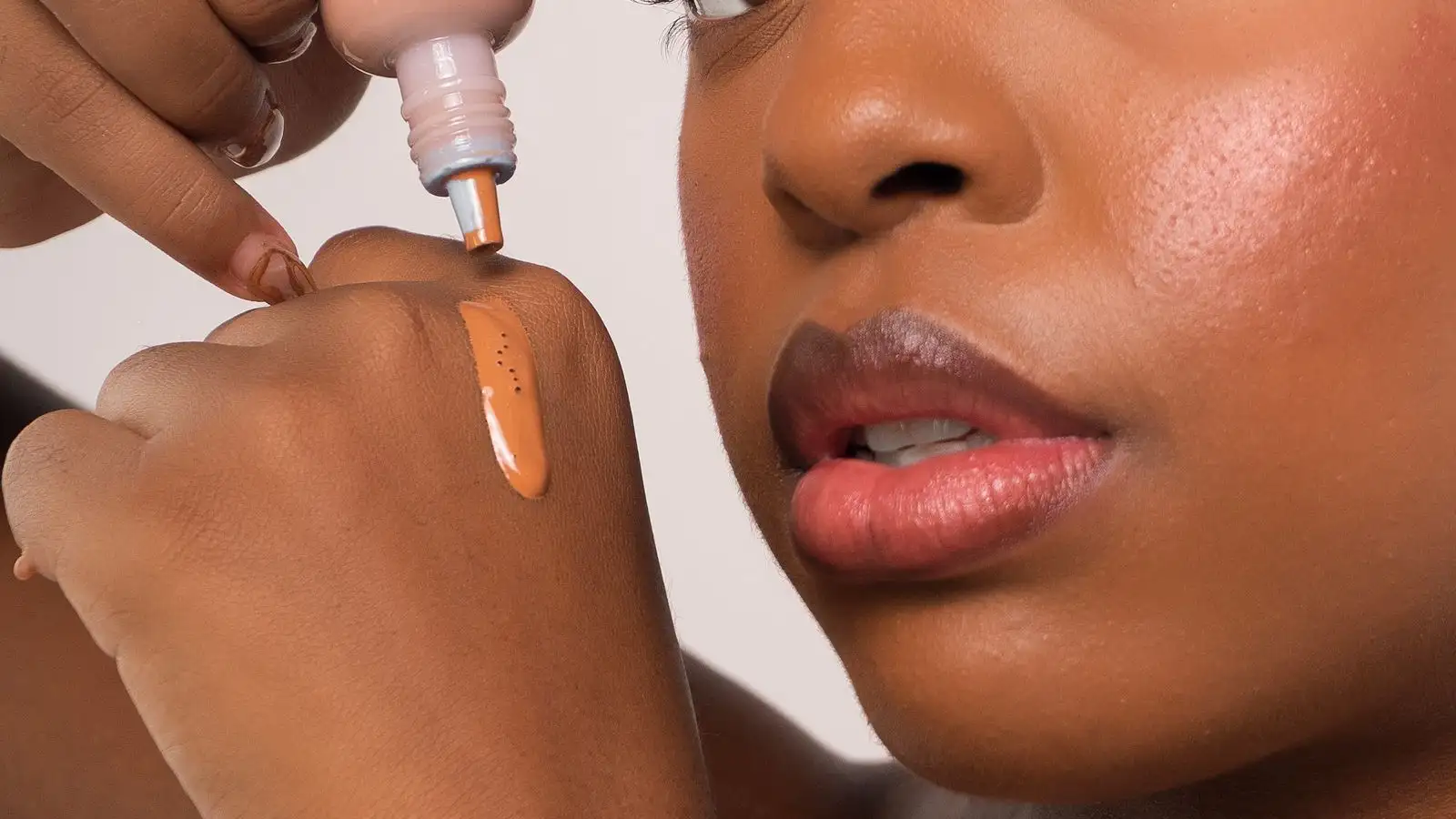
Let me put you where I was standing. Back of my left hand, two stripes. On one stripe I'd pressed a silicone primer — the kind that feels like silk and seems to vanish into nothing. The other stripe, bare skin. Then the same foundation over both.
The bare stripe blended out in maybe four passes of my fingertip. The primed one went strange around pass two: it started to gather into little gray-pink threads, like eraser shavings, and where it finally did stick, it sat there like a wet sticker instead of settling in. That's pilling, and it's not a technique problem. It's two things refusing to be one thing.
I wore it anyway that day. By one in the afternoon the line along my jaw had gone ruddy and half a step deeper, and there was a bald patch on my chin where the whole layer had skated off. The bald patch is what finally stopped me from blaming the shade.
Two films, not one
A foundation is pigment dispersed in a liquid carrier, plus a set of ingredients whose job is to hold everything together once the carrier leaves. That second group is the part nobody talks about at the counter.
Water-based formulas are built on water plus humectants — glycerin, butylene glycol, propanediol, that family. They hold moisture, they feel cool going on, and they set by the water evaporating and the humectants doing what humectants do, which is pull water toward themselves.
Silicone-based formulas are built on silicone film formers: dimethicone, dimethicone crosspolymer, trimethylsiloxysilicate, and similar. These don't absorb and they don't sink in. They spread, they level, and they cure into a flexible film that sits on top of your skin. That film is why a silicone foundation feels like nothing and photographs flat.
Here's the part that matters. Water cannot dissolve a silicone film. If you lay a water-based foundation on top of a silicone primer, you have not made one layer of makeup. You've made two layers that happen to be touching, and the top one is holding on by surface tension and hope. Where it touches down, it grabs. Where it doesn't, it slides. That's the pilling you saw on my hand, and the bald chin patch, and the uneven patch of color that made me think the shade was wrong.
Why it shows up as color, not just texture
The word people use for this is oxidation. Sometimes that's technically right. Most of the time it isn't, and thinking it is keeps you buying bottles instead of fixing the problem.
What usually happens is simpler and uglier. When the film breaks down, pigment stops being evenly dispersed and starts concentrating. Where it pools, it reads deeper and warmer. Where it's worn away, you see your own skin underneath, and the contrast between the two makes the whole face look like it changed color. It didn't change so much as separate.
On top of that, skin oil gets involved. A silicone film is oil-resistant up to a point, but it's also a lid. If your skin is producing oil under that film and the film isn't intact, oil pools in the broken areas and lifts pigment unevenly. Sebum is slightly acidic, and over a long day the surface pH of your skin and the pigments and dispersants in the formula do interact. Slow, minor, and cumulative.
In my experience, this reads louder on deeper skin. A foundation that's two points warmer than it should be is a small error on a light face. On a rich brown face it turns muddy or ashy, because the undertone is doing more work — there's less room for drift before the color stops looking like skin. That's not a flaw in the skin. It's a tolerance issue in the formula layering.
Humectants have a humid-day problem
There's a second failure mode that has nothing to do with mixing systems and everything to do with weather.
Water-based foundations and humid air are in a constant negotiation. Humectants pull moisture from the atmosphere. On a muggy day, the film can stay soft longer, never fully sets, and starts to break along the creases by your nose and mouth where the skin moves. You blot, and the blotting paper comes back with pigment-tinted oil — a pinkish-brown ring on white paper. That ring is the tell. Your film has failed, not your shade.
Silicone films handle humidity better because they're not interested in water at all. But they have the opposite liability in heat: they can feel heavy, and where the day's oil accumulates under the edges, they lift rather than dissolve.
The layer you forgot was part of the system
Most people check their primer and their foundation and stop there. Your base system is the whole stack: moisturizer, sunscreen, primer, foundation, and anything you spray or powder on top.
This is the thing I'd want you to take from all of it. Sunscreens and day moisturizers are frequently silicone-heavy, because that's how they get a cosmetically elegant finish. So the hidden silicone layer is often not the primer at all. It's two products earlier in your routine, and you've been staring at your foundation wondering why it won't behave.
Setting spray will not bridge a water formula to a silicone film. It's water, alcohol, and a light polymer. It evaporates and leaves a faint varnish. It doesn't dissolve anything.
The two tests I run before I commit
Read the first five ingredients. Not the front of the box. If water is listed first and there's no dimethicone or trimethylsiloxysilicate anywhere near the front, you're holding a water-based product. If cyclopentasiloxane, dimethicone, or a dimethicone crosspolymer shows up in the first few, you're holding a silicone-based one. Labels that say "water-based" on a bottle that's carrying a heavy silicone film former are common. Trust the list.
Then do the hand test, exactly as I described it. Primer on half, bare skin on the other half, same foundation over both, drag with one clean fingertip. If one side pills and the other doesn't, you have your answer in about ninety seconds, and you've saved yourself a return.
The second test takes a day. Wear it, then check your jaw by a window — real daylight, not bathroom light — at the two-hour mark and again around hour six. Daylight is where I stop arguing with myself. Blot your T-zone with a plain paper square and look at what's on it. Clear oil is normal. Tinted oil means the film is going.
Working with what you already own
If your primer is silicone and your foundation is water-based, pick one and drop the other for that day. Skip the primer entirely and see if the foundation behaves. A lot of primers are doing far less for you than the marketing suggests.
If you love the primer, keep the whole stack silicone-based: silicone-leaning moisturizer, silicone primer, silicone foundation. It's a system, and it performs like one.
Don't try to mix a silicone-based mixer into a water-based foundation to adjust the depth. You'll get separation and streaks, and you'll have ruined a bottle. Match the mixer to the base.
Powder is mostly neutral here. It sits on top of either system and absorbs oil, which helps delay the shift. But powder over a film that's already broken will grab at the edges and make a patchy situation patchier. Fix the film first, then powder.
What matching does not fix
Matching base systems fixes behavior: pilling, separation, uneven wear, the sliding. It does not fix a shade that was wrong to begin with. If your foundation is a full step too shallow in depth, no primer change will save it, and you'll spend a year mistaking incompatibility for a bad match.
Some people never see a problem with a mismatched stack. Dry skin produces less oil, so there's nothing to trap and nothing to lift, and the whole thing can look fine for eight hours. Oily skin in a humid climate is where mismatches announce themselves. It depends on your skin, your climate, and how heavy your skincare is underneath.
And sometimes the honest answer is that the foundation is fine and the primer is what needed to go. I keep one silicone primer and one water primer now, and I don't cross them. That's the entire trick. It took me far longer to learn than it should have, mostly because I kept reading the shade name instead of the ingredient list.

About the author
The Undertone
The Undertone is a byline for people who learned foundation on brown skin by swatching, mixing, and checking color in real light. They share a practical focus: if the depth and undertone are right, the formula will follow.
More about us