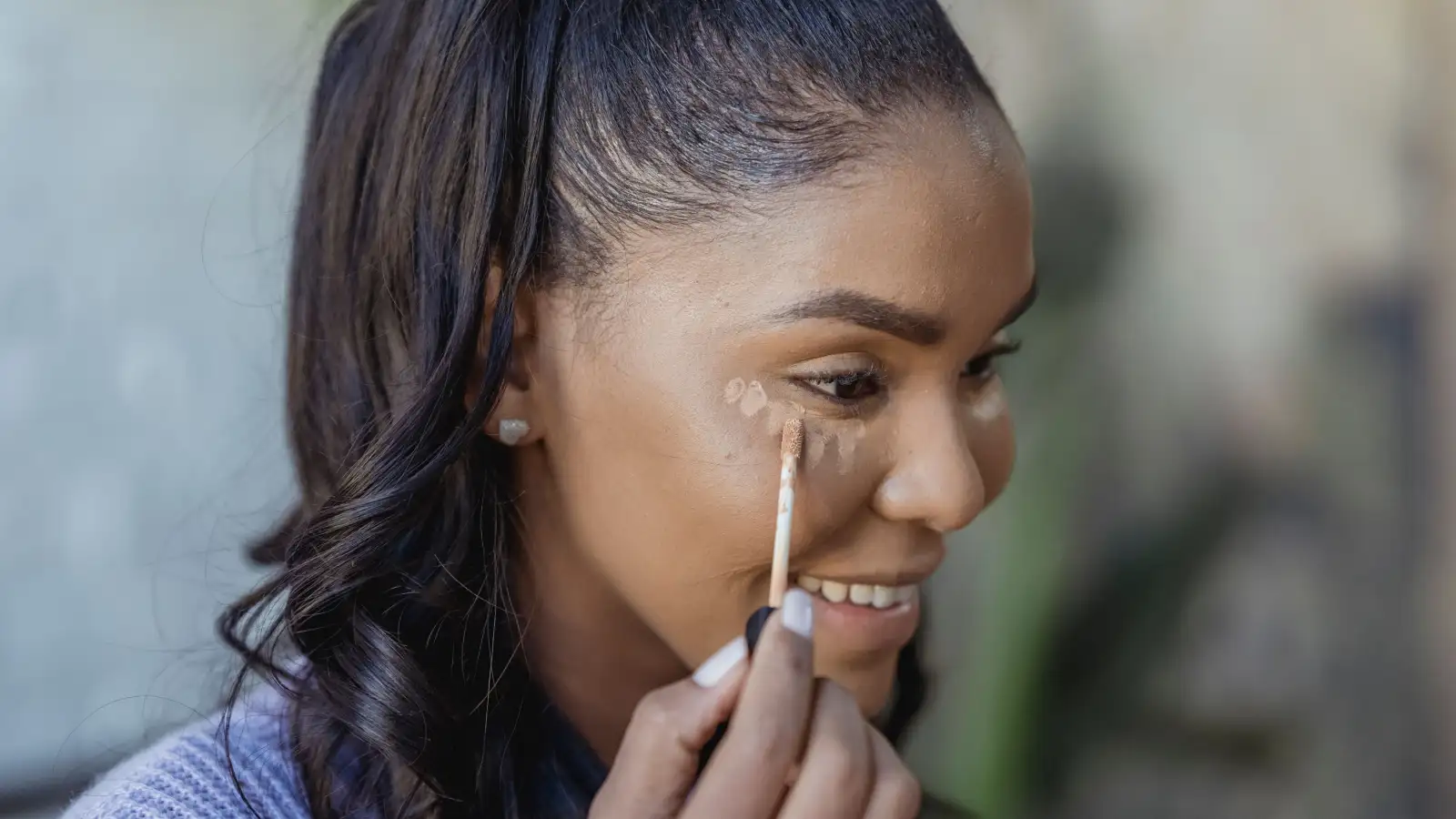
Is Your Foundation Turning Orange Because of Oxidation?
An orange foundation is usually not the wrong shade. It is the right shade after a reaction. Iron oxide pigments carry most of the color in a foundation, and those pigments react with oxygen in the air and with the oil your skin produces. The reaction darkens them and pushes the hue toward orange. On brown and deep skin that shift is louder, because the color already sits close to the red-yellow edge of orange, so a half step of drift that reads as "slightly deeper" on fair skin reads as "who is that" on a deeper tone. The fix is rarely a new bottle. It is controlling the two things the reaction feeds on, oxygen and oil, and knowing whether you are looking at real oxidation or a foundation that simply dried down darker.
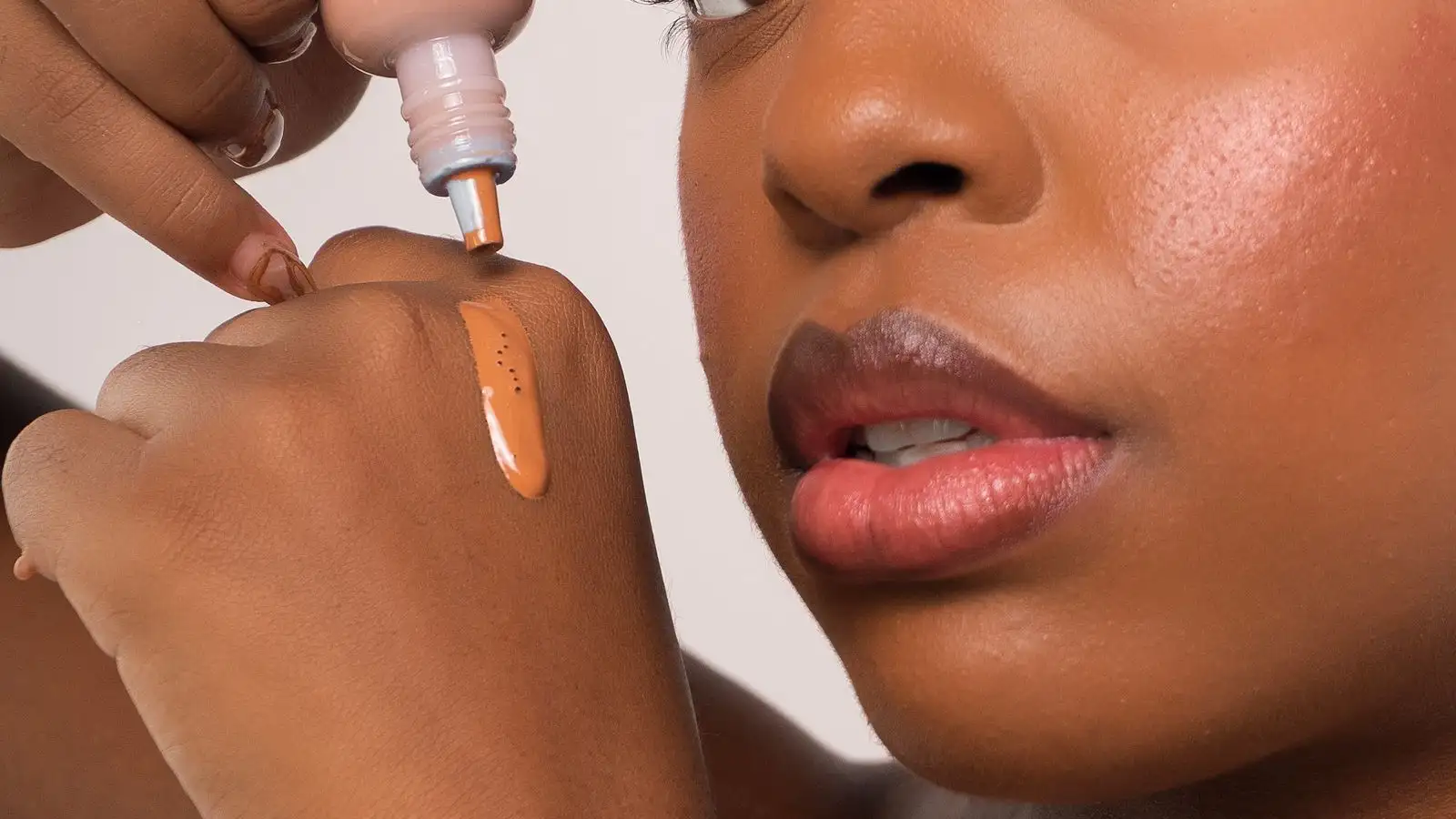
I learned this the slow way, with two bottles of the same shade on my dresser, bought a few months apart. One turned me copper by mid-afternoon. The other behaved all day. For weeks I blamed my primer, then my moisturizer, then the humidity. What actually solved it was a white tile. I put a drop of each on the tile, left it by a window, and checked at ten minutes and again at forty. Both shifted. One just shifted further, and the one that shifted further was the thicker, oilier formula. Nothing about my face changed. The chemistry did.
Two different problems wearing the same name
Most people use "oxidation" for anything that makes a foundation turn darker after application. That lumps together two separate events.
The first is dry-down. Water, alcohol, and volatile silicones evaporate out of the film, and what is left is more pigment per square inch. The color deepens, but the hue mostly holds. Dry-down happens fast, usually within five to ten minutes, and then it stops. It is predictable, and it is a shade-matching problem.
The second is actual oxidation, a chemical reaction. It unfolds over hours. It does not just deepen, it shifts, which is why orange shows up instead of simply brown. If the color is wrong the moment you finish blending, that is dry-down. If it is right at 8 a.m. and wrong at 2 p.m., that is oxidation.
The distinction matters because the fixes are different. You solve dry-down by choosing your shade one step lighter and testing on your actual face rather than your wrist. You solve oxidation by managing oil and air.
Why the shift lands on orange
The pigment load in most foundation is a blend of red, yellow, and black iron oxides, which show up on an ingredient list as CI 77491, CI 77492, and CI 77499. Deep shades lean hard on the red and the black, and warm and olive undertones already sit near the orange end of the spectrum. So there is very little room to drift before orange. A formula that shifts by a small amount reads as a completely different color on a medium-deep or deep base tone.
The white pigments matter here too. Titanium dioxide and zinc oxide do not oxidize the same way the iron oxides do, but they are what turn a bad situation gray. This is why powdering over an orange patch so often makes it look worse instead of better.
What actually feeds the reaction
Three things: oil, air, and heat.
Sebum is the big one. Skin that produces a lot of oil will push that oil up through the foundation film within a few hours, and where sebum meets pigment, the reaction has what it needs. This is also why oxidation is worse in summer, in humidity, and on a long day than on a mild one.
The formula's own oil content matters too. A heavier, oil-rich foundation puts more fuel in the film from the start. Water-based and mattifying formulas tend to drift less, but that is a trade, not a free win. Mattifying foundations can go patchy and settle into fine lines as the day goes on, so you may be trading an orange shift for a dry, cracked finish. I would rather have a formula that dries down slightly matte and holds than one that stays comfortable but goes copper by lunch.
Then there are film formers, the ingredients that create the flexible layer holding pigment on your skin. Different film formers breathe differently. A tightly sealed film keeps air and sebum away from the pigment and oxidizes slowly. A film that lets oil through quickly will oxidize faster. There is no reliable way to read this off a label, which is why the next section is the part that actually matters.
The swatch test that predicts it
Fifteen to thirty minutes on your skin, in daylight, before you decide anything.
Put two stripes side by side along your jaw and down onto your neck, not on your wrist and not on the back of your hand. Wrists are a different color and a different oil environment from your face. Then walk out of the store, or stand near a window, and come back. Check the stripes against each other and against your neck.
What you are looking for is not whether the color is perfect at minute one. It is whether the two stripes drift apart from each other. If a stripe is already warmer and darker at thirty minutes than it was at five, that formula is going to keep going on your face.
A store's lighting will lie to you about hue. Daylight will not. If you cannot get to daylight, at least check the swatch again right before you leave, and compare it to what it looked like when it first went on.
Correcting a foundation that has already oxidized
You do not have to throw it out.
Blue is the direct counter to orange, because blue sits opposite orange on the color wheel. A blue mixing pigment, a tiny amount, worked into a pump of foundation on the back of your hand, will pull an oxidized shade back toward neutral. Start with less than you think. A dot the size of a pinhead is usually enough for a full face, and blue also deepens slightly, so you may need to add a touch of a lighter shade back in.
If your foundation has gone cool and ashy instead of orange, that is the opposite problem, and yellow or peach mixers are what you want.
Two things to know before you commit to mixing. First, mix on your hand or on a palette, never in the bottle, because a formula you have altered is a formula you cannot return. Second, oxidation continues after you apply it. A mix that reads perfect at 9 a.m. may still drift by 3 p.m., just less far.
Slowing it down without changing your foundation
Oil control is the lever, and it works best when it is targeted rather than total.
An oil-control primer creates a barrier between your skin and the pigment film. It will not stop oxidation. It slows it, which on a long day is often the difference between arriving somewhere looking like yourself and not.
Setting only the T-zone is the other half. Most oil breakthrough happens in the center of the face, so a full-face powdering is not necessary and it can backfire. Set the forehead, nose, and chin. Leave the cheeks alone, or use the lightest possible touch there.
Blot before you powder. Pressing a blotting sheet into the shine lifts the oil at the surface. Powdering straight over shine pushes powder into oil and can create a creamier, heavier layer that breaks down sooner.
And be careful with reapplication. This is the counterintuitive one. If your foundation has already shifted orange, adding more powder does not neutralize it. It adds a lighter, cooler layer on top, and in daylight that reads pinkish-gray and slightly chalky. Layering powder over oxidation can make the whole thing look worse than the orange did on its own.
When it is not oxidation at all
Some of what gets blamed on oxidation is something else entirely.
A primer or moisturizer that does not agree with your foundation can break the film and separate the color. Sunscreen, especially a mineral one, can drag a shade lighter or grayer as the day goes on. Pilling looks like a color problem at a glance but is a texture problem underneath.
Skin pH and the acid mantle get blamed constantly for oxidation, and there is a logic to it, since the film sits on top of whatever your skin is doing. I cannot verify that for you, and I would rather you spend your energy on the variables you can actually measure: how much oil is on your face, what the swatch does over thirty minutes, and whether the shift is a deepening or a hue change.
One honest limit. If a formula is oxidizing by the two-hour mark, no primer is going to rescue it. That is a formula that does not work with your skin, and mixing is a better answer than layering. The goal is not to force every bottle to behave. It is to know which ones will, before you get home.

About the author
The Undertone
The Undertone is a byline for people who learned foundation on brown skin by swatching, mixing, and checking color in real light. They share a practical focus: if the depth and undertone are right, the formula will follow.
More about us