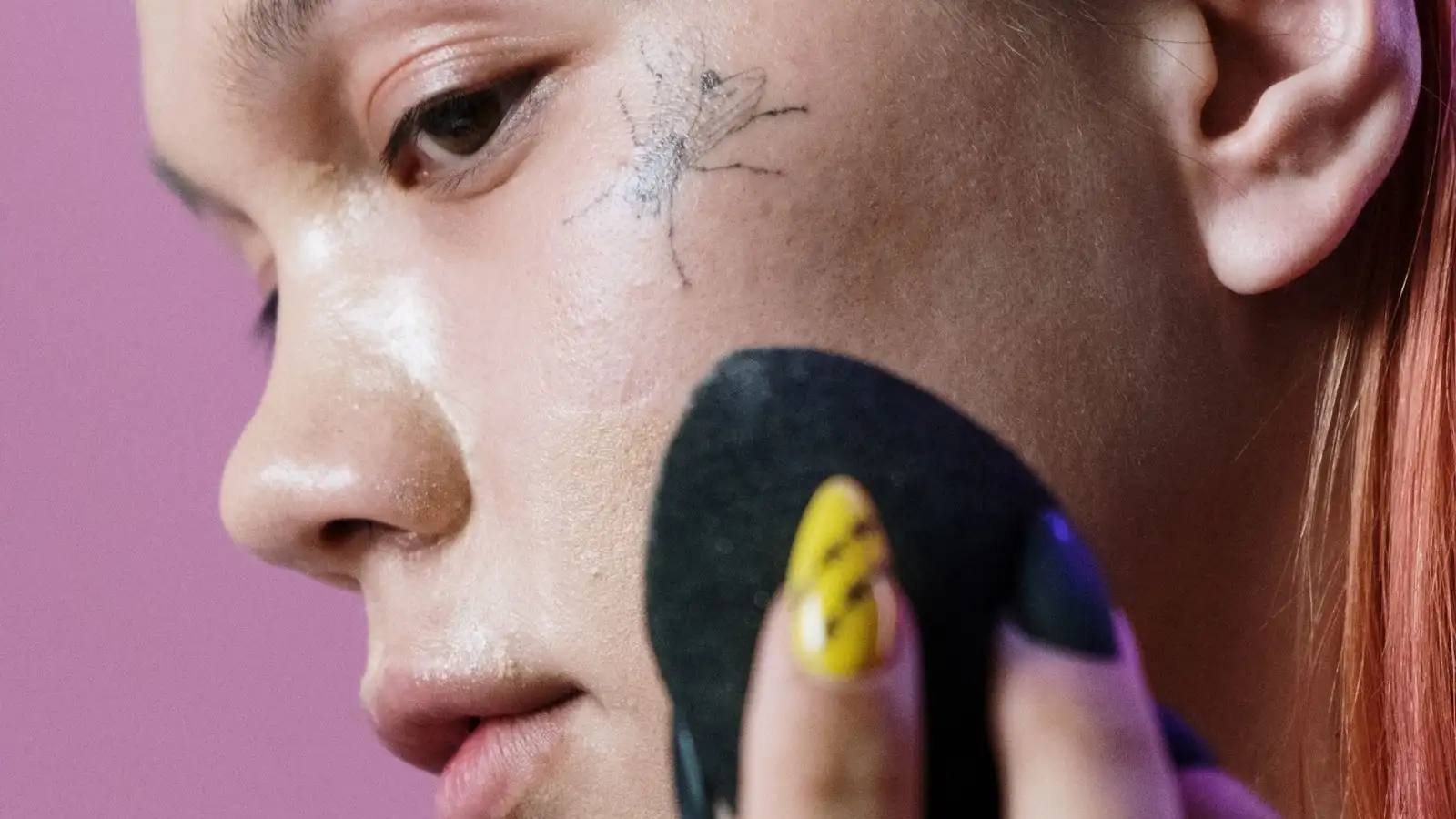
Which Foundation Formula Sits Best on Textured Skin?
Across the five main foundation categories, thin liquid and serum formulas sit most smoothly on textured skin by default; cream and stick formulas carry the heaviest pigment load and need the thinnest possible layer; powder is the most conditional of the group, because whether it helps or hurts depends on whether your texture runs dry or oily. What actually decides the fit is the base, the pigment load, and the film formers — the three things the front of the bottle never tells you.
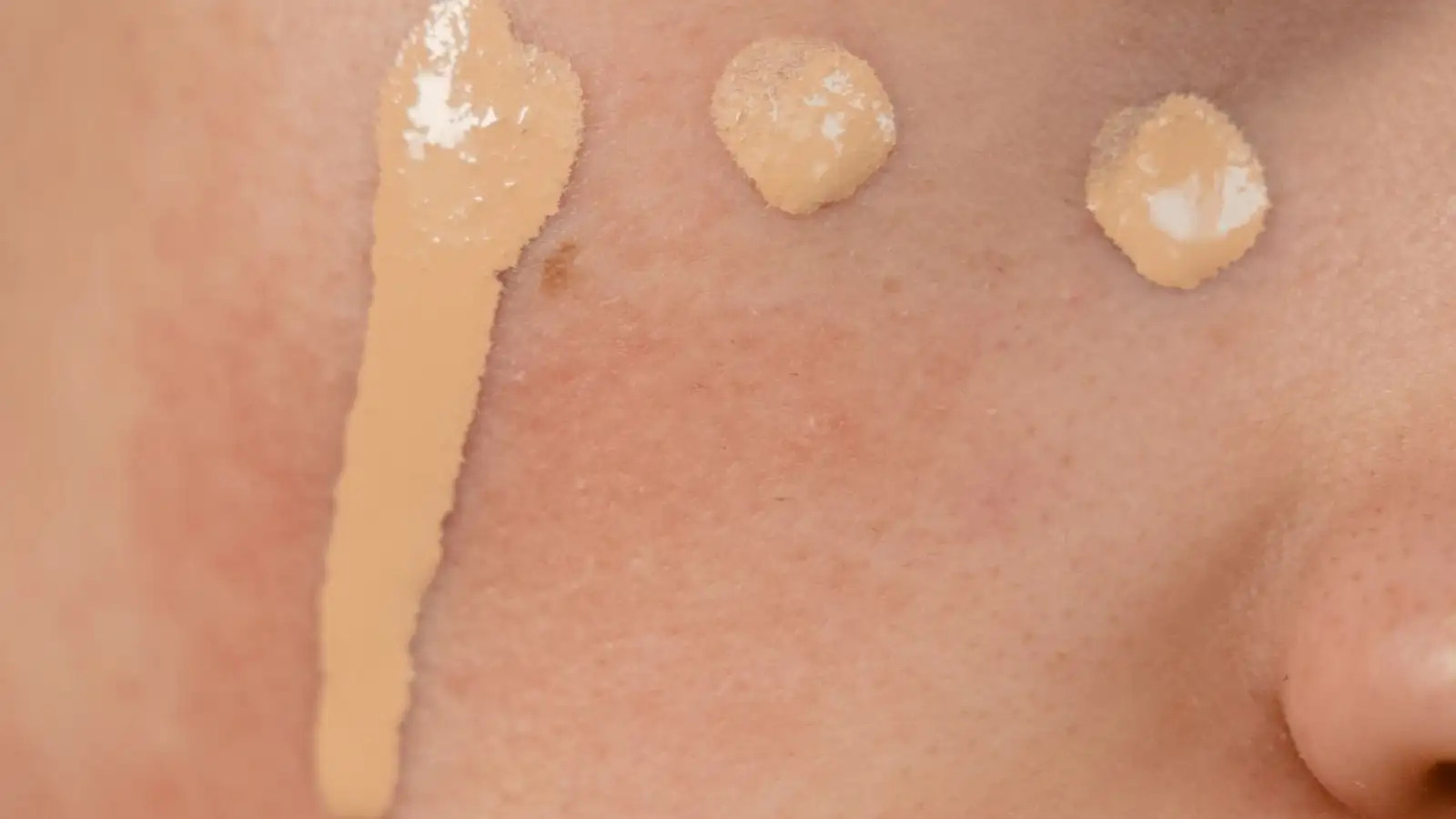
The first time I tested foundation the slow way, I was standing at a north-facing bathroom window at 7:40 on a Saturday morning with a kitchen timer running and a stripe of product drying on the back of my hand. The hand told me nothing, which is the first lesson. Hand skin is not face skin. It took me years to stop trusting it.
Here is the setup I want you to picture, because you can build it today with what's already in your drawer. A window with real daylight coming through it. A pane of clear glass, propped on the sill. Five small strips of foundation on that glass, not on you, so you can watch each one behave without your own skin complicating the answer. A timer. One bare cheek. That is the whole laboratory, and it will tell you more in twenty minutes than an hour at a counter.
"For textured skin" is a phrase, not a category
There is no regulated foundation category called "for textured skin." Nothing on a label is bound to that phrase. It is copy, and it gets written because it sells. What is real is shorter and less exciting: the order of ingredients on the back, the base they are suspended in, how much pigment is in there, and what kind of film the whole thing dries into.
Flip the bottle over. If water or glycerin sits near the top of the list, you are holding a water-based formula — light, fluid, fast to dry down, with less grip on the skin. If you see cyclopentasiloxane or dimethicone in the first few lines, you have a silicone-based formula, and you have just found the reason it looks so smooth in the first ten minutes. Waxes — beeswax, carnauba, the synthetic ones — mean cream or stick territory, pigment held in something that stays exactly where you put it. That last detail sounds like an advantage until you put it in a dip.
The five categories, by how they land
Liquid and serum
These two live next door to each other. A watery serum foundation is barely more than tinted fluid; a full-coverage liquid is a cream thinned enough to pump. So "liquid" by itself tells you almost nothing — tip the bottle and watch how it moves. What runs is usually thin on the face, and thin is what texture wants. A low pigment load evens out a faint difference in tone and lets the texture underneath stay visible rather than hidden. That is the trade you are making, and it is a fair one: you are not covering texture with this category, you are declining to make it worse.
Silicone-heavy liquids are the opposite bargain. The silicone sits in the shallow dips and scatters light, which is why they read as smooth at minute zero. Applied thin, that is a genuine advantage. Poured on thick, the film has nowhere to go and the excess collects in exactly the places you were trying to soften. The fix is almost never a different formula. It is half the amount, pressed in with a sponge instead of swept on with a brush.
Serum formulas are the thinnest option in the drawer, and they behave accordingly. They even out minor differences in tone quietly, with almost no weight, and they will not hide anything stronger — a deeper mark or a shadow at the jaw stays visible through them. That is not a flaw. It is the category working as designed.
Cream and stick
Cream and stick formulas bring waxes and a pigment load you can feel. They cover uneven tone better than anything else in the drawer, and they are the least forgiving about texture, because wax does not flow. It stays. Put a stick directly on your cheek and you have laid down a line of product that was already too much before you started blending, and now you are pushing that excess around your face with a brush, watching it fill every dip it crosses.
I use them, but I ration them. Warm a tiny amount on the back of my hand, pick it up with a small dense brush, tap — do not sweep — and build in three thin passes instead of one thick one. Most of the complaints about cream and stick foundations are really complaints about quantity.
Powder
Powder is the most honest category, because it never pretends. It blurs shine and softens the look of texture in photographs better than any liquid, and it will also find every dry patch you own and set up camp there. On deeper skin this is where it gets tricky: a heavy talc-based powder over dry texture can read grey and ashy, and it settles into fine lines as if it were designed to.
So I do not use powder as a foundation across the whole face. I use it as a finisher in the places that actually get oily by mid-afternoon — the center of the forehead, the sides of the nose — and I keep it off the cheeks, where most of my texture lives. Pressed over loose, for me. Loose gives more blur and more mess.
The film former is what you feel at hour four
Nobody at the counter talks about film formers, and they are the single biggest reason a foundation looks fine at 9 a.m. and looks like cracked paint at 4 p.m. Film formers are the long names near the bottom of the ingredient list — the siloxy and acrylate words — and their job is to hold the pigment together as one continuous sheet on your face.
Some of those sheets are rigid. They hold their shape beautifully and photograph like a dream. They also cannot stretch, so when you smile, the film over your nasolabial fold has two choices: crack, or drag. A flexible film former does neither — it moves with the face and comes back. On textured skin the difference is not subtle. Rigid films look best in the first hour and worst in the last.
There is a related thing happening with finish. A flat matte film gives light nowhere to go, so every raised edge and shallow dip shows up as its own small shadow. A satin or slightly radiant finish scatters that light and softens the read. If you love matte, keep it thin and keep it off the parts of your face where the texture is densest.
Twenty minutes, one cheek, daylight
This is the test. Do it on one cheek and leave the other bare, because side-by-side is the only comparison your eye can actually make. Sit by the window, not in front of the bathroom mirror — the mirror light is the friend of the product, not of you.
At minute zero, note what it looks like. At ten, look again. At twenty, look hard at three things: has it settled into the texture, has the color shifted warmer or darker than it started, and is the surface still even from an angle instead of straight on. Angle is everything. Turn your head so the window light rakes across the cheek from the side; anything that has collected in a dip will show itself immediately.
Then go outside. Daylight at noon is a different test than window light at eight, and flash on a phone camera is a third one. Check again at hour four.
Two things I have learned to expect from this test. The first is that oxidation is real and it usually drifts warm — a formula that starts half a shade off will not often drift toward you. The second is that a formula can pass the twenty-minute test and fail at hour four, which is why I run the whole thing twice before I commit to anything.
Mixing categories instead of buying them
The most useful habit I have built is not finding the perfect formula. It is using two. A thin serum or watery liquid everywhere, because it sits quietly on texture, then a small amount of cream tapped only into the places that genuinely need coverage — a mark, a shadow at the jaw, the corner of the mouth. You get the coverage without the wax sitting in every dip across your whole face.
Same logic with finish: sheer base all over, powder only where you shine. Once you are thinking in categories instead of brands, you stop replacing bottles and start using the ones you already own differently. That is cheaper, and honestly, it is the part that finally made my makeup look like my face at four in the afternoon.

About the author
The Undertone
The Undertone is a byline for people who learned foundation on brown skin by swatching, mixing, and checking color in real light. They share a practical focus: if the depth and undertone are right, the formula will follow.
More about us