Why Foundation Turns Orange on Mature Dry Skin by Afternoon
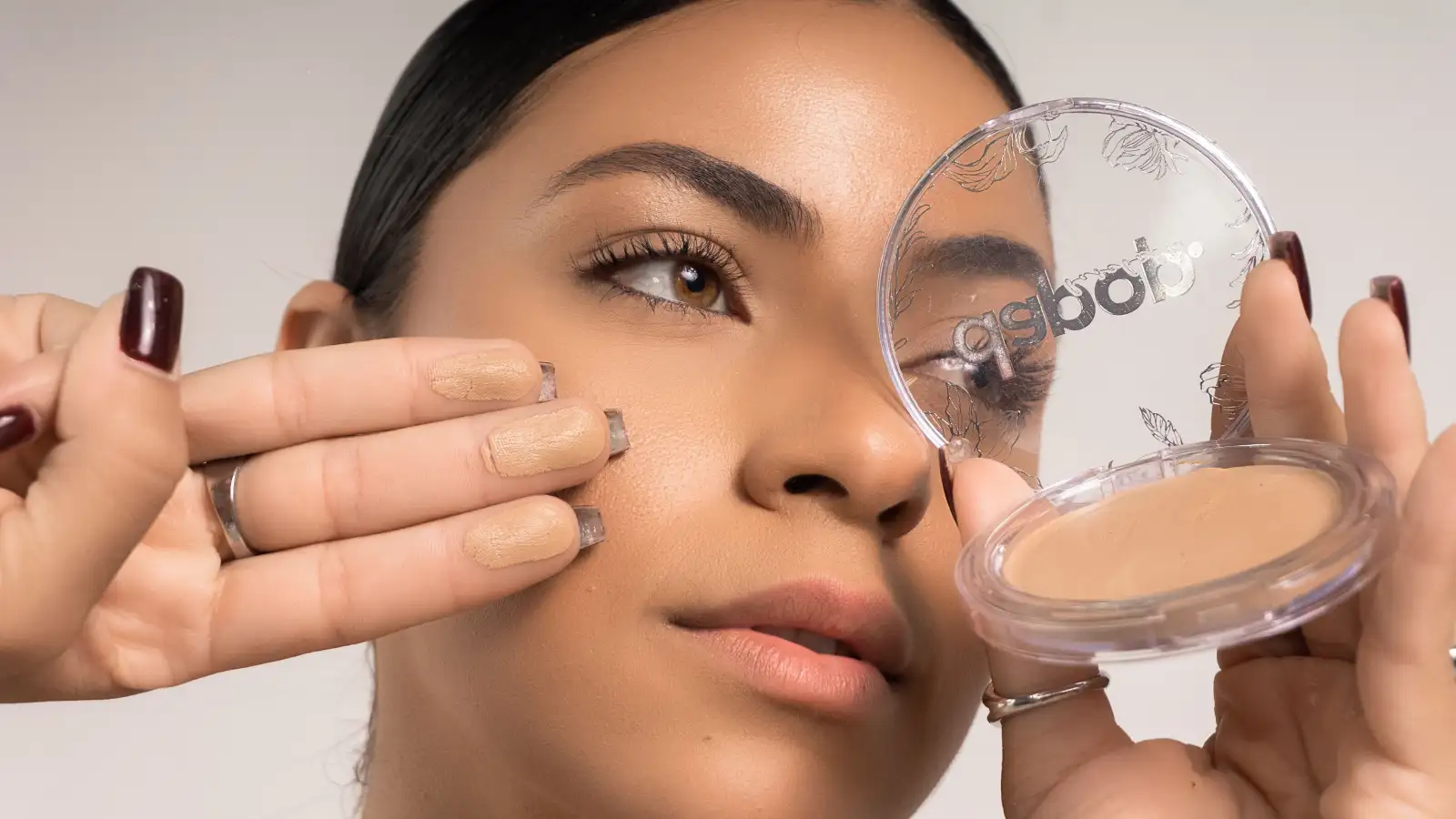
Foundation turns orange on mature dry skin by afternoon because two things happen at once. The film on the face loses water and light volatiles through the day, so the pigment left behind reads more concentrated than it did at application, and the pigments themselves react with air, skin oil, and whatever was layered underneath them. On deeper skin the shift rarely presents as plain darkening. It comes up orange or red on some faces and gray on others, and the gray is often not oxidation at all — it is an undertone that was mismatched from the first pump. The test that separates one from the other costs nothing and takes an hour: three swipes along the jawline, left alone, checked again in daylight at 30 to 60 minutes.
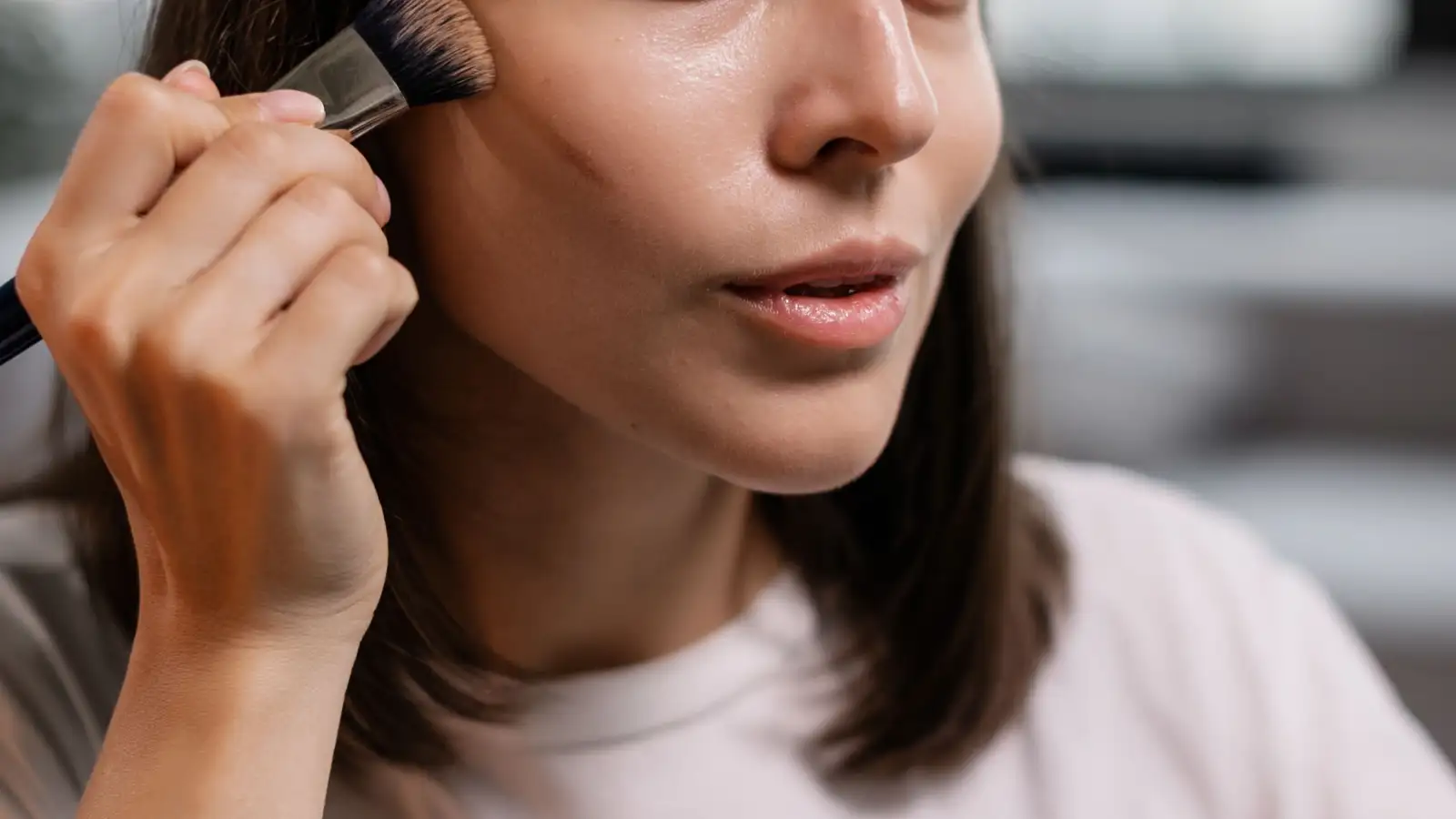
I do the hand swatch first anyway, out of habit, and then I remember the hand is a lie. It runs a shade or two lighter than my jaw, it barely produces oil, and it does not move the way my face moves. So the hand tells me how a formula spreads and nothing else. The real reading happens on the jaw, right at the hinge where the bone turns, plus a second swipe an inch lower onto the neck, because that is where the color actually has to agree.
Three swipes, then leave the room
Here is how I run it. Clean face, no moisturizer the first time — I want the foundation on bare skin so I know what the formula does by itself. One pump covers all three swipes. First at the hinge of the jaw, second at mid-jaw, third just below the jaw onto the neck. Pat, don't rub.
Then walk away. This is the part people skip. The reading at minute one tells you nothing, because a foundation is at its lightest and most flattering the second it goes on. Water is still in it. The film is still wet. Whatever it is going to become, it has not become yet.
I leave it 30 minutes minimum. If the day is hot, or I know I will be moving around, I go the full hour.
When I come back, I look in daylight — by a window, not the bathroom bulb. Store lighting and warm bulbs both push everything toward gold, which is the exact direction oxidation travels, so a warm bulb either hides the shift or makes a good match look bad. Either way it lies to me.
Three swipes give me a direction, not just a verdict.
Orange, red, gray: read the direction
If all three swipes went darker and warmer — orange, or orangey-red — that is oxidation, and it is happening across the board. The pigment is concentrating and reacting the same way at the jaw and the neck. It usually shows strongest at mid-jaw, because that is where I have the most oil and the most movement.
If the swipes look gray, ashy, or dirty against the neck and they looked that way at minute one too, nothing oxidized. That is undertone. My neck runs cooler and more neutral than my jaw, so a warm golden base reads fine on the jaw and muddy on the neck. The day did not create that problem. The day just gave me enough light to see it.
There is a third pattern that gets filed under oxidation for years when it is not. Gray that develops over four or five hours on skin that genuinely matched at the start. On mature dry skin that is usually the film drying down and tightening around texture — pores, fine lines, dry patches — so the foundation separates into thin zones and thick zones, and the thin zones let the skin's own color come through. Cool skin under a warm base equals gray. It behaves like oxidation and it is fixed like an undertone problem.
The powder instruction that backfires
The standard anti-oxidation advice is to set the foundation so oil cannot reach it. On a young, oily face that reasoning holds. On mature dry skin it is the wrong move, and I learned that the hard way.
Powder does not seal. It sits on top of the film and holds heat and whatever oil I do produce. On dry mature skin there is less oil overall, but what comes up has nowhere to go under that layer, so it pools and works at the pigment from underneath. Heavier setting, faster shift. Meanwhile the powder drops into every line and dry patch and pushes the finish toward chalky, which on deep skin reads gray. So I ended up with a face that oxidized faster and looked grayer than before I tried to prevent it.
What I do instead: a light dusting on the T-zone and only where I crease, nowhere near the dry patches on the cheeks or around the mouth. Indoors, often no powder at all, and I accept a little shine. Shine I can blot. Gray at three in the afternoon means taking everything off.
Blotting matters more than I expected, too. Pressing a blotting sheet on the oily spots and then re-checking the color tells me whether I am looking at surface oil or pigment that has actually changed. Sometimes the "oxidation" wipes clean off.
What sits underneath sets the clock
The moisturizer underneath changes how fast this moves. A rich, still-tacky cream keeps the film wet and mobile, and wet foundation slides with the oil below it. That is the setup for a fast shift. I wait longer than I want to, until the moisturizer feels set rather than slippery, and that alone has bought me a couple of hours.
Sunscreen is the related variable. Thick mineral layers sit at the surface and read pale, which is its own kind of gray on deep skin, and the more I stack under the foundation, the more the foundation has to cover. I use fewer layers, not more, and I test the whole stack together rather than the foundation alone.
While the swatches are still on, I take one photo with flash in a dim room. A formula loaded with mineral filters can bounce light back white, and on deeper skin that flashback reads as a gray patch in the middle of the face at night. It is a different failure from oxidation, it happens in a fraction of a second instead of eight hours, and no amount of blotting touches it.
The mixer, and the ratio you will forget
If the swatch went orange and the match was right at minute one, a mixer costs less than a new bottle. Blue neutralizes orange — a pinhead-sized dot of blue liquid mixer into one pump of foundation. If the swatch went red, green is the corrector, and it takes less of it than instinct suggests.
Two cautions. A pump is not a standard unit, so measure by eye and stay consistent, or the ratio drifts and one morning you overcorrect without noticing. And blue crosses from neutral into gray very fast. Pinhead for a pump. Mix, check on the jaw, and only then add more. Overcorrecting into ash and trying to warm it back up is a worse problem than the orange I started with.
I write the ratio down. One pump plus one pinhead, blended on the back of the lid. Three months later, when it looks off again, that note is the difference between a two-minute fix and a store trip.
Gray does not respond to a blue mixer. Blue on gray just makes gray. That shift is solved by changing the base tone of the foundation — warmer, or genuinely neutral — not by adding corrector.
What I check at the end of the day
After blotting, I look at the jaw and the neck side by side in daylight again. If the jaw still reads like the neck after eight hours, the formula and the routine are working. If the jaw separated, I go back through what changed that morning: did I set heavier, did I layer more underneath, did I use the wrong ratio. It is almost always one of those three.
Do not judge a foundation in the first hour. Do not judge it under a warm bulb. Do not judge it on your hand. Judge it at the jaw and the neck, in daylight, an hour in and again in the afternoon, and you learn in one day what most people take years to piece together from old photos.

About the author
The Undertone
The Undertone is a byline for people who learned foundation on brown skin by swatching, mixing, and checking color in real light. They share a practical focus: if the depth and undertone are right, the formula will follow.
More about us