The Setting Step That Turns Mature Dry Skin Ashy in Flash
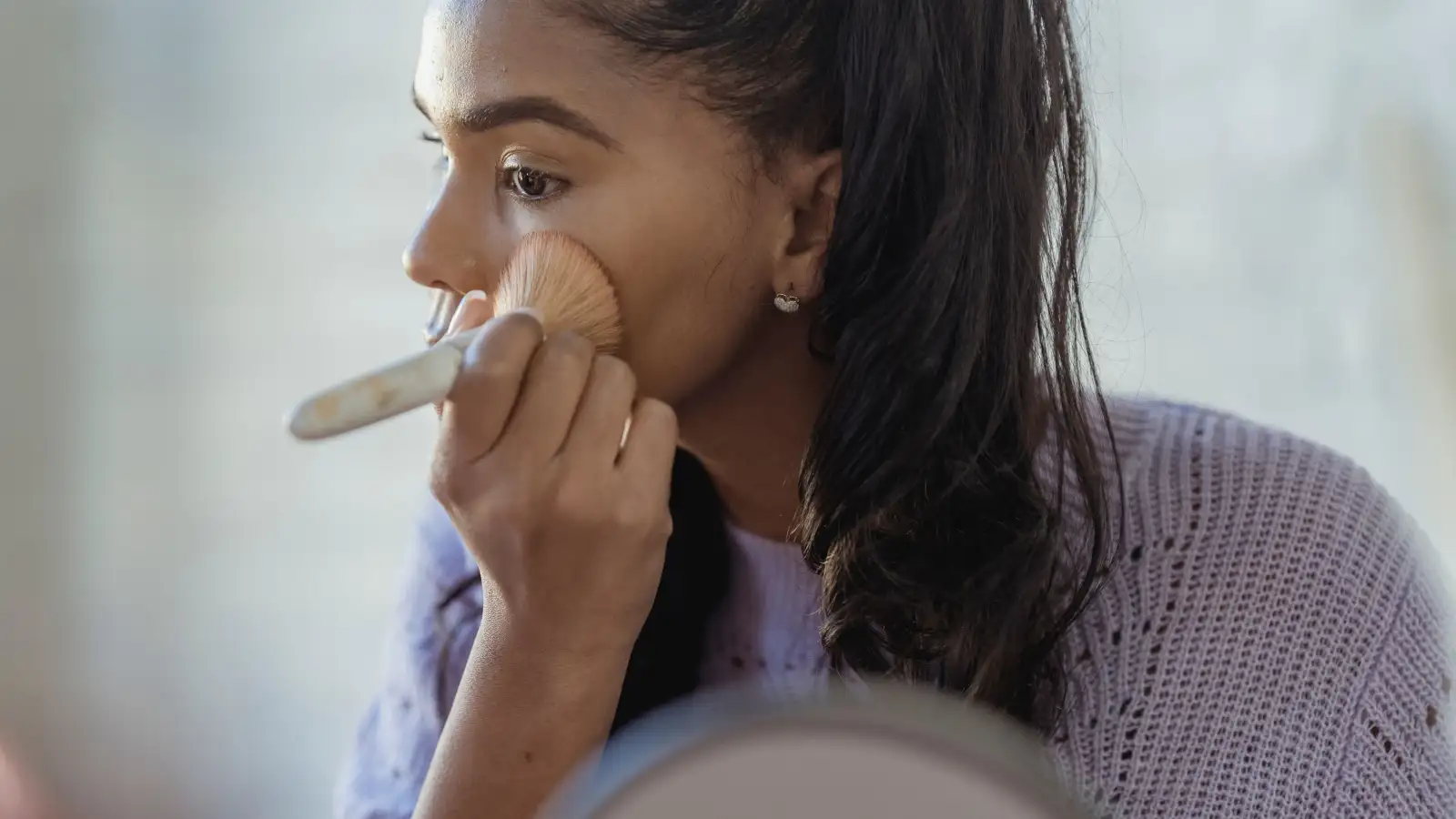
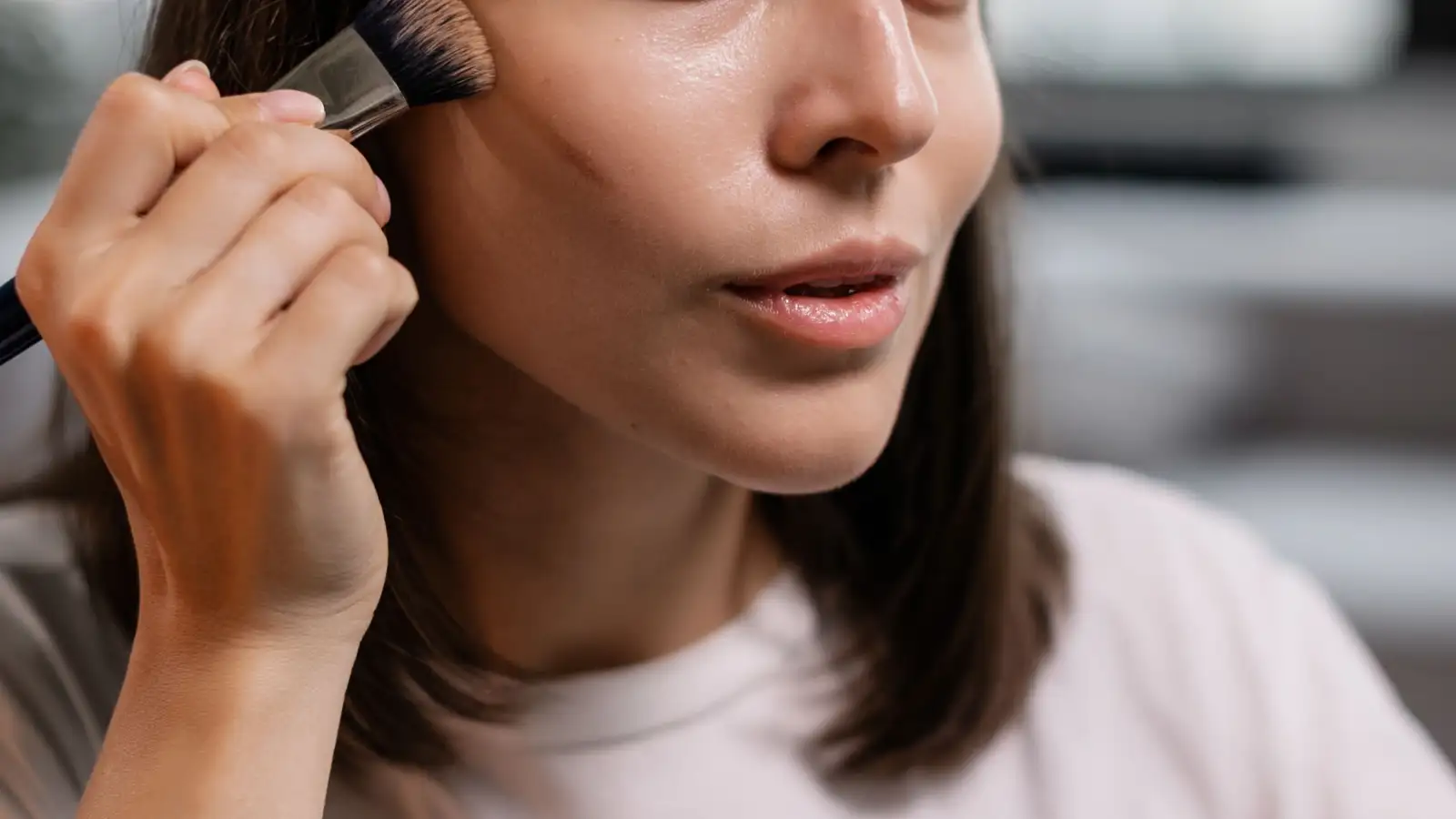
Setting powder on mature dry deeper skin is a spot step, not a full-face one. If the foundation isn't moving, skip it. If it is, dust a small amount of finely milled, tinted powder in a depth close to your own over the sides of the nose, the chin, and anywhere the base creases or transfers, using the lightest touch a soft brush allows. The ashy flash look comes from the powder sitting on top of the foundation, not from the foundation shade — white mica, titanium dioxide, zinc oxide, and silica bounce flash straight back at the camera and lift the surface a shade or two lighter than the skin underneath it.
Stand with me in the bathroom for a minute. Overhead light on, vanity strip on, phone held at arm's length with the flash forced on. That's the test I run before I walk out the door, and it's the one that caught me: my jaw and the outer edges of my cheeks came back fine, warm, the right depth. The middle of my face — nose, chin, the space between my brows — came back chalky grey. Same foundation everywhere. Different result depending on what I'd put on top of it.
So I turned the compact over and read the back. That's where the answer was.
What is actually in the powder
Titanium dioxide. Zinc oxide. Mica. Silica. Those four show up over and over, and none of them know anything about your depth. Titanium dioxide and zinc oxide are white pigments — the same reason a physical sunscreen goes grey on deeper skin. Mica is a light reflector; it's the thing giving you that soft-focus blur in a dim room, and it's the thing throwing light back at a strobe. Silica does the same job by scattering light. In person, under a warm bulb, that reads as "smoothing." Under a camera flash, it reads as a white sheet laid over the middle of your face.
"Translucent" is not a color. It's a marketing word for white with no pigment in it. On a deep warm brown base, a translucent white powder is not invisible. It is a film.
If the center of your face flips two shades lighter the moment a flash goes off, the foundation is usually innocent. Powder is the variable.
Setting is not baking
Baking — pressing a thick layer of powder into the skin and letting it sit before sweeping the excess away — was built for a different face in a different light. On mature dry skin it's where the damage happens, and it's specific damage: powder takes whatever is on the surface of the skin, and where the base is thin and the skin is dry, it grabs. The dry patch on the cheekbone gets outlined instead of blurred. Fine lines fill with powder and then exaggerate themselves. Flakes get coated and each one becomes a tiny reflector.
Pressing makes it worse than dusting. When you press, you're shoving powder down into the grain of the skin rather than laying it across the surface. That's why the tool matters more than the amount: a dense, flat brush loads and presses. A soft, fluffy one holds the powder loosely and lets you release almost none of it.
What I do instead
I tap. Twice, on the back of my hand or the rim of the sink, until I can see almost nothing coming off the bristles. Then I dust — barely touch — rather than press. Anything that reads as motion on the skin is too much.
Placement, in order of where it earns its keep:
- The sides of the nose, where foundation migrates into the crease within an hour
- The chin, especially the fold under the lower lip
- The corners of the mouth, where base collects in the lines
- Between the brows, only if there's a line there for it to sit in
- The very center of the forehead, only if it is genuinely breaking down
The cheeks get nothing. That's where dry skin lives, and that's where powder turns into flour.
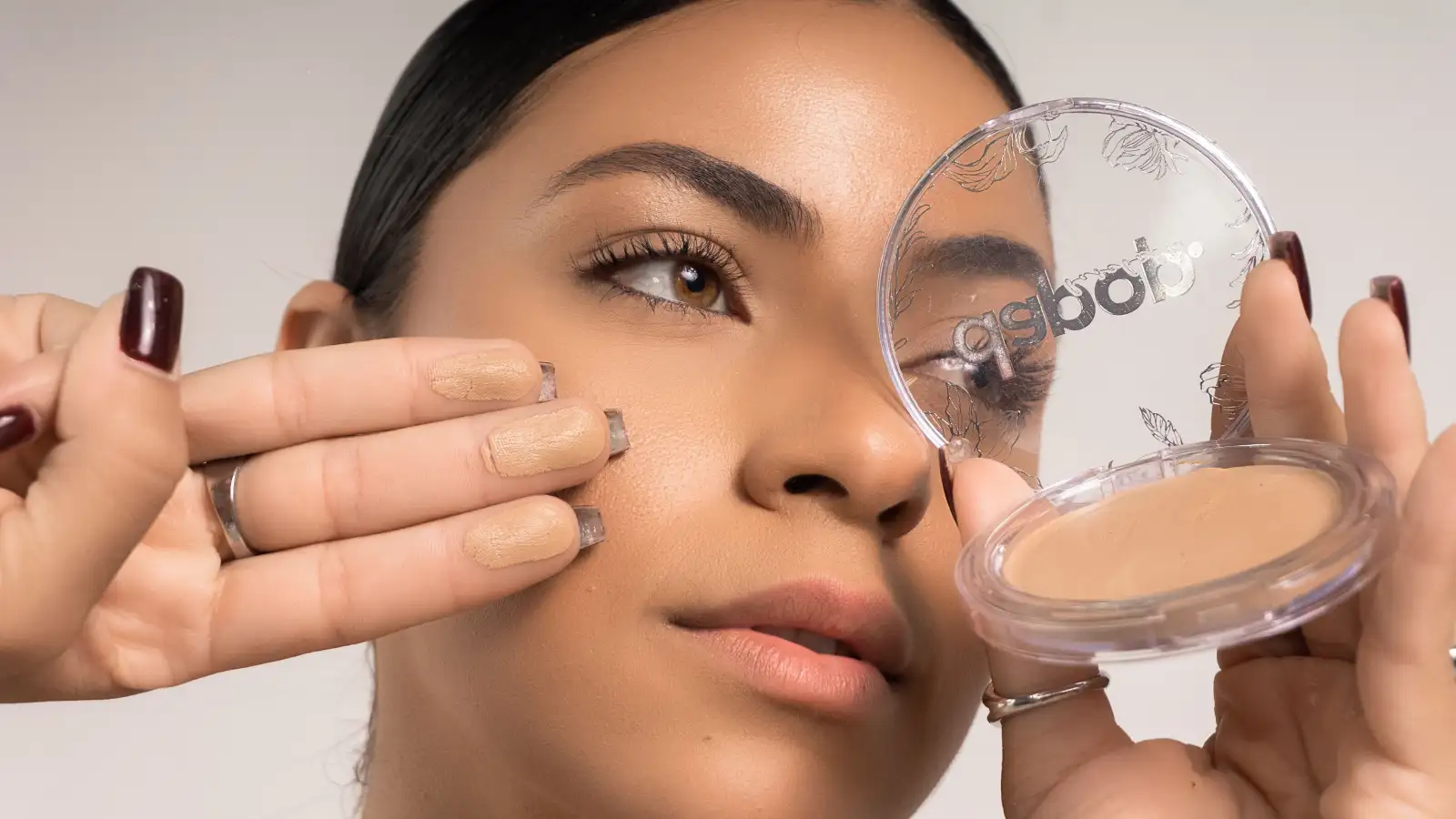
Depth matters as much as placement. A finely milled powder in your own depth sets without lightening. Finely milled is the operative word — coarse powder sits on top of the skin and texture reads through it. Here's the swatch test I use, and it takes ninety seconds: put a small dot of your foundation on the back of your hand, tap powder over it the way you'd use it on your face, then look at that patch in daylight and take one phone photo with the flash on. If the patch lifted, that is exactly what is happening to your face at the same depth.
Then walk to a window. The bathroom you got ready in is not the light you'll be seen in.
Setting spray, honestly
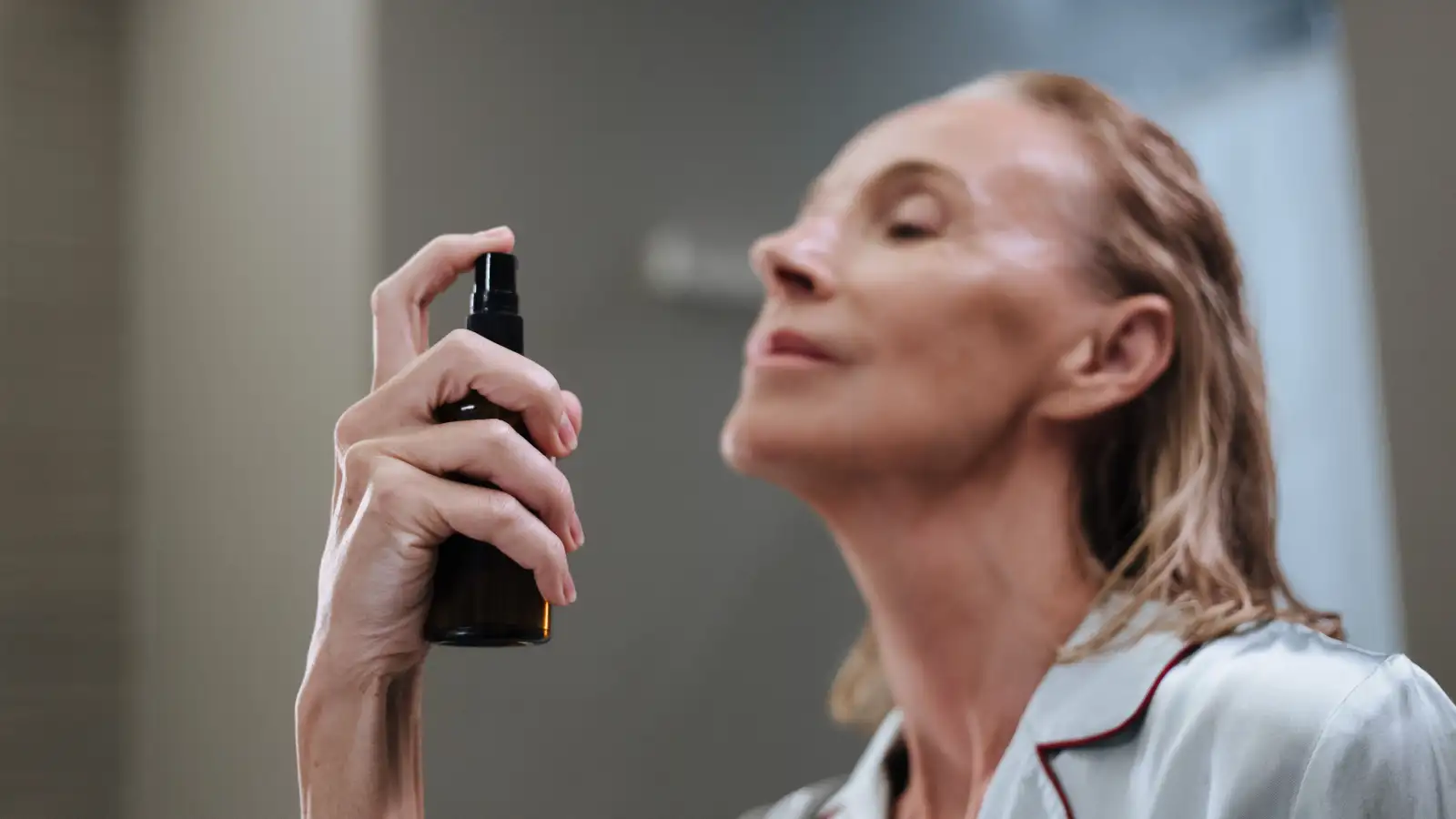
Setting spray does one thing well: it re-wets the surface so the powder melts in and stops looking like powder. That's real, and on dry skin it's the difference between finished and dusty.
It will not fix a white cast. White cast is pigment sitting on pigment. Misting water over white powder gives you white powder with a nicer texture. If the area is already chalky in daylight, the only fix is lifting it — a damp sponge, one light pass over just that patch — and then deciding whether the base underneath survived. Sometimes it did and you're done. Sometimes you took the foundation with it and you're rebuilding that one spot. Re-powdering over a lifted area puts you straight back where you started.
The parts that depend
Setting powder isn't wrong. It's conditional, and the conditions change with the face and the day. If your T-zone genuinely breaks through by early afternoon, you may need more powder there than I use anywhere, and you'll want blotting papers for the rest of the day so you're removing oil instead of layering powder over it. Combination skin doesn't stop being combination because the skin matured.
And if you know a camera is coming out — an event, a dinner, a photo with the flash on — that is the day to leave the center of your face bare and blot instead. Nothing you add at 6 p.m. will be invisible at 9 p.m.
One more thing, because it took me a while to accept it: no powder makes dry skin less dry. It can only take something away from the surface. The best result on mature dry skin comes from giving most of your face nothing at all and spending the powder where the base actually moves.

About the author
The Undertone
The Undertone is a byline for people who learned foundation on brown skin by swatching, mixing, and checking color in real light. They share a practical focus: if the depth and undertone are right, the formula will follow.
More about us