What sheer, medium, and full coverage actually change
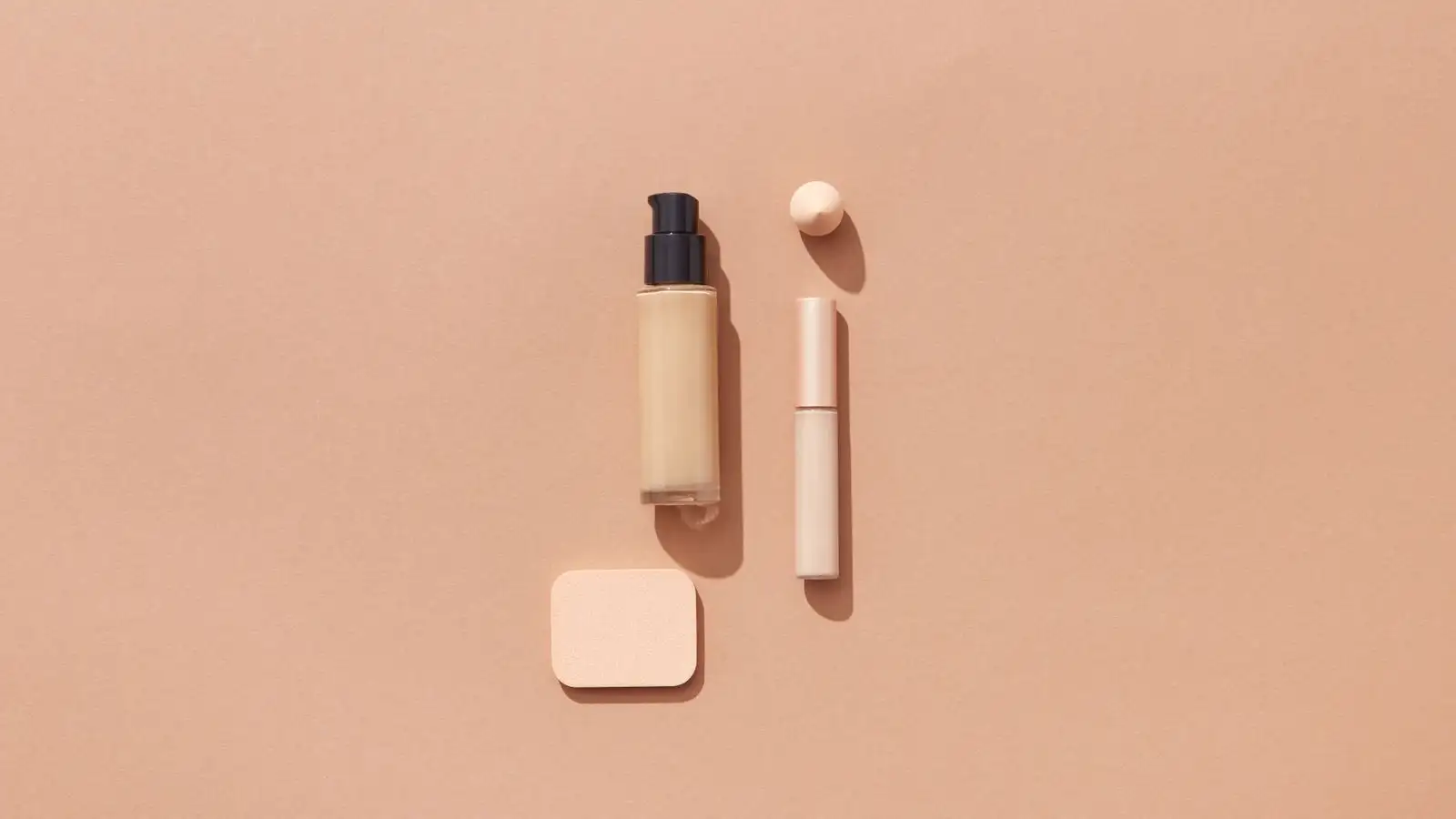
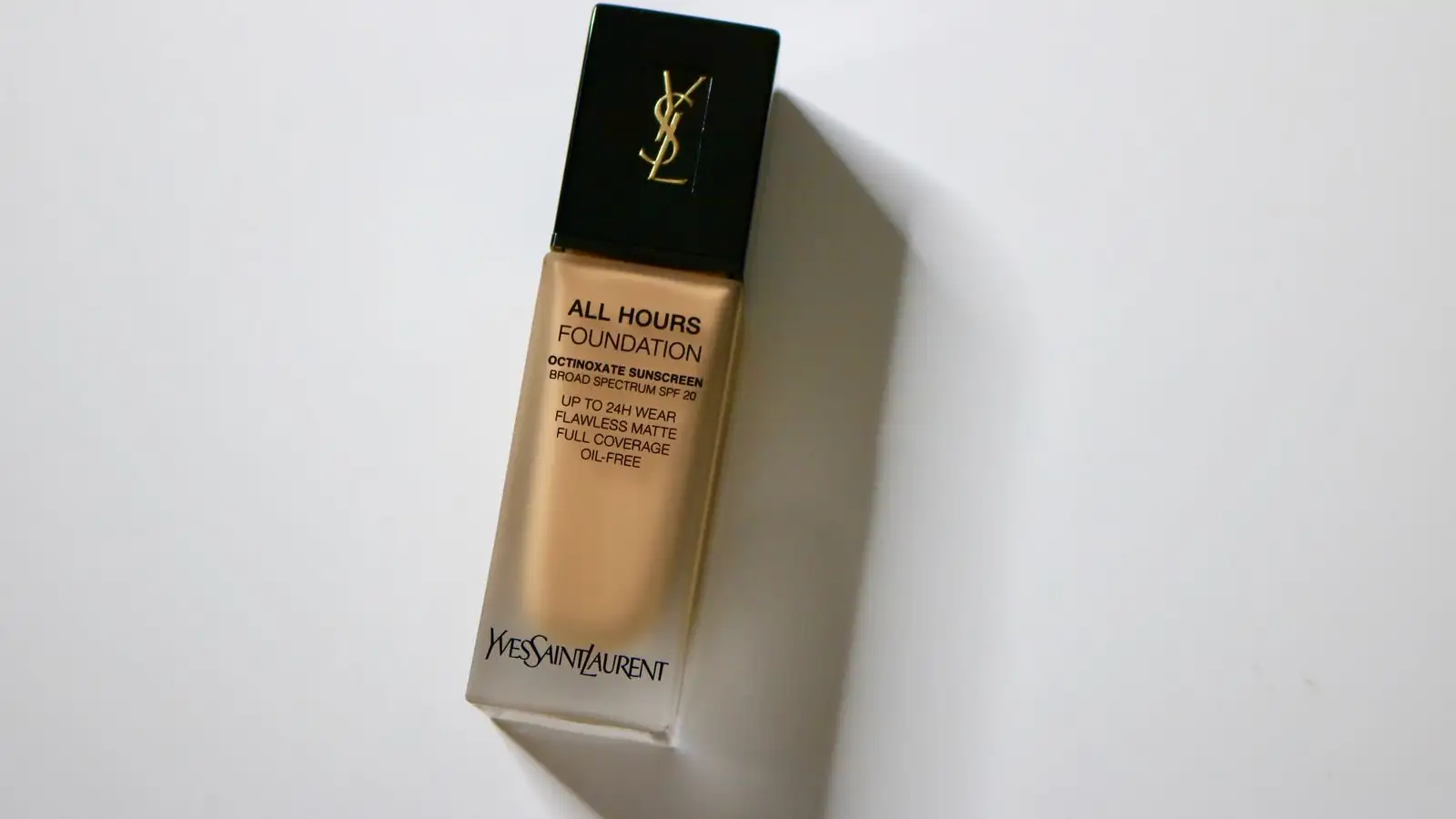
Sheer, medium, and full coverage describe exactly one thing: how much of your skin's own color the film hides. That amount is set by pigment load — how much iron oxide and titanium dioxide a formula carries relative to the base holding it, and how much solid that base can actually suspend — which is why a serum foundation has a coverage ceiling built into the bottle, not the word printed on the carton. Read coverage as a ratio instead of a tier and you can predict what a bottle will do on your depth before you spend a dollar on it. That is the shift almost nobody makes at the counter.
I stopped trusting the front of the bottle the morning I put two "medium" foundations on a plain white saucer, side by side, in window light. One dot slumped and ran toward the rim. The other held a peak like cold butter. Same word on both boxes. Different amounts of pigment in different bases.
That saucer lives on my bathroom windowsill now. It is not glamorous and it is not a hack. It is the only honest number on the package.
Here is how I read it. A lentil-sized dot on the glaze, tilt the plate, watch. Thin base, low pigment: it runs. Thick base, high pigment: it sits. Then the edge test — spread each dot flat with a clean fingertip, one pass, and look at where it stops. A sheer formula dissolves at its border, a soft gradient where the glaze shows through. A full formula stops where your finger stops, with an edge you could draw a line around. Everything labeled light, medium, or buildable lands somewhere between those two behaviors.
Use the plate, not the back of your hand. Your hand is a different depth, a different undertone, a different oil level, and it will lie to you politely.
On deeper skin, more pigment means more exposure
This is the part I wish someone had said to me plainly. Every extra gram of pigment sitting on the surface is another chance for a slightly-off undertone to be visible instead of blended away.
A sheer film lets my skin do most of the talking and the product only nudges the color. A full film does the talking itself. If it is saying cool and grey while my neck is saying warm-neutral, that mismatch is the first thing anyone sees in daylight — well before they register how much I covered.
That is not an argument against full coverage. It is an argument for the order of operations: depth first, undertone second, coverage third. When the shade is a hair off, sheerness forgives it and opacity broadcasts it. People go up the ladder hoping to hide a shade problem. It works the other way.
Where the rungs actually sit
The scale I keep in my head is not a standard and no manufacturer has to honor it. It is a way to guess before I buy:
- Sheer removes maybe a fifth of the color variation. Marks, freckles, shadow lines still read through it. You are evening tone, not erasing it.
- Medium removes roughly half. The face reads more uniform, but the skin still looks like skin at conversational distance.
- Full removes most of the color contrast. It flattens the surface into one reading, which is the point and also the risk.
Those fractions are my working estimates, not measurements. What matters is that each rung is a different amount of hiding, and that the label on the box may be one rung off from where the product actually sits.
Buildable is a behavior, not a level
A buildable product has no fixed rung. It finishes wherever your passes stop it, which is why the same bottle can be two different coverage levels on two different days.
Two thin passes with a minute of settling between them land somewhere completely different from one thick pass. Thin passes let you stop where you want; a thick pass commits you at the first stroke and there is no walking it back. This is also why "buildable" is the most abused word in the category — it describes layer behavior, and it says nothing about where the layers top out.
Two dials, not one
Coverage and finish move independently and people conflate them constantly. Pigment load sets coverage. Film formers, oils, humectants, and powder content set whether the result reads matte, satin, natural, or dewy.
A sheer matte exists. So does a full dewy. Someone buys a dewy formula expecting a light veil and gets a heavy one that slides; someone buys a matte sheer expecting to blur texture and gets a chalky film over dry patches instead. Neither surprise has anything to do with coverage level. They are the other dial.
The film fails where you move and where oil gathers
Coverage does not break down evenly across a face. The nose creases, the corners of the mouth, the chin, the space between the brows, under the eyes — that is where the film goes first, because that is where skin moves and oil collects.
Full coverage makes failure more visible, not less. There is more pigment to crack, collect, and separate, so the breakdown has more material to work with. I have watched a medium film look intact at hour eight while a full film on the same face looked patchy by hour four. If the day is long, the rung you want is often the lower one.
Pick the rung by contrast, not by how hidden you want to feel
Pigment reduces color contrast. That is all it does. A mark, a flush of redness, a visible vein, a shadow line — those are color, and more pigment reduces them.
Texture is not color. Pores, raised bumps, dryness, the soft shadow of hair under the skin — those are relief, and pigment settles into relief rather than covering it. Push to full over textured skin and the higher pigment load tends to read grey or ashy in the crevices, because light is no longer hitting your own color there. Going up the ladder on a texture problem makes the problem louder.
So the honest question before buying is not "how opaque do I want to look." It is "what am I actually trying to reduce — contrast or relief." Contrast goes up the ladder. Relief does not; pigment settles into texture and outlines the relief instead of filling it.
Running the ladder on your own face
What I do, in order, no shortcuts:
Stand facing a window. Morning or an overcast afternoon, never a bulb, never a ring light. Do one thin pass over the whole face and stop. Look. If what bothered you is still visible, add a second thin pass to that area only, and let the first pass settle for a minute before you do. Then look at where the product collected — the creases, the sides of the nose. Those are your failure zones, and they do not move when you change coverage level; they just get more obvious. Do not set anything until you have seen it dry, because powder changes the read. Last, count the passes it took to get there. That number is your rung for that formula. Two formulas needing different pass counts to reach the same look is the entire point of thinking this way.
What the ladder will not do
You can thin a fuller formula with a drop of moisturizer to drop it a rung. That is a real technique and it is not free. You are diluting the base system, not just the pigment, and film formers that get diluted do not always form a proper film. Sometimes it holds beautifully. Sometimes it separates around the nose by noon and you cannot figure out why.
Buildable also has a ceiling. Most formulas top out after two or three passes before they start to cake in the creases, whatever the package implies.
And judge the rung after the color settles, not before. A film shifts over its first hour, and a higher pigment load can shift more visibly simply because there is more color there to move. The dot on the saucer is not the final color.
The word on the box is a guess made by someone in marketing. The saucer, the edge, the pass count — that is a ladder you can actually read, and once you can read it you stop buying rungs you never wanted.

About the author
The Undertone
The Undertone is a byline for people who learned foundation on brown skin by swatching, mixing, and checking color in real light. They share a practical focus: if the depth and undertone are right, the formula will follow.
More about us