Three Powder Formats and How Each One Flashes Back
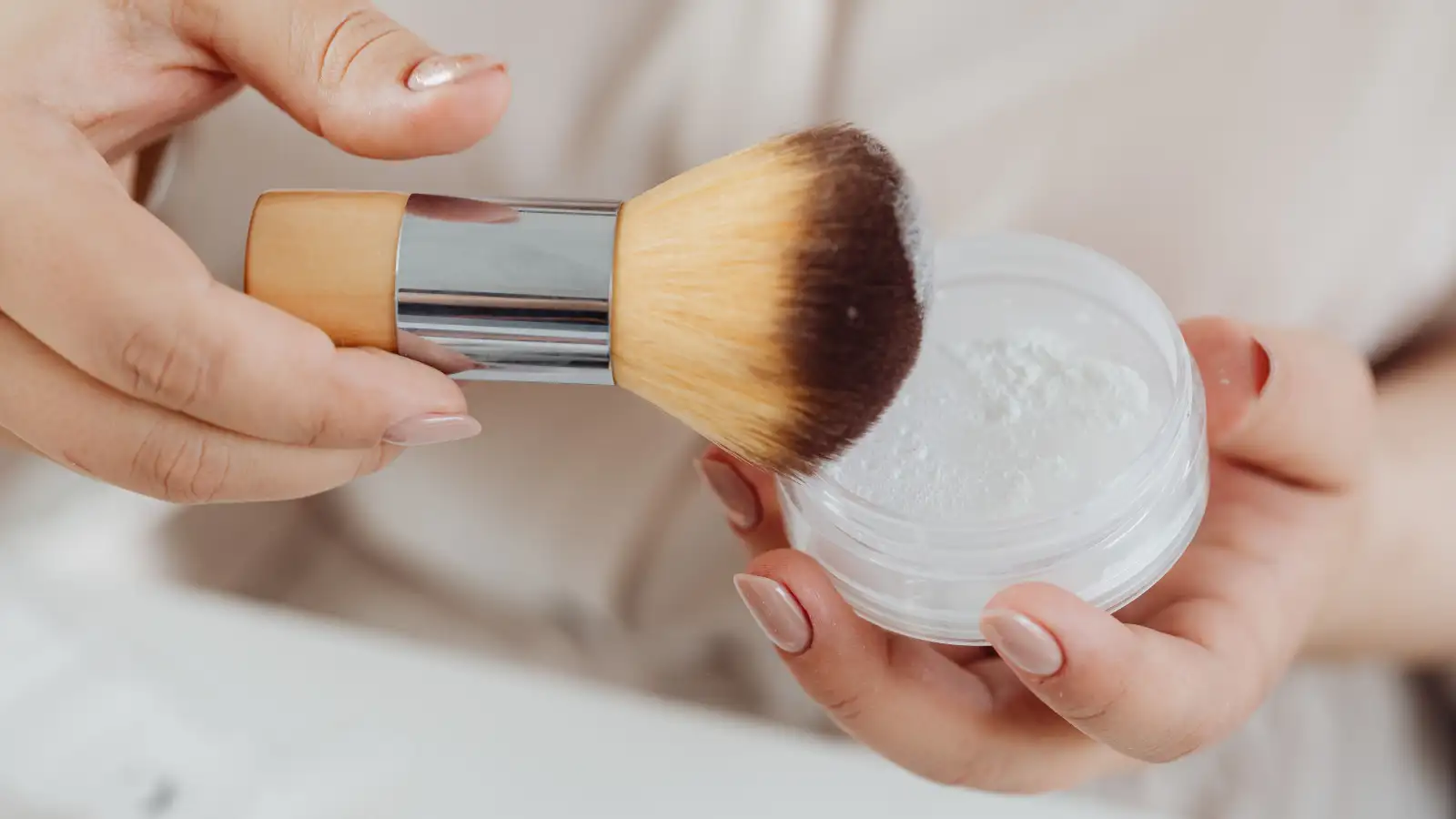
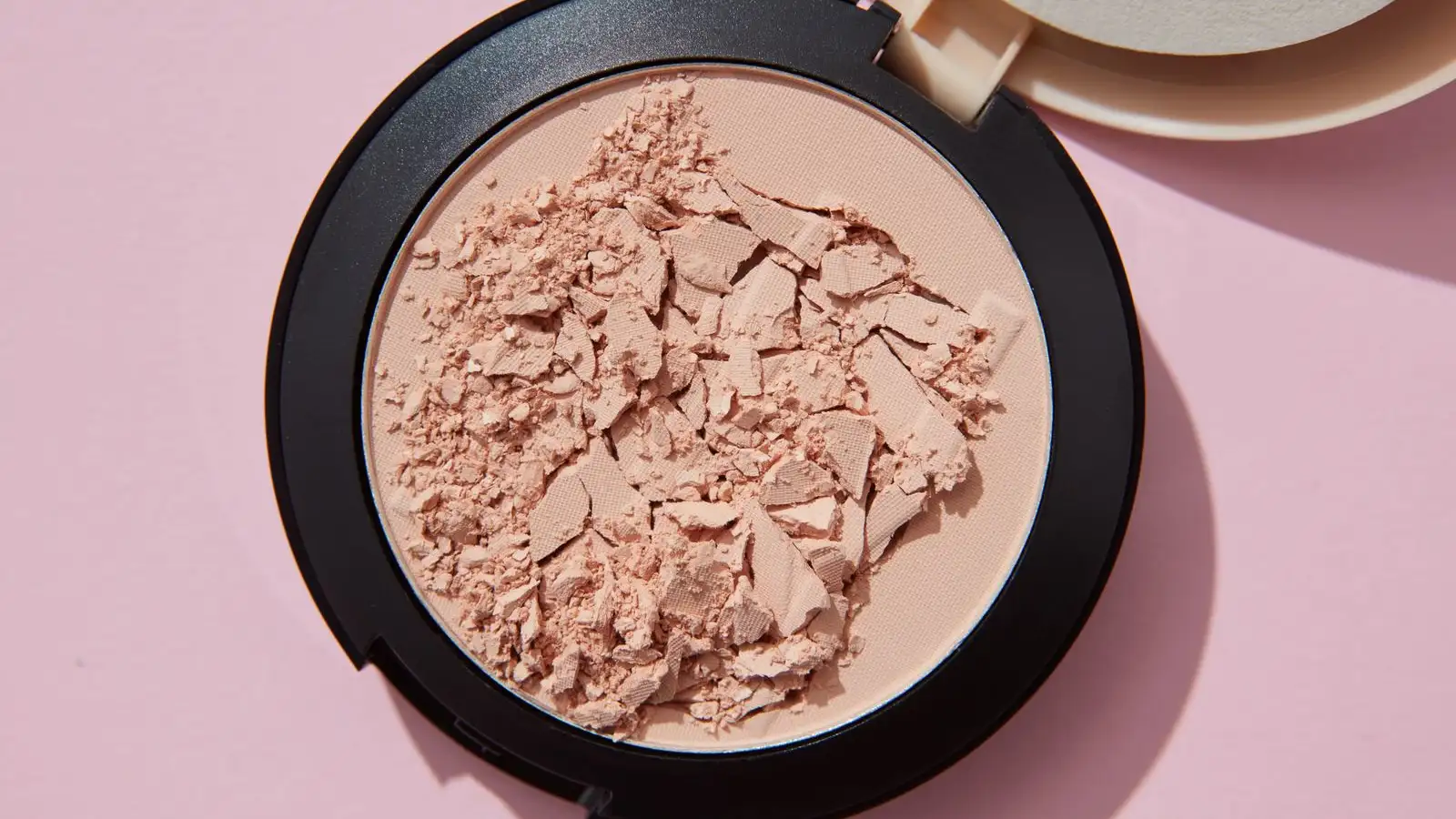
The label on a powder compact tells you almost nothing about how it will behave in a flash photo. What actually predicts flashback is the binder-to-powder ratio inside the formula and how much of it leaves the pan in a single pass: pressed powders are compressed with binders and oils, so one swipe of a brush picks up a dense load; loose powders sit at a much higher air-to-powder ratio and lay down a thin veil; baked powders are cream-powder hybrids set in a heated dome, and their higher binder content leaves a surface that bounces light back at the lens even when the layer is thin. A heavy pass of loose powder can flash as hard as a light pass of pressed. Judge the deposit, not the format.
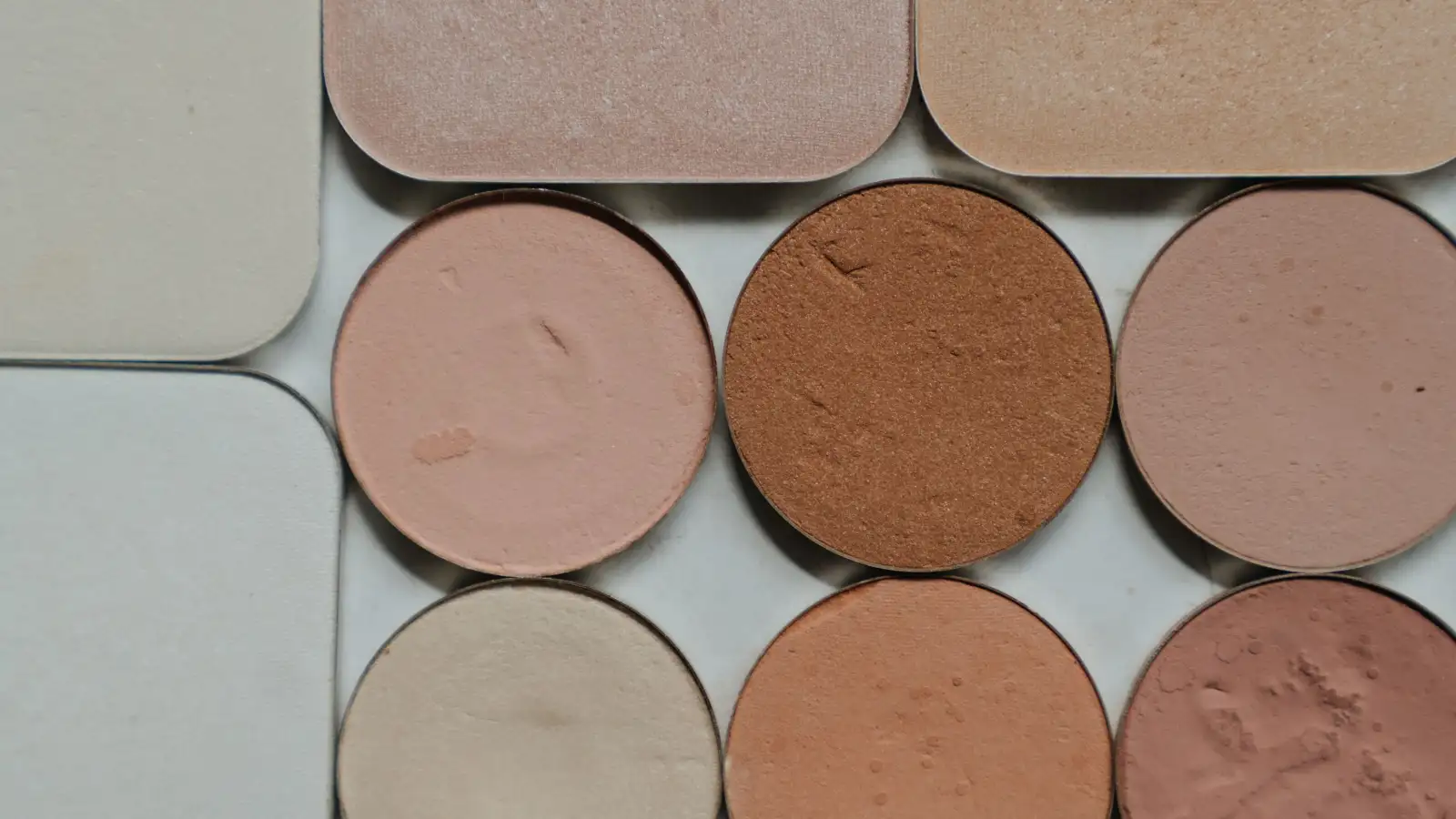
Come stand where I stand. Bathroom light off, door shut so the hallway bulb doesn't leak under it, phone in my left hand with the screen turned away from me and the camera facing out. In my right hand is a fan brush carrying maybe a quarter of what I'd normally load. I sweep it once across the back of my hand — one pass, no buffing, no second dip — and take the picture. Flash on, arm's length, same as always.
That photo has taught me more about powder than a week of wearing it. And it keeps telling me the same thing: pressed, loose, and baked are not three levels of flashback. They're three deposit rates.
One pass is the unit that matters
Pressed powder is powder held in a solid cake by binders and oils. Drag a brush across it and the brush leaves with a dense, even load, because the cake has nowhere to hide. One pass puts down what a loose powder might take four passes to build. It isn't trying to be heavy. It just is.
Loose powder is mostly air. You shake a little into the lid, dip, swirl, and a good share of it ends up floating above the jar instead of on the brush. A thin dusting per pass is the whole point — it's why loose sets cream products without dragging them, and it's why it usually photographs cleaner.
Baked powder looks like a pressed cake that got left in the sun. It starts as a cream-powder slurry and gets baked in a heated dome until it sets. Binder content runs high, and the surface that forms is smoother than either of the other two. In a flash photo that smoothness shows up before the color does.
So when someone asks me whether loose powder flashes back, the honest answer is that it's the wrong question. The question is how much powder that pass just left behind. Load a puff with loose powder and press it into the skin — the classic way to set under the eyes — and you have just deposited as much product as a normal pressed pass, sometimes more. The photo goes white. Reverse it: tap a dense brush into a pressed compact twice, then barely kiss the skin with a fan brush, and you get a veil that photographs like loose. Same formats, opposite results. The format didn't change. The deposit did.
What the binder is doing while the flash makes up its mind
Flashback isn't mysterious. Light from the flash hits your skin, hits particles that reflect light broadly instead of absorbing it, and comes back to the lens. White pigments and texture agents do this — titanium dioxide, zinc oxide, silica, mica. A powder heavy in those will scatter flash regardless of what shape the packaging is.
The binder does two jobs at once. It controls how much powder leaves the pan per pass, and it leaves a film on the skin. More binder means a more continuous, smoother, more reflective surface, and in a direct flash that surface throws light straight back. That's how a baked powder can look like nothing in the mirror and then read as a lit forehead in the photo. Thin deposit, shiny film.
Which is why I stopped judging powders by format before I judged them by panel. A pressed powder built on silica and mica is still a pressed powder built on silica and mica. Compressing it doesn't make the silica stop reflecting.
A format comparison only means something if the panels match
Here's where I have to be careful, including with my own testing. If I put a loose powder built on silica next to a pressed powder built on talc and rice starch and declare the pressed one worse, I haven't compared formats. I've compared two ingredient panels and handed the credit to the format. The format is a delivery system. It carries what's inside it.
The only comparison that means anything is two powders with the same white pigment load and the same texture agents, one pressed and one loose, tested the same way. Then whatever difference shows up is compression, air content, and binder ratio. That's the real variable.
And even that test has a ceiling. Flash strength changes from phone to phone. Distance from lens to skin moves the bloom more than most people expect. A window behind you, a white wall, a room with overhead cans — all of it shifts the result. My test is useful because I do it identically every time. It's comparative, not absolute. I wouldn't hand you a number of passes; I'd tell you to keep the setup the same and read the difference.
Reading a format in about a minute
The routine is short. Use the same brush, the same pressure, the same hand.
One swipe on the bare back of the hand. Look at the residue before you look anywhere else. Does the skin read dusted, or covered? If one pass already looks opaque, treat that powder as a heavy-deposit product no matter what the case says.
Photograph the swatch with a direct flash in a dark room, arm's length, same as the face.
Then take it to the face at the deposit level you'd actually wear — not the test load — and photograph that too. What a powder does at three passes on the back of a hand tells you about the powder. What it does at the amount you wear tells you about your photos.
Working with what's already on your shelf
A pressed powder that flashes on you doesn't need to be replaced by a loose one. It needs a lighter pass. Fan brush instead of a dense kabuki. Tap the brush off on your wrist, not over the sink. Sweep instead of press. Build in thin layers instead of loading once and dusting it down.
A loose powder that reads too sheer for what you want isn't a dead end either. Press it in with a puff instead of sweeping it with a brush. The air is in the jar, not in the application.
And if a baked powder is the one blooming in your photos, separate the two problems before you fix anything. Is the bloom following the product, or following the finish the binder left behind? A thin pass of baked powder, buffed down afterward with a clean brush, can drop the specular bounce without stripping the layer that's actually doing the setting. Sometimes the answer is finishing, not coverage. Sometimes it's leaving the shiniest zones alone and keeping powder off them entirely — the center of the forehead, the tops of the cheekbones, the bridge of the nose, wherever the flash hits square-on.
None of that requires a different format. It requires knowing how much each one hands over per pass, and then deciding how much you want handed over.

About the author
The Undertone
The Undertone is a byline for people who learned foundation on brown skin by swatching, mixing, and checking color in real light. They share a practical focus: if the depth and undertone are right, the formula will follow.
More about us