7 Days After Nd:YAG Laser: A Realistic Healing Timeline
The week after an Nd:YAG laser treatment can feel unsettling, but underneath the redness and darkening scabs, your skin is following a quiet, orderly timeline. This guide walks you through exactly what you’ll notice — the swelling that rises early, the dark spots that intensify before they fade, the tiny scabs that signal healing — and, most importantly, the moment it’s safe to welcome your favorite active ingredients back.
Your Skin Right Now: Three Common Journeys
It helps to know which camp you’re in, so you can match the timeline to your own story.
Melasma or deep pigment. If stubborn, deep melasma was your reason for treatment, you’ll likely watch those patches deepen before they lift. That’s not a setback; it’s part of the plan. Your reintroduction of actives will be the last one here, and that extra caution will protect your hard-won progress.
Sunspots and freckles. Freckles and sunspots tend to form delicate, precise scabs that darken quickly and then shed. You may find your path moves a little faster, and by day 7 you might get the green light to test a mild active — once all scabs have fallen away on their own.
Post-inflammatory hyperpigmentation. Old inflammation can leave the skin more reactive, so give it a little extra grace. Your journey might stretch a bit longer, but rushing could undo the healing. Watch for any stinging or pinkness that quietly says, “I’m not ready.”
Each path begins right here.
Day 1–2: The Tender Beginning
What you’ll see: Redness, mild to moderate swelling, and a sensation of warmth. Some tiny dots of dried serous fluid or pinpoint bleeding may appear — the very first whispers of scab formation.
Goal: Soothe inflammation, shield the skin from anything harsh, and let those early scabs settle in undisturbed.
Concrete actions: Keep a cool compress within reach, and use it for 10–15 minutes at a time — no ice straight against the skin. If your provider advised, hold off on washing for the first 24 hours; after that, use a gentle, non-foaming cleanser with lukewarm water, letting your fingertips do the work without any pressure. Pat dry with a soft, clean cloth. Apply a thin layer of the prescribed occlusive ointment (or plain petrolatum) to keep the surface calm. If you step outside, a broad-spectrum mineral sunscreen — zinc oxide or titanium dioxide — belongs on your skin even under clouds.
Readiness sign to move forward: Swelling has largely eased and the skin no longer feels hot. Tiny dark dots are forming evenly, without any weeping or fresh bleeding. If swelling is still severe after 48 hours, or pain is building instead of fading, let your laser provider know.
Day 3–4: When the Darkening Feels Alarming
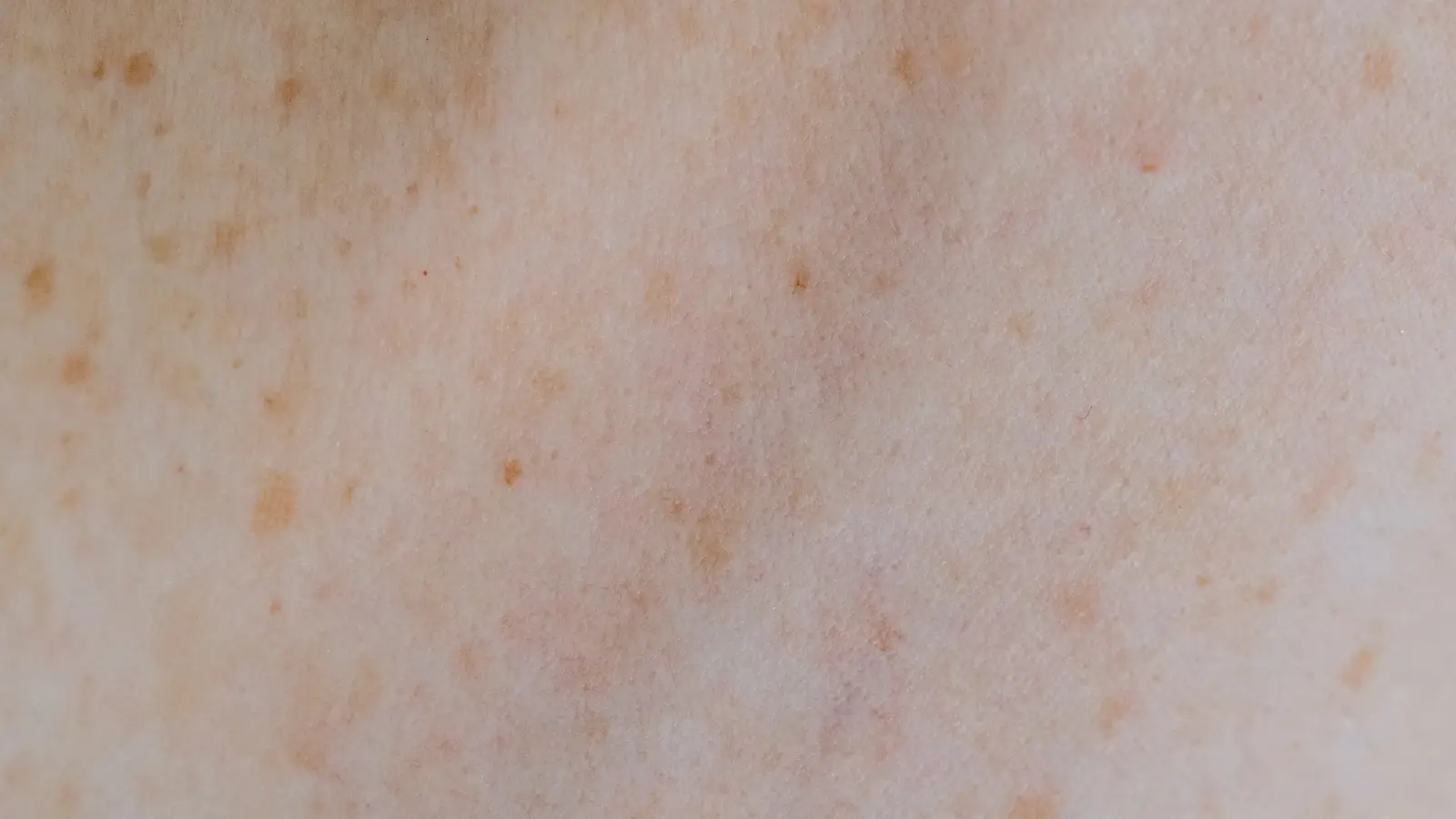
What you’ll see: Those small dots become more defined scabs, often darkening to a deep brown or near-black. Treated pigmented spots — whether melasma patches or sunspots — can look more pronounced than they ever did before. This is the laser-damaged pigment making its slow way to the surface; it’s exactly what you want, even though it can feel startling.
Goal: Guard those scabs. Let them hold on tightly until they’re ready to let go.
Concrete actions: Continue the same gentle cleansing routine. Seal in moisture with a fragrance-free, occlusive-based product — a ceramide cream or plain petrolatum — so the scabs stay flexible rather than cracking. Keep all actives (vitamin C, AHAs, BHAs, retinoids) far away. Sun protection stays front and center; a mineral sunscreen is safest right now.
Readiness sign to move forward: The scabs feel dry and secure. Nothing has been rubbed or picked off early. The surrounding skin may still show faint pinkness, but there’s no spreading redness, pus, or unusual heat.
Day 5–7: The Shedding and a Gentle Return
What you’ll see: Edges lift, flakes fall — never forced, always on their own schedule. The new skin beneath is often pink and may appear lighter than your natural tone for a while. If a scab covered a sunspot, you’ll likely see a significantly faded patch underneath; if it covered a deeper melasma area, some residual pigment may still be present, but that will continue to settle over the coming weeks.
Goal: Cradle the newly exposed skin and begin to think about—not rush into—reintroducing actives.
Concrete actions: Stay with your tender cleanser and moisturizer. At the end of day 7, pause and check: have all scabs fallen away naturally? Does the skin feel smooth, with no stinging when you apply a plain moisturizer? If yes, you might introduce a single gentle helper — a low‑percentage vitamin C (around 10%) or a niacinamide serum — but only if it brings no discomfort. If your skin tone is rich in melanin, hold off on retinoids, AHAs, BHAs, and strong exfoliants until at least day 10–14, even if everything looks calm. The risk of a dark rebound is too steep to gamble with. If the area still feels rough or tender, wait a little longer. Your skin will tell you when it’s truly ready.
Readiness sign to move forward (and resume actives): Every last scab has fallen off on its own, the surface is smooth, and there’s no rawness or tenderness. Once these conditions are met, you’ve moved from “healing” to “maintenance” — but still ease back into your full routine over the next week.
Your Healing Landmarks, at a Glance
- After 48 hours: Swelling is gone, the heat has faded, and tiny scabs are forming evenly.
- Around day 4: Scabs are dark, dry, and intact — none have been accidentally dislodged.
- By day 7: All scabs have shed naturally; the skin feels smooth and calm, not raw.
What’s Asking for Patience, Not Worry
- “My spots look way darker than before.” This is what healing often looks like on the surface. The laser is escorting pigment upward and out. If the darkening sits stubbornly without any shedding beyond two weeks, or the area becomes painful or raised, reach out to your provider.
- “There’s still some pinkness.” Post-inflammatory erythema can linger for weeks, particularly on lighter skin. As long as the pink gradually softens — not deepens or spreads — it’s simply a quiet part of the recovery.
- “My skin feels rough and sandpapery.” That’s the texture of micro-scabs. As long as there’s no oozing or pustules, it’s nothing to fear.
- “The spot peeled off and underneath looks lighter — but not evenly.” Temporary hypopigmentation can happen. Sun protection and time often even it out. If the uneven tone hasn’t improved after a few months, a dermatologist can take a closer look.
Lending a Helping Hand — Gently
These small gestures can comfort your skin, but they won’t force the timeline; that pace belongs to your skin alone.
- Silicone gel or sheets. Once all scabs have let go, a thin layer of medical-grade silicone gel can help flatten the area and reduce the chance of textural irregularity, especially on places like the jawline or chest.
- Red light LED therapy. If you own a device, low-level red or near-infrared light may quiet inflammation and support cellular repair gently — no more than once a day.
- Optimal hydration. Reach for a moisturizer rich in humectants like glycerin and panthenol. Well-hydrated skin heals more comfortably and feels less tight.
- Tinted mineral sunscreen. The iron oxides in tinted formulas help block visible light, which can worsen hyperpigmentation. This is an especially thoughtful step for melanin-rich skin.
Common Questions at the One-Week Mark
Can I wear makeup 7 days after Nd:YAG laser?
You might be hovering over your makeup bag, wondering if today is the day. Yes, you can apply makeup — as long as every scab has fallen off and the skin feels sealed, not weepy. Opt for a lightweight mineral powder or a breathable, sheer foundation; heavy creams can trap warmth and moisture that aren’t helpful right now.
When can I go back to the gym or sweat?
Sweat and a healing barrier don’t mix well. Wait until the scabs have all said goodbye and your skin feels sturdy, which often falls between day 7 and 10. If you must exercise earlier, keep it low-key and shower with cool water immediately after.
Is it safe to use my retinol or tretinoin again now?
Retinol needs a calm, settled home to work its magic without stirring up trouble. For most people, hold off until at least day 14. If your skin holds more melanin, waiting 3–4 weeks is even safer. When you do start, use it just three nights a week on completely dry skin, and pay attention to any tingling — your skin will let you know if it’s too soon.
Why do I see new dark marks after the scabs fell off?
What looks like a fresh spot can sometimes be post-inflammatory hyperpigmentation (PIH) — the skin’s own reaction to the laser. Diligent sun protection and calming ingredients like niacinamide can gently fade early PIH. If it deepens or doesn’t respond after 4–6 weeks of careful care, a provider can help.
Can I use a physical exfoliant to help the scabs come off?
No. Any scrubbing — even with a soft washcloth — can pull scabs away too early, leaving raw skin that’s much more likely to hyperpigment or scar. Let them fall away in their own time.
By the end of this first week, your skin has already done the heavy lifting. The road ahead is about protecting that new layer with a steady, gentle rhythm. If melasma led you here, let your sunscreen be the last thing you put on each morning, as constant as the sunrise. If sunspots were your target, you can soon — carefully — bring back one brightening active at a time. Above all, trust that your skin knows its own timing. When it stings, it’s telling you to wait.
Pigment Curious
We are people who want to better understand skin pigmentation, dark spots, and how different skin tones respond to skincare and professional treatments. We look beyond simple beauty claims, focusing on scientific evidence, clear explanations, and practical knowledge that helps people make more informed decisions about their skin.