The Blurring Powder You Trust Is Catching the Flash
A blurring powder can photograph pale with no titanium dioxide or zinc oxide anywhere on its label. The ingredients doing the blurring — silica, mica, boron nitride — are light-scattering particles in their own right, and a camera flash is the one light source that throws that scattered light straight back into the lens. Check the texture agents before you blame a white pigment.
I have a photo from a birthday dinner that I keep on my phone as a reference. Dim room, warm bulbs, someone stands up to get the whole table and the flash fires. Twenty minutes later the phone is going hand to hand and there I am: forehead and the tops of my cheekbones a solid two shades lighter than my neck, with a hard line where the powder stopped. Not gray, not pink. Chalky, like someone had lit a stripe on my face from the inside, and the stripe was exactly the shape of my powder brush.
Look at your own bad photo with that in mind. Not the color of your face — the edge. If the pale zone ends where you stopped applying, the base isn't the problem. The layer on top of it is.
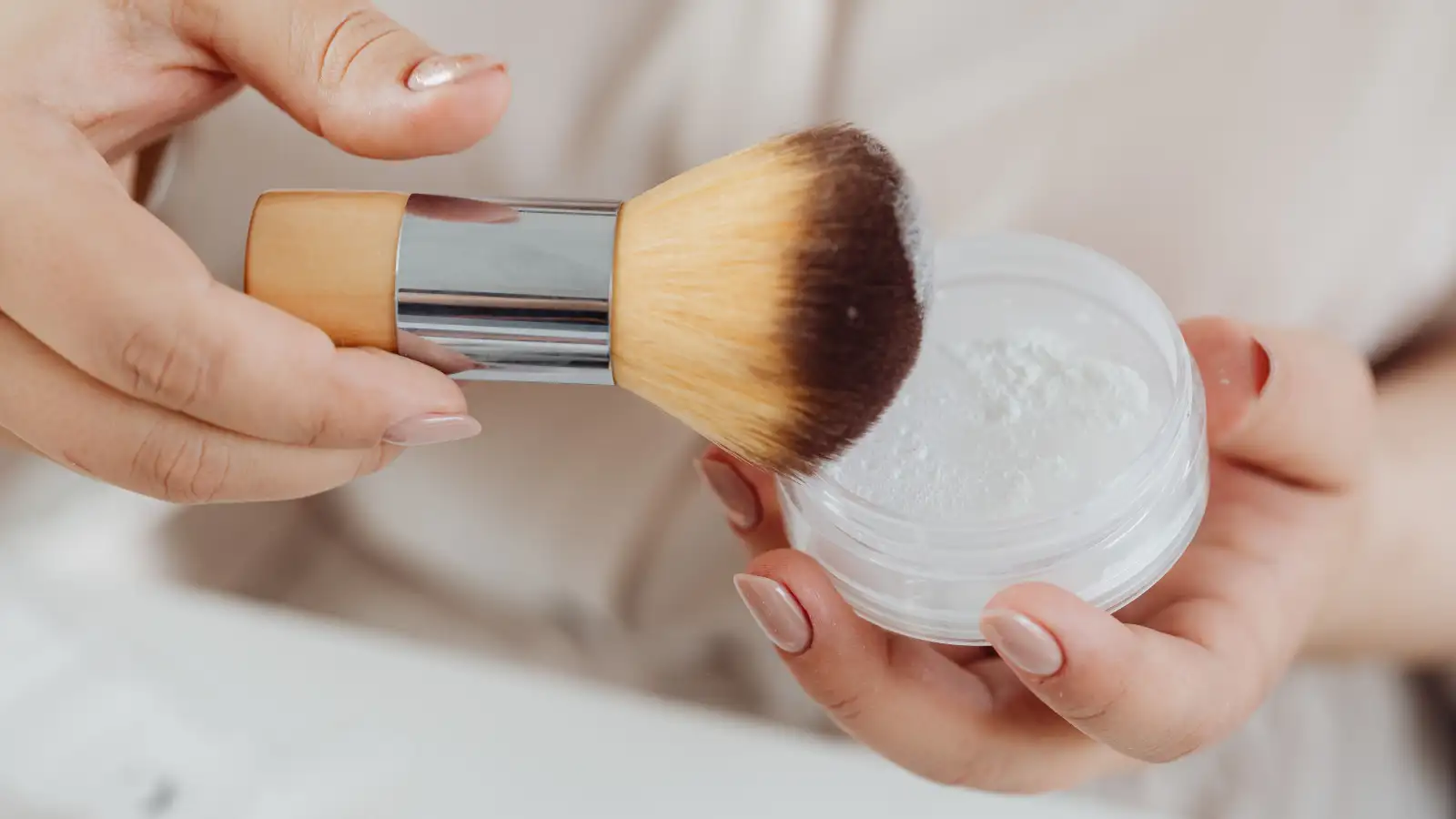
My first instinct was to blame the foundation anyway, because that's the thing with a shade name. I went home, read the foundation's ingredient list, and found no titanium dioxide, no zinc oxide, nothing I could point to and call the white one. That's the moment the whole subject rearranged itself for me. The powder had done it. And the powder was one of those soft-focus ones that feels like almost nothing going on.
A pigment tints. A texture agent redirects.
Those are two different jobs and I had been treating them as one.
A white pigment adds whiteness. Titanium dioxide, zinc oxide, bismuth oxychloride — these sit on the skin and their particles are very good at throwing light back in every direction, which is exactly why they work as sunscreens and why they can leave a cast. You can usually predict them from a label.
Silica, mica, and boron nitride don't add a shade. They're in there for slip, for blur, for the sensation of a powder that glides instead of drags. What they also do is scatter light at the surface of the skin, and that scattering is the blur. A soft-focus powder and a diffusion filter on a camera lens are the same idea wearing different clothes: soften the image by breaking up the light before it reaches the eye or the sensor. Nobody calls a diffusion filter white, and it still blooms under a hard light.
Frosted glass is the comparison I keep coming back to. There's no white paint in frosted glass. Shine a light through it in a dark room and it glows.
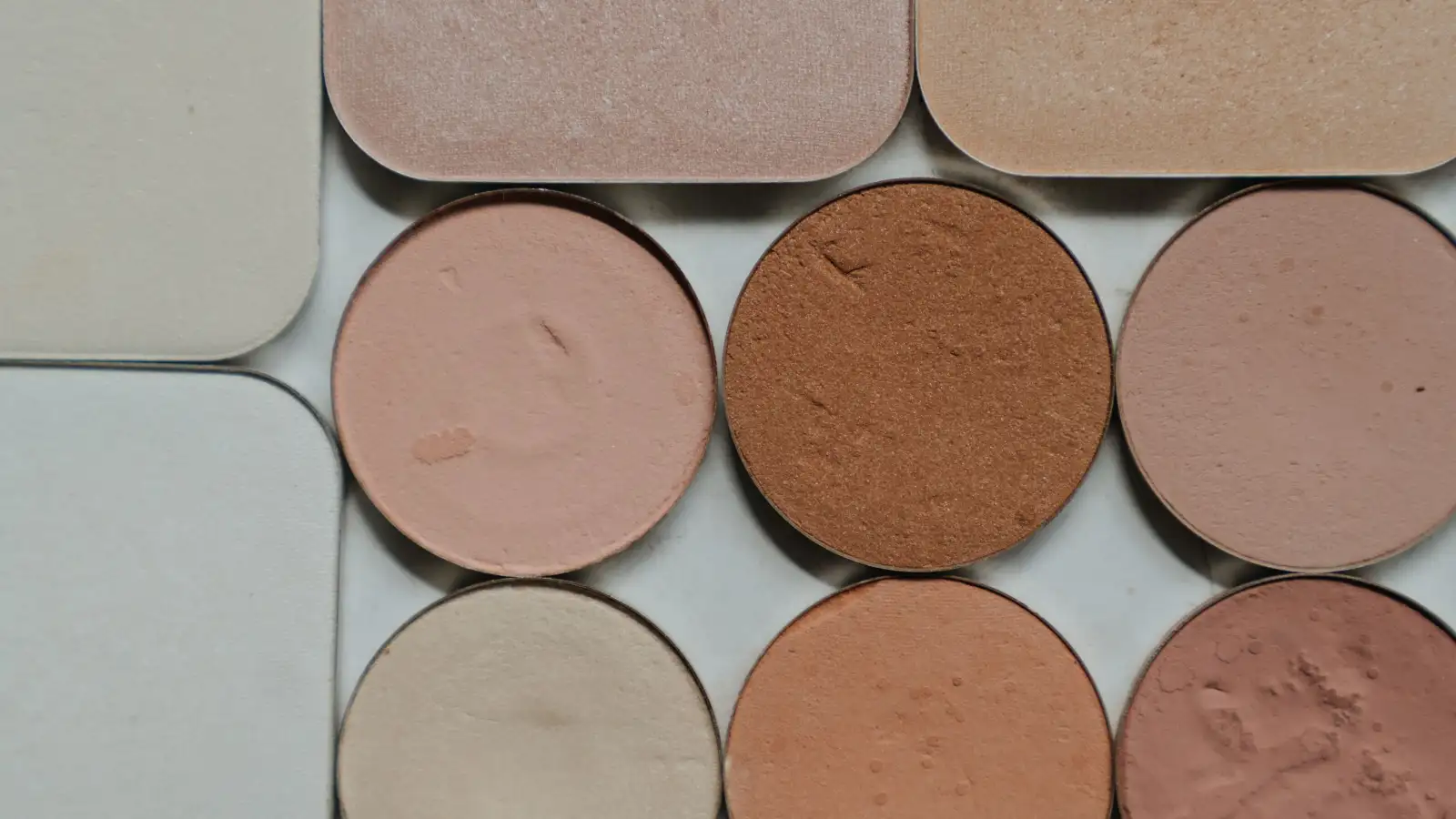
Silica is the cleanest example. Tiny spheres, transparent in the pan, invisible on the face in daylight — and very good at turning a point of light around. Mica is plated, so it does something slightly different: it adds sheen. A formula loaded with mica reads lighter and more reflective than its shade number suggests, which is why a powder swatched on the back of your hand can look like a perfect match and then go bright in a photo. Boron nitride is the soft, low-density one that turned up everywhere as a talc alternative; smooth particles, slippery feel, and a surface that reflects rather than absorbs.
None of that is a flaw. It's the product doing its job. It's just that the job is light management, and a flash is a light source.
Why flash is the specific problem
Ambient light comes at your face from everywhere. A flash comes from one small point, sitting an inch from the lens, roughly on the same axis your camera is looking down. Light goes out, hits the scattering layer, and comes back the way it came. That's the geometry that turns a nice blur into a pale mask, and it's why the mirror in your bathroom never warned you.
Distance changes it too, and most people test at the wrong distance. A flash photo at arm's length from your own hand is a different exposure from the one taken across a table or from across a room, where the flash has fallen off and the camera has cranked up what it can. Take the test shot from where the real photo will be taken. That one adjustment saved me from rewriting my whole routine twice.
Baked and HD-style powders make it worse, and this is where the texture-agent story really bites. Those formulas tend to stack several of these ingredients at once — the blur agent, the slip agent, the sheen — and the scattering compounds. A powder with three light-management ingredients near the top of the list underperforms a plainer one in a flash photo even when it looks softer in person. Which is the uncomfortable tradeoff: the more convincing the blur, the more there is to bounce back.
Reading the list for the right thing
Ingredient lists are ordered by weight, so position tells you more than presence. I read past the pigments now and count how early the texture agents show up. Silica high on the list, mica second or third, boron nitride before the preservatives — that's a formula built to scatter. It might be exactly what you want for a wedding in daylight and exactly what you don't want for a flash photo in a dim room.
And a powder with no titanium dioxide or zinc oxide at all can still be the culprit. That's the trap. A pigment-only label check comes back clean and you go buy the same kind of thing again.
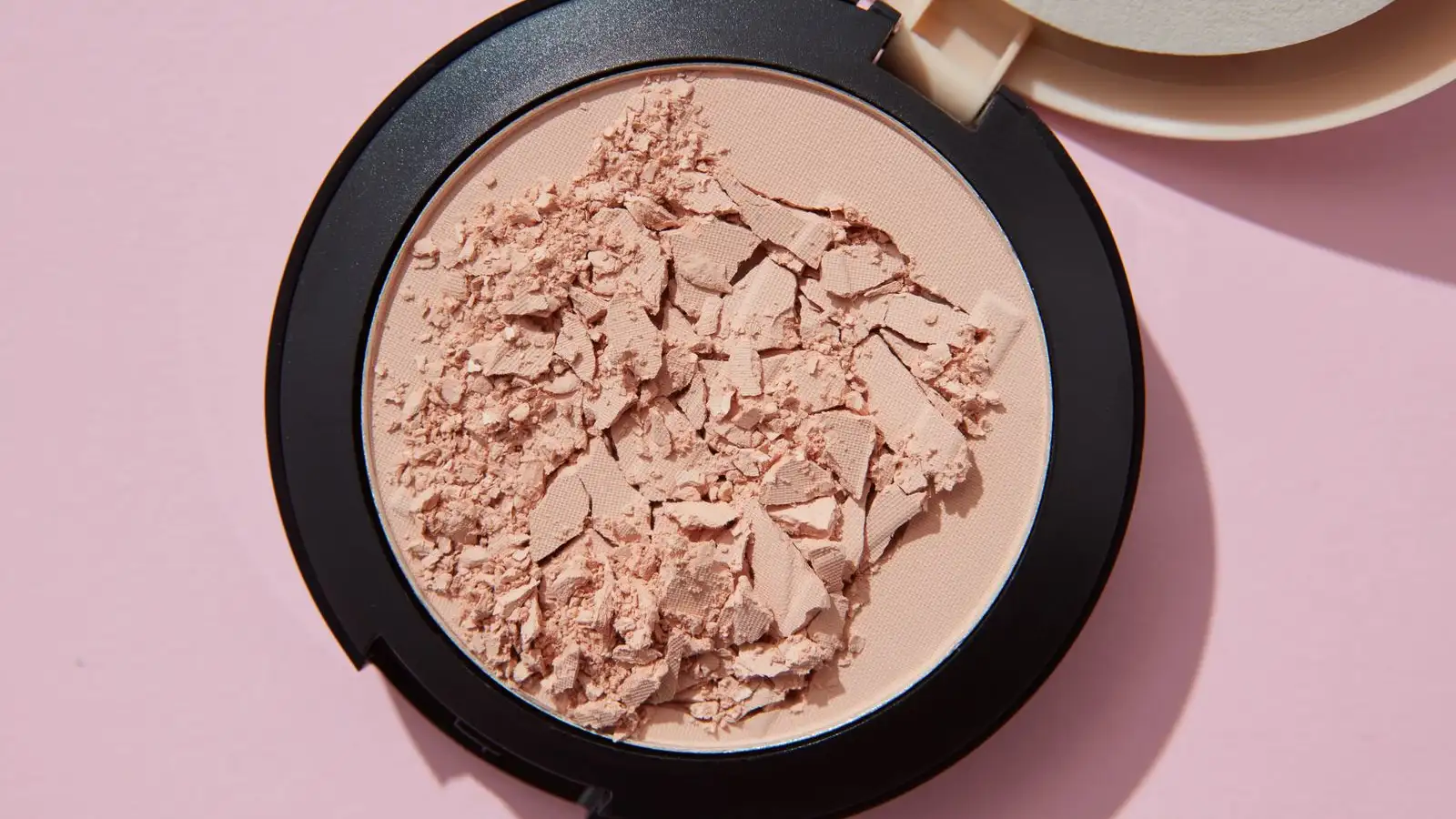
The pan gives you a preview before you ever open the list. Hold it under a lamp at an angle and roll it. If the pressed surface throws a visible sheen — that fine satin shift as the light moves — there's mica in there doing its work, and it will do the same thing under a flash. Flat, matte, slightly chalky powders have less of that to give back.
When it isn't the powder
I'd be lying if I said the powder was always the answer. Sunscreen underneath is a frequent offender, and a foundation with a high pigment load of its own can do it. A setting spray that dries down with a film can add a sheen you didn't have ten minutes earlier. And phones do their own processing now — the pale patch in the photo isn't only optics, it's also whatever the camera decided to do with the highlights afterward.
What I'd say is this: the powder layer is the easiest variable to remove and the easiest to put back, so rule it out first. Skip it on one half of your face, take one flash photo in a dim room, and look at the edge again. Ten seconds of work, and it tells you which layer to spend your attention on.
What I actually changed
I still use a blurring powder, which probably isn't the answer anyone wants from a piece like this. It does real work on a long day, and the fix wasn't giving it up — it was using less of it, and using it where shine actually happens instead of across the whole face. Center of the forehead, sides of the nose, chin. The outer cheeks stay bare, so there's no edge to find in a photo and nothing scattering light back where the flash hits flattest.
And I stopped trusting the mirror as my only test. The mirror shows you the blur. Only the flash shows you the bill.

About the author
The Undertone
The Undertone is a byline for people who learned foundation on brown skin by swatching, mixing, and checking color in real light. They share a practical focus: if the depth and undertone are right, the formula will follow.
More about usRelated posts