The overlooked step that doubles microneedling’s spot-fading power
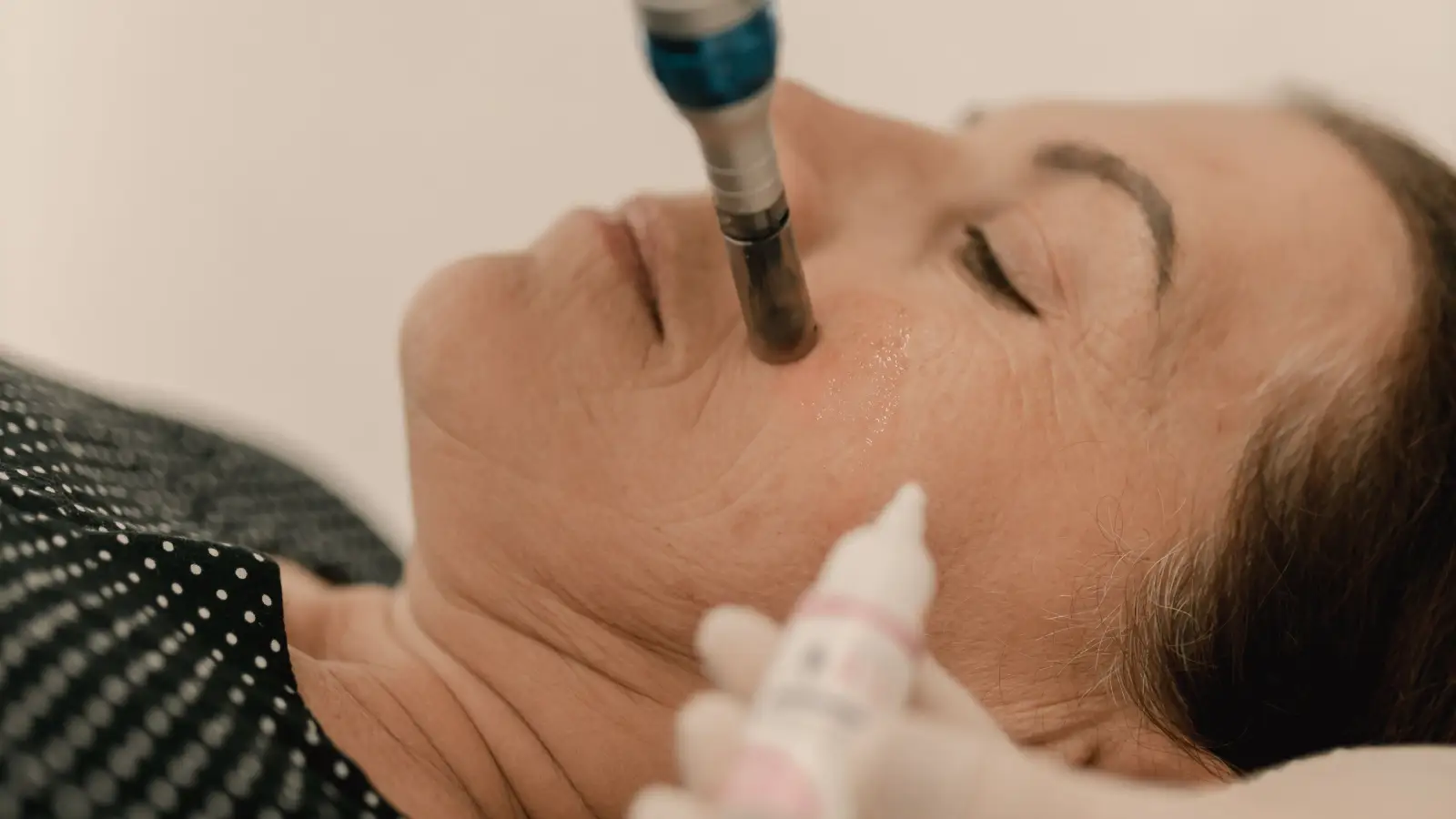
The real secret to making microneedling erase spots faster isn’t the needles—it’s the serum you slide into those tiny channels while they’re still open. Research on transdermal delivery shows that brighteners like vitamin C, tranexamic acid, and growth factors can reach melanocytes at depths they’d never touch from the surface alone. Understanding this window, and how to use it without triggering rebound pigment, is what separates a home session that feels like a waste from one that reveals noticeably lighter skin after just a couple of rounds.

The distinction between what’s genuinely safe to try on your own and what demands a professional’s steady hand matters deeply—especially for melanin-rich skin, where a wrong move can darken spots instead of fading them. The protocol here maps that line clearly, drawing on the ingredients with actual data behind them and the timing their absorption depends on.
The Visible Acceleration You’ll Notice When Delivery Gets It Right
Spots that resist months of topical brightening suddenly start to blur. Within two to three sessions spaced appropriately, a noticeable softening of pigmentation becomes the norm—not a fluke. That jump in speed comes from a narrow window after needling: skin permeability peaks immediately and begins closing within 20 to 30 minutes. Applying the right actives in that gap gives pigment-clearing ingredients a direct route to the cells that overproduce melanin. Miss it, and you’ve just done a treatment without the benefit you were after.
Every Step to Turn Microchannels Into a Spot-Fading Advantage
- Hand-select a serum with evidence-backed brighteners and zero classic offenders
- Match needle depth to your skin tone’s unique risk profile
- Run a 48-hour patch test — but on needled skin, not untouched skin
- Cleanse and disinfect like the treatment depends on it (because it does)
- Make the channels with a stamp or pen; keep rolling out of the routine
- Apply the brightener inside the 30-minute permeability peak
- Lock everything in with a mineral sunscreen and obsessive sun avoidance
- Guard the aftercare for three full days, letting nothing else in
Hand-Select a Serum With Evidence-Backed Brighteners and Zero Classic Offenders
The trio worth focusing on: L-ascorbic acid (vitamin C) for its tyrosinase-blocking and antioxidant muscle, tranexamic acid for shutting down the cross-talk between melanocytes and keratinocytes that drives stubborn pigmentation, and epidermal growth factors to guide repair while keeping melanin production calm. A well-formulated blend combining two of these often outperforms a solo active.
Just as critical are the ingredients that must be absent. Fragrance, denatured alcohol, exfoliating acids, and retinoids have no place in the same session as microneedling. They inflame open microchannels and can light the fuse on post-inflammatory hyperpigmentation—exactly the outcome someone is working to reverse. This is where dark skin tones face the highest penalty for a formula mistake.
Time: about 10 minutes to read a label closely. The single most common slip-up is grabbing a low-pH vitamin C serum straight from the shelf without realizing its sting isn’t proof of potency—it’s a sign of collateral damage that prolongs redness and risks uneven tone.
Match Needle Depth to Your Skin Tone’s Unique Risk Profile
Fitzpatrick IV–VI skin has a narrower margin of safety. For home use, 0.25 mm to 0.5 mm is the reliable range—plenty to open absorption channels without traumatizing melanocytes enough to kick off a pigment storm. In a clinic, a practitioner may go deeper for stubborn dermal spots, but that requires vertical entry with a pen or stamp and zero lateral dragging.
Time: choose and set the depth in under 5 minutes. Mistake: picking up a 1.0 mm roller because social media made it look standard, then dragging it across the face. That tears rather than punctures, and the aftermath is often darker patches, not lighter ones.
Run a 48-Hour Patch Test — But on Needled Skin, Not Untouched Skin
A patch test on intact skin doesn’t predict what happens when a serum dives right through the barrier. The right move: create a small needled test area—roughly the size of a quarter—on the jawline or forearm, apply the serum immediately, and wait 48 hours. Any lingering redness, heat, or deepening of pigment means the product is off the table for full-face microchannel use.
Time: two minutes to needle and apply, then a mandatory two-day watch. Mistake: assuming that because the serum never caused trouble before needling, it’s safe to dump into hundreds of open channels.
Cleanse and Disinfect Like the Treatment Depends on It
Microneedling creates thousands of bacterial entry points. A gentle, non-stripping cleanser comes first, followed by an antiseptic wipe of diluted chlorhexidine gluconate 2%. The device soaks in 70% isopropyl alcohol for at least 10 minutes and gets replaced on schedule. Gloved hands reduce the contamination risk further.
Time: 15 minutes. Mistake: substituting a quick micellar water swipe for a real disinfectant step, leaving a biofilm that delivers trouble directly into the dermis.
Make the Channels With a Stamp or Pen; Keep Rolling Out of the Routine
Stamps and pens enter vertically and exit the same way, causing far less epidermal tearing than rollers dragged across skin. That distinction is everything for hyperpigmentation-prone faces. Work in small, methodical sections, lifting the device cleanly after each placement instead of sweeping.
Time: 10 to 20 minutes. Mistake: rolling back and forth forcefully while rushing, which creates uneven wounding that heals with stubborn dark marks.
Apply the Brightener Inside the 30-Minute Permeability Peak
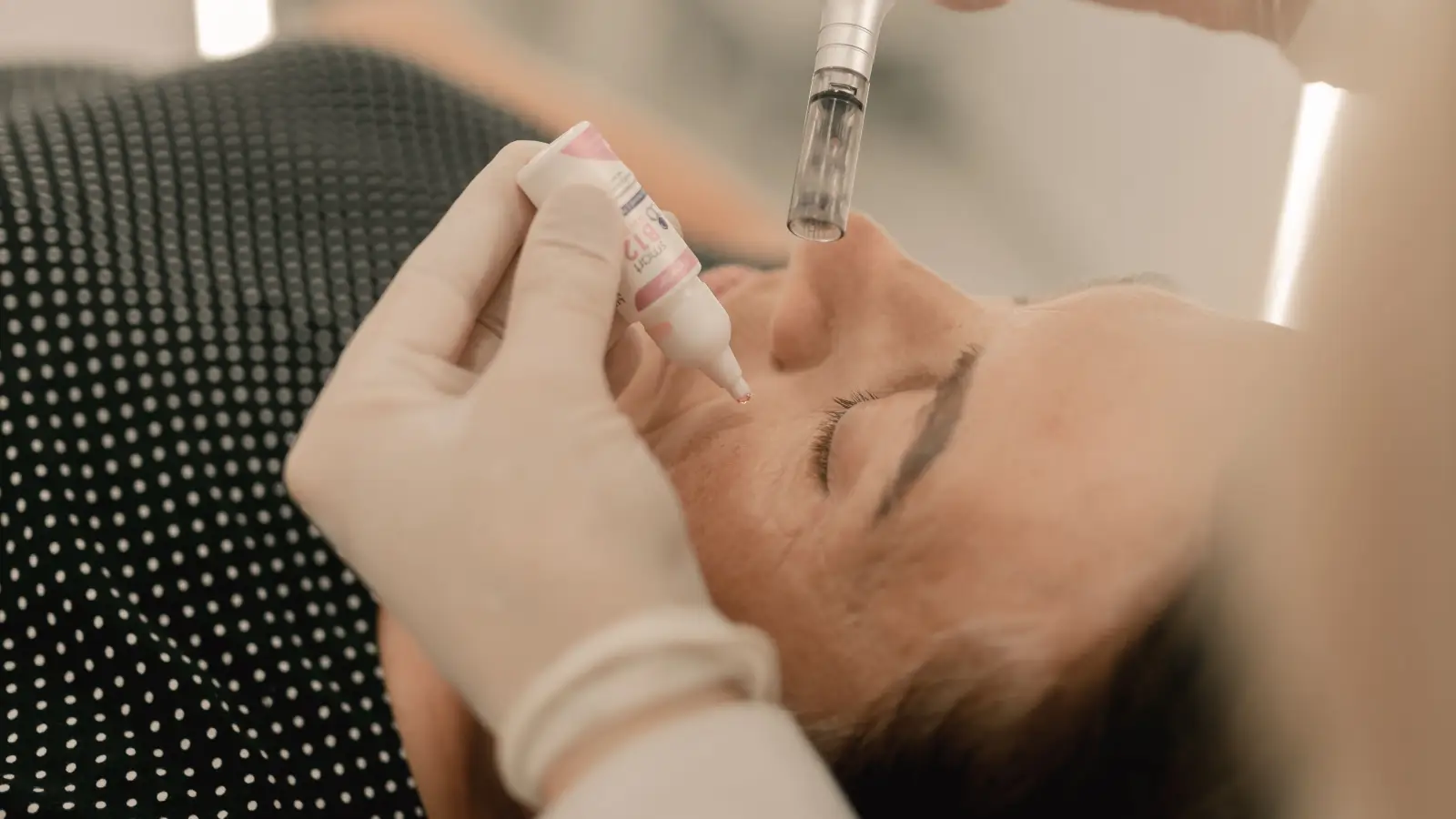
The moment needling stops, absorption is wide open. The serum gets patted on with clean fingertips—no rubbing—and extra product goes to the areas where spots cluster. This is the step that home routines most often leave out: people finish needling, smooth on a bland moisturizer, and walk away from the entire delivery advantage they just created.
Time: under 2 minutes. Mistake: postponing the brightener until morning, when the channels are effectively sealed, or using an oil-heavy serum that smears across the surface without sinking in.
Lock Everything In With a Mineral Sunscreen and Obsessive Sun Avoidance
Freshly needled skin is photovulnerable. Even ambient light through windows can nudge healing pigment in the wrong direction. A mineral sunscreen—zinc oxide or titanium dioxide, no chemical filters—goes on right after the serum sets, with reapplication every two hours if outdoors. Hats and shade are non-negotiable for at least 48 hours.
Time: a minute to apply, days of diligence. Mistake: reaching for a chemical sunscreen that stings open channels, or forgetting that car windows block UVB but not the UVA rays that deepen pigmentation.
Guard the Aftercare for Three Full Days, Letting Nothing Else In
From the moment the sunscreen goes on, only three things touch the face for 72 hours: a gentle cleanser, the same mild moisturizer, and that mineral SPF. No retinoids, no acids, no extra vitamin C beyond what was already delivered. The skin is building new tissue; interrupting that process with exfoliants invites inflammation that writes pigment back into the skin.
Time: three full days of restraint. Mistake: feeling optimistic on day two and adding a glycolic toner “just to glow,” then watching the very spots you were fading turn darker.
The At-a-Glance Protocol You’ll Want to Keep
Because this sequence rewards repetition, a save-able outline helps:
- 48 hours before: patch test serum on needled test area
- Session day: cleanse → disinfect → stamp/pen at conservative depth → serum within 30 min → mineral SPF
- Days 1–3 post: gentle cleanse, moisturizer, SPF only
- Frequency: every 4 weeks for at-home depth; every 2–4 weeks for in-office treatment, guided by a clinician
Answers When You’re Holding the Serum Bottle in One Hand and the Device in the Other
Can vitamin C go on right after microneedling at home?
Only if the pH sits above 3.5 and the formula is free of alcohol and fragrance. Low-pH ascorbic acid serums can burn microchannels and trigger prolonged irritation, especially in pigment-prone skin. A buffered derivative like ascorbyl glucoside is often the safer pick for home protocols.
Is tranexamic acid a safe bet for darker skin tones?
Absolutely. Tranexamic acid works by blocking plasmin-mediated signaling between melanocytes and keratinocytes—not by irritating the skin. It has a strong safety profile in Fitzpatrick IV–VI and pairs well with the post-needling window, as long as the base formula avoids accompanying aggressors.
How often should the device come out for spot fading?
At 0.25–0.5 mm depths, a 4-week gap allows full repair and collagen remodeling before the next round. Professional sessions at greater depths might be spaced 2–4 weeks depending on the provider’s evaluation. Weekly home needling is a path to chronic inflammation and paradoxical darkening.
Do growth factors only repair, or do they actually help fade pigment?
They do both. Growth factors speed epidermal turnover and fine-tune melanocyte behavior during recovery. When paired with a direct pigment inhibitor like tranexamic acid, they help keep pigmentation even while the skin renews—making them a valuable partner in a brightening protocol.
What’s the single most overlooked move that changes everything?
Applying the brightener while the microchannels are still open. That 30-minute window is the mechanism that transforms microneedling from a texture treatment into a true spot-fading intervention. Skipping it means losing the very acceleration the procedure can provide.
Final Spot Check
- The serum’s ingredient panel is clear of alcohol, fragrance, and low-pH acids
- Needle depth is set at 0.25–0.5 mm for home use, and a stamp or pen was used
- The 48-hour needled-skin patch test produced no adverse reaction
- Mineral sunscreen is on immediately, with zero chemical filters in the mix
- No other actives are planned for the next 72 hours
The Fading That Unlocks — and How to Do It Faster Next Time
When a genuinely compatible brightening serum meets open microchannels at the right moment, stubborn spots become responsive in a way surface application never achieves. That acceleration is woven into every item on this checklist. Next session, having the serum pre-selected and the device depth locked in shaves about 10 minutes off the routine and removes the last-second guesswork—turning what felt like a procedure into a swift, high-impact habit that keeps compounding results.
Pigment Curious
We are people who want to better understand skin pigmentation, dark spots, and how different skin tones respond to skincare and professional treatments. We look beyond simple beauty claims, focusing on scientific evidence, clear explanations, and practical knowledge that helps people make more informed decisions about their skin.