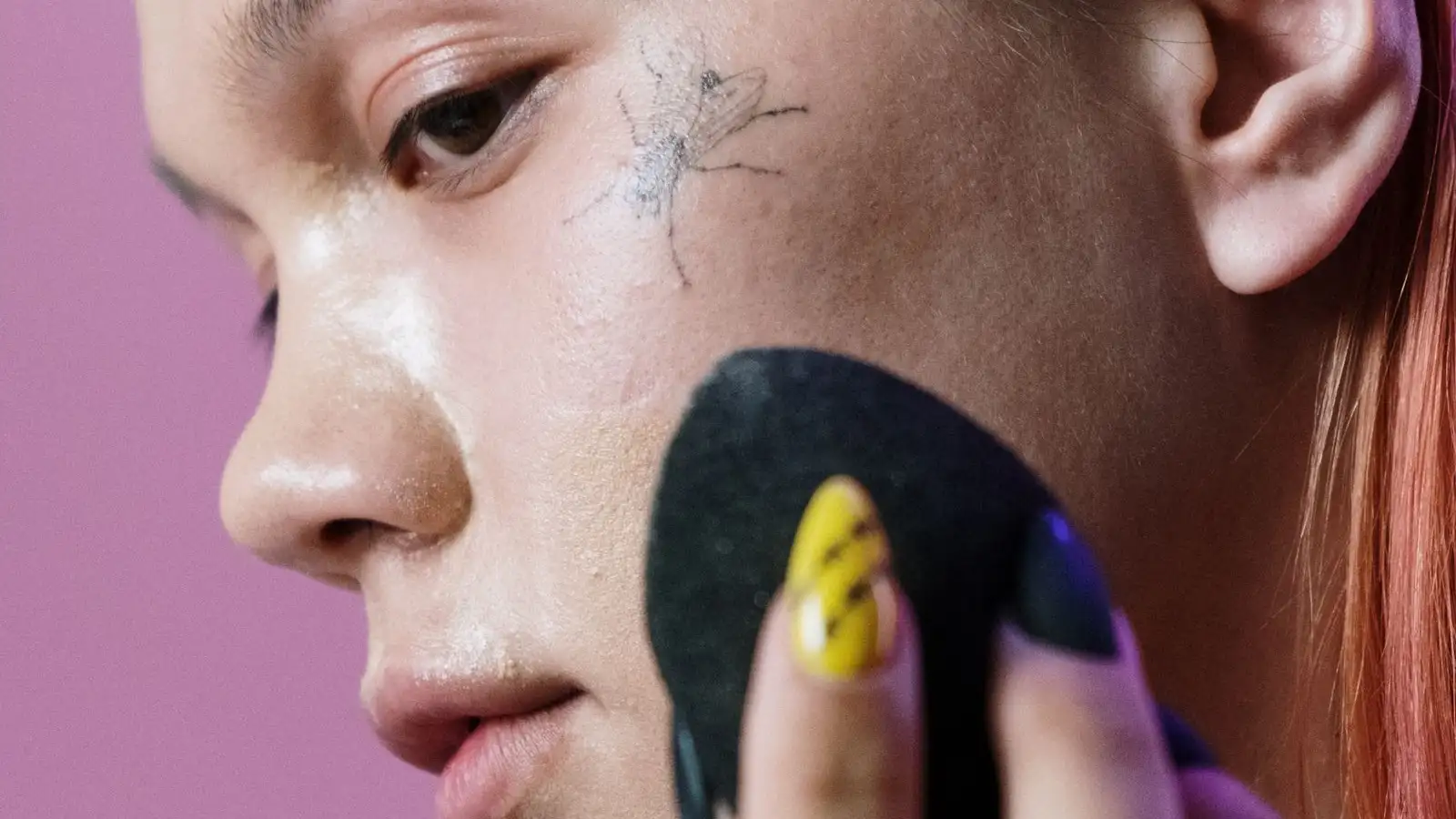
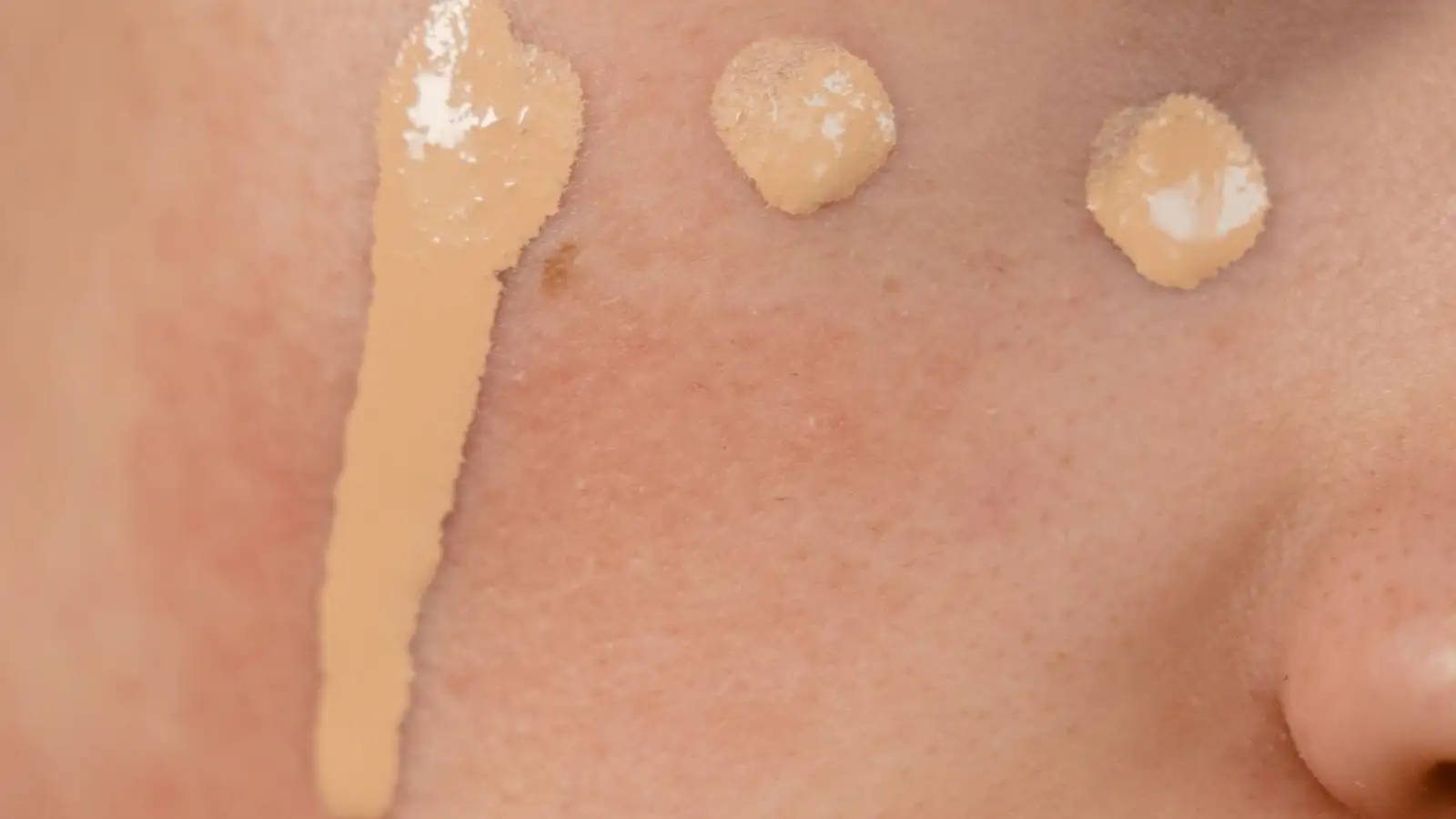
Textured Skin Foundation Can Work If You Change Your Routine
There is a window in my bathroom that faces east, and for years I did my makeup in the worst possible version of it. The light was warm and forgiving and it lied to me every single morning. I found that out at a red light on a Tuesday afternoon, when I flipped the visor down and caught my own face at an angle I had never planned for. The foundation I had left the house trusting looked gray around my mouth. Along my cheeks, where the skin is dry in winter and a little rough all year, the coverage had settled into a fine grid I could not see in the bathroom. Nothing was wrong with the bottle. Everything was wrong with the order I had used it in.
That is the thing I want to get to before anything else, because almost every article about foundation and texture starts in the wrong place. It starts with finding a better foundation. I spent a long time in that hunt. What actually changed my face was stopping the hunt and rearranging the sequence: what I put on my skin before, what finish I chose and why, how thin I built the layers, where I pressed powder and where I refused to, and only then how I matched the color. Shade matching is the last step, not the first. When you do it first, you are matching a color to bare skin that will never again look the way it looks in that moment, and you will spend the whole day chasing the difference.
I also want to be honest about what texture is. Pores, fine lines, dryness, roughness, uneven surface. That is a cosmetic condition, not a problem to be healed. Foundation can blur it visually, sit around it, or make peace with it. It cannot treat it, and the search for the product that finally makes texture vanish is the search that keeps a lot of us buying bottle after bottle; a category-by-category formula guide at least narrows which bottles are worth trying. I stopped asking foundation to fix my skin and started asking it to work with the surface I actually have.
Read your own surface first, before you shop
I check three things on a clean bare face, in indirect daylight, holding a hand mirror at an angle rather than straight on. Straight on tells you almost nothing.
Visible pore size across the T-zone, especially down the sides of the nose and between the brows. Fine lines around the mouth and at the outer corners of the eyes. And dry or rough patches on the cheeks, which for me are seasonal but never entirely gone.
Whichever of those three is most visible on you is the one that decides your finish and your application. If pores dominate, you are fighting pooling. If lines dominate, you are fighting settling. If dryness dominates, you are fighting cling. They do not all get solved by the same technique, and a routine built for someone else's dominant texture usually makes yours worse. This takes about ninety seconds and it is the most useful thing I do all week.
Prep should be hydrating and thin, and that is not the same thing
The instinct with textured skin is to pile on moisture. A rich cream feels like it is smoothing the surface, and for about four minutes it is. Then foundation goes on top of it and slides, or pills, or separates in the exact spots where the surface is uneven and the product has nowhere to grip.
What works for me is thin layers of hydration with time between them. A light hydrating layer, patted rather than rubbed, especially over rough patches where rubbing lifts the flakes you are trying to lay flat. Then I wait. Two or three minutes, until the skin feels like skin again and not like something damp. That waiting is not fussiness. Foundation applied over a wet surface moves for the rest of the day.
I skip heavy oils under foundation entirely. They read beautifully on camera in a store and they break the base apart by noon.
Finish is a lighting decision
Matte absorbs light. It flattens bumps because there is no reflection running across them, which is why it photographs so well on textured skin. The cost is that matte can go chalky on deeper complexions and it will find every dry patch and announce it.
Dewy reflects light. That reflection travels across the surface and outlines each bump like a contour map. Satin sits between the two, holding a little light without polishing the texture into visibility.
I choose the finish by asking which texture I am least willing to show that day; the zone-by-zone finish map makes that call more precise. Winter, when dryness wins, I go satin and accept some shine. Summer, when pores win, I lean matte but never fully flat, because fully flat on my skin tone reads ashy in daylight no matter how good the shade is. That last part matters more the deeper you go. The flatter the finish, the more the base reads like powder sitting on top of skin rather than skin.
Thin layers, built only where tone is uneven
One thick layer pools, and the layer-count and timing fixes start with using less product, not a different bottle. It gathers in pores and fine lines and leaves a rim around them that catches light and makes texture look deeper than it is. Thin layers, pressed in, built up only where you actually need more, cover uneven tone far better because there is no excess product looking for somewhere to settle.
My first pass is a thin veil over everything, applied with a stippling motion rather than a sweep. Then I look at my face in daylight before I add anything. Usually the unevenness is concentrated in a few places and the rest of my face does not need a second layer at all. Adding a second layer everywhere because two places needed it is how a face starts looking like a mask.
I use a damp sponge for the build, and I press rather than drag. Pressing pushes product into the surface. Dragging pushes it across the surface, and across is where it catches on texture.
Powder only where the oil is
Translucent powder applied broadly is the single most common reason a deep complexion goes gray by mid-afternoon, and the flash-photo powder test catches the pale film before someone else's camera does. The powder is not gray in the pan. It goes gray on skin because a light-scattering layer over a deeper base shifts the whole thing toward ash.
So I use a tinted powder that matches my depth, in a small amount, pressed only into the oily zones: the center of the forehead, down the sides of the nose, the inner cheeks. I press with a small dense brush or a velour puff, and I do not sweep. Sweeping distributes powder across the dry areas where it will cling and chalk.
The rest of my face stays unpowdered on purpose. A little natural shine at the perimeter keeps the base reading like skin and keeps the texture soft rather than outlined.
Now match the color, and do it on a finished face
This is the part almost everyone does backwards. Surface texture scatters light. The same foundation can look lighter, darker, or ashy on the same face at different angles, so a swatch judged on bare skin in a bright store is a swatch judged on the wrong surface.
I test on the upper cheek and along the jawline, over my actual prep and my actual finish, and then I wait fifteen minutes. Not five. Oxidation begins early and you want to see the color after the base has started reacting to your skin, not before. Then I check in indirect daylight, and again under the indoor light I will actually be sitting in. Two lights, one face, same base. If it holds in both, it holds.
If the daylight check and the indoor check disagree, trust daylight. Store light is designed to sell.
When the color drifts by afternoon
Skin oils shift foundation over a few hours, and they shift it more on textured areas where the base is thinner in some spots and thicker in others. That drift is normal and it is not a reason to throw the bottle out.
A pigment adjuster is what I reach for. A drop of something deeper or warmer, mixed into the foundation on the back of my hand, corrects depth or undertone without replacing the entire routine. Mix it, test the mix on the jaw, and adjust in small increments. One caution: an adjuster can change the finish slightly, so recheck it in daylight rather than assuming the mixed base behaves like the original.
What this routine will not do
It will not make texture invisible. Nothing cosmetic does, and any routine that promises otherwise is selling you the next bottle. Up close, in raking afternoon light, my skin still looks like skin.
It also takes longer than one thick layer does. Some mornings I do not have the time and I accept a lighter result. On humid days the powder placement needs rethinking and the base may need a lighter hand overall. If your skin is actively irritated or flaring, this is not the moment to optimize coverage; a base that feels comfortable beats a base that looks flawless for two hours and then does not.
What it does do is stop the two things that made me miserable for years: the ashiness around the mouth and the patchiness across the cheeks. Those were never problems with my skin. They were problems with my sequence. Fix the order, and the same face, in the same daylight, in the same car mirror, looks like itself again.

About the author
The Undertone
The Undertone is a byline for people who learned foundation on brown skin by swatching, mixing, and checking color in real light. They share a practical focus: if the depth and undertone are right, the formula will follow.
More about us