Your Bathroom Mirror Is Lying About Your Foundation
The bathroom mirror is not lying to you on purpose, but it is lying. Bathroom light adds its own color to your skin before your foundation ever gets a chance to show what it really is, so a shade that looks seamless at 7 a.m. can read orange at your desk by noon and gray in a photo that night. Test the shade in real daylight at a window first, then in the light you actually spend your day in, and treat the bathroom as a place where you apply makeup, not where you judge it.
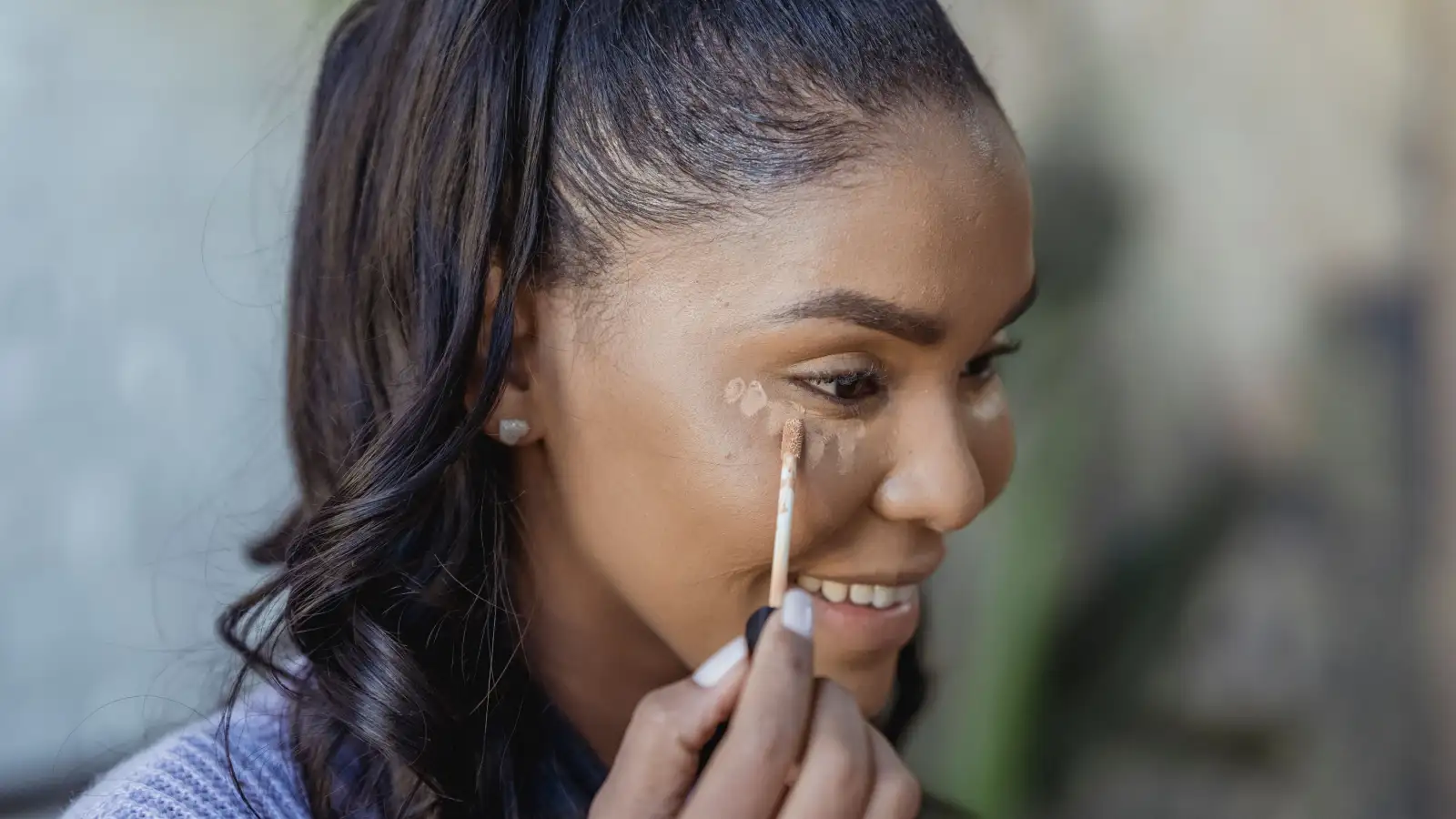
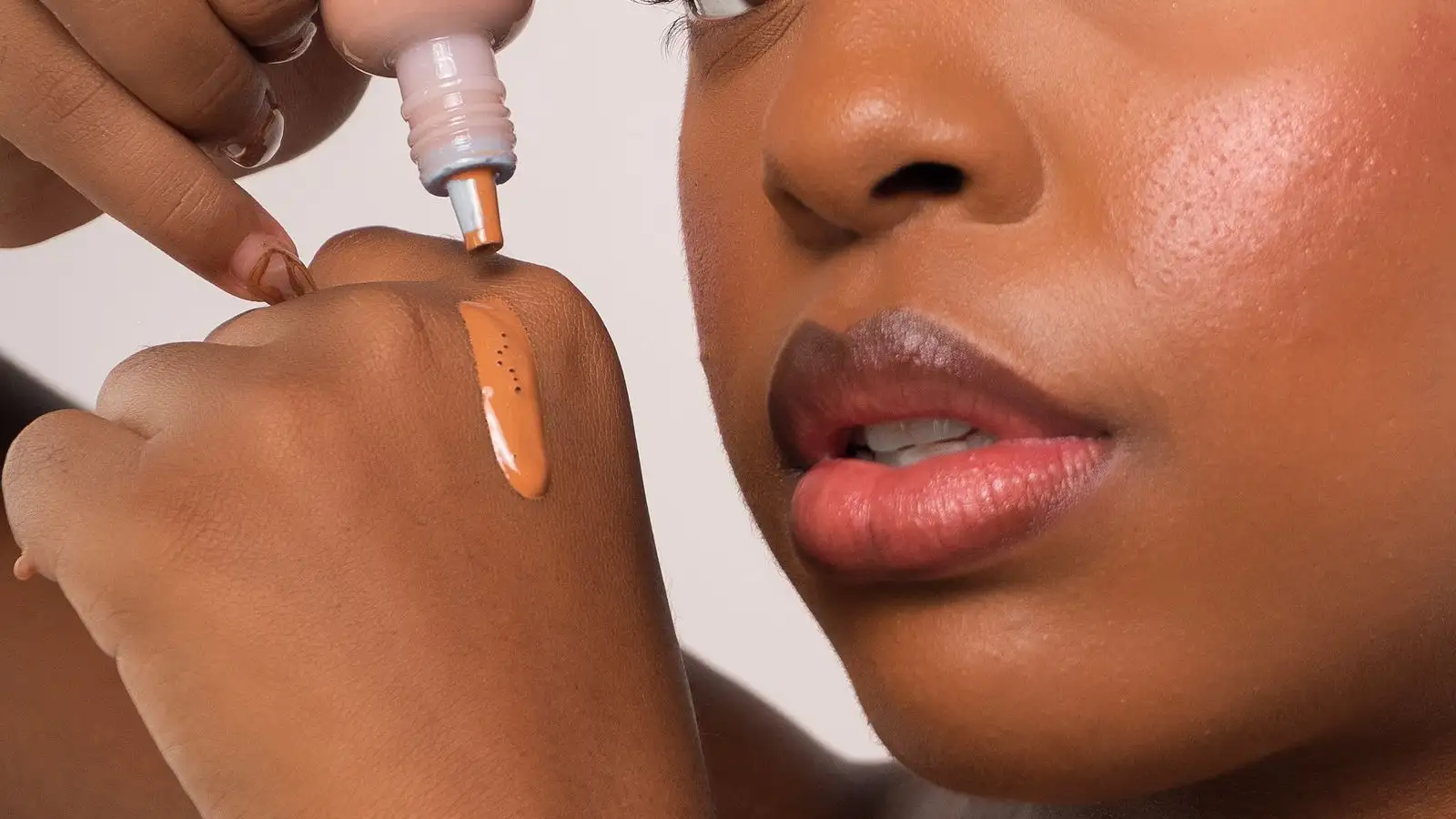
I had a stripe of foundation running from my jaw down onto my neck, and I was tilting my chin up into that warm glow from the vanity bar, and I thought: this is it, this is the one. It vanished into my skin. I capped the bottle, drove to work, and caught my reflection in the elevator maybe forty minutes later and saw a different face. The lower half of it looked muddy against a neck that had gone ashy under that flat white panel in the ceiling. Same foundation. Same skin. Different light. That was the day I stopped trusting the room I get ready in.
Light has a color, and so does your skin
Here is what I wish someone had said to me plainly, years earlier: light is not neutral. It is a color, and it multiplies with whatever is on your face.
The bulbs over most bathroom vanities run warm. That warmth stacks on top of the warmth already in your foundation, so a shade with a yellow or golden base looks calmer and more "skin-like" than it is. You are not matching your skin under those bulbs. You are matching your skin plus the bulbs.
Fluorescent tubes do the opposite. They push a green-blue cast that drains the color out of deeper skin and can drag a warm foundation toward gray. I have stood under office panels and watched a foundation I loved turn dull and slightly chalky on my jaw. Nothing about the formula changed. The tube did that.
LEDs are the sneaky ones because "LED" tells you nothing. Two bulbs sold side by side can sit on completely different color temperatures, one reading amber and one reading almost blue-white. A warm LED will flatter a golden undertone and quietly make a neutral look pink. A cool LED will do the reverse and make that same neutral look flat. If you have swapped bulbs in your bathroom in the last few years and suddenly your foundation "went bad," it probably did not go bad. Your room got a different cast.
Take the mirror to the window
This is the whole method, and it costs nothing. Get a hand mirror with a handle. Carry your foundation and the mirror to the brightest window in your home, stand with your back to the glass so the light falls directly on your face, and swipe.
Daylight is the reference because it carries the full spectrum and does not push a color of its own. It does not tint you yellow, green, or blue. What you see there is the closest thing to what the rest of the world sees.
Two things I got wrong for years before I figured them out.
First, window light changes with the hour. Morning light through glass can run cool and slightly blue. Late afternoon turns golden and forgiving and will make almost any warm foundation look right. So do the test at the same time each time you try a shade, and note the hour. A shade that passes at four in the afternoon may fail at nine in the morning. Mine did.
Second, do not use a white towel or a white wall as your reference. Most white fabric is treated to look brighter than white, which throws a blue cast into your comparison. If you want something neutral next to your skin, use a piece of plain unbleached paper or just your own bare neck.
The neck is the part people see
Match at the jawline and down onto the neck, not in the middle of your cheek. Your cheek catches more light than your neck does, so a foundation that matches your face indoors can leave an obvious line at the collar outdoors where the two zones sit side by side in the same light.
I blend a stripe down past the jaw and look at the boundary. In daylight, if the stripe disappears into the neck, you are close. If you can see a difference in depth, you are probably one step off. If you can see a difference in direction — the stripe reading pinker or greener than the neck rather than darker or lighter — you have an undertone problem, and no amount of blending will fix it; sorting the shift into oxidation, undertone mismatch, lighting, or base incompatibility tells you what to change first.
The light you actually live in
This is the part most people skip, and it is why I wrote any of this down.
Daylight is the honest reference, but you do not live in it. You live in an office with panels overhead, or a classroom, or a car, or a kitchen with one warm bulb, or a video call with a ring light clipped to a laptop. If your foundation only works at a north-facing window, it does not work.
So run two tests. Daylight first, because that tells you what is true. Then your own light — sit where you actually sit, at the hour you actually sit there, and look. I keep a small hand mirror in a desk drawer for exactly this reason. If you spend eight hours under fluorescents, that panel is your real world, and it gets a vote.
That is the tradeoff nobody warns you about: no single foundation wins in every light. You are always choosing which light you are willing to lose in. Knowing which one that is, before you buy, is most of the skill.
One photo with the flash on
Before you commit to a bottle, do one more thing. Go into a dim room, set your phone to flash, and take one photo of the stripe at your jaw.
Flash does something nothing else does. It hits the pigments in the foundation and bounces back in ways your eye cannot catch in real time. Sometimes you get flashback — a pale ghostly cast over the whole area, very visible on deeper skin — because light-reflecting mineral powders such as titanium dioxide, zinc oxide, silica, and mica are doing their job too well for a direct flash. Sometimes you get an undertone shift instead, where a foundation that looked neutral all day suddenly reads distinctly pink or distinctly olive. Both are worth knowing about before a wedding, a graduation, or any night where someone will be holding a phone.
What the flash test is not: it is not a color match. Your phone's camera decides its own white balance and it will not tell you the truth about depth. It is only good for catching a cast you would otherwise miss.
What I do now, in order
Swatch at the jaw and down the neck. Walk to the window, back to the glass, same hour as before. Look at the boundary line in daylight and judge the direction of the difference, not just the depth. Then step into my own bathroom and look again, then the office light if it is a workday. One flash photo. Then I wait half an hour and look a third time, because foundation settles and warms as it sits on skin, and the first thirty seconds are not the final answer.
If the shade fails only in one light, I now know which light it fails in, and I can decide whether I care. That is a different kind of decision than "does this match." It is the one that actually holds up.
The bathroom mirror is not the authority. It is just the first opinion you hear, and it is a biased one.

About the author
The Undertone
The Undertone is a byline for people who learned foundation on brown skin by swatching, mixing, and checking color in real light. They share a practical focus: if the depth and undertone are right, the formula will follow.
More about usRelated posts