The Oil-Control Mistake That Shortens Foundation Wear
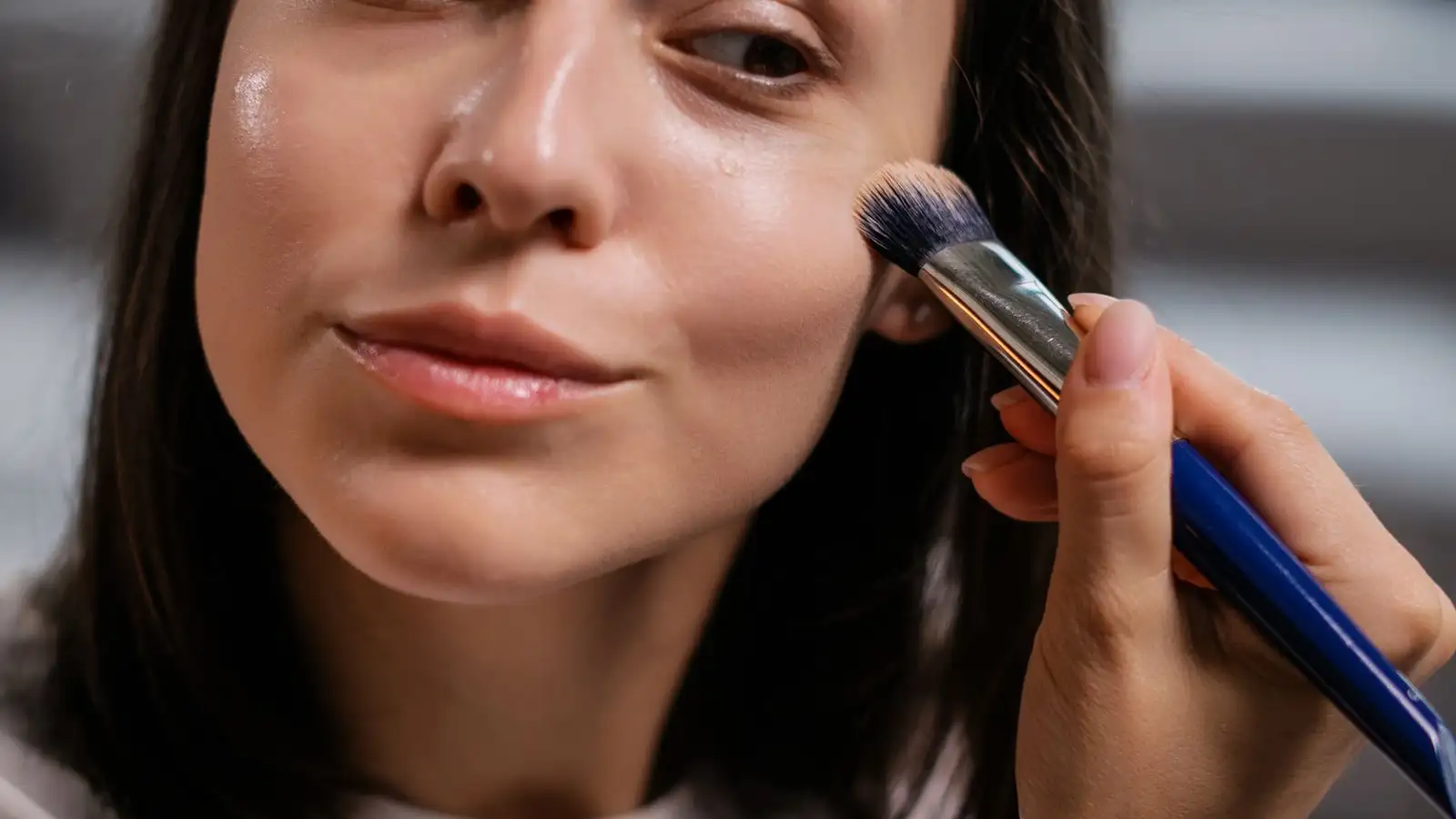
The mistake is powdering over shine instead of lifting the oil off first. Chasing a shiny forehead with another pass of mattifying powder — silica, clay, some starches — traps a film of sebum under a dry crust; on deep skin that crust goes chalky in daylight, then cracks and lifts in patches, and the pigment left behind reads a half shade warmer than it did at 8 a.m. Thin tissue first, powder only where it's actually needed, rebuild in thin layers, and the same bottle holds hours longer and keeps its shade.
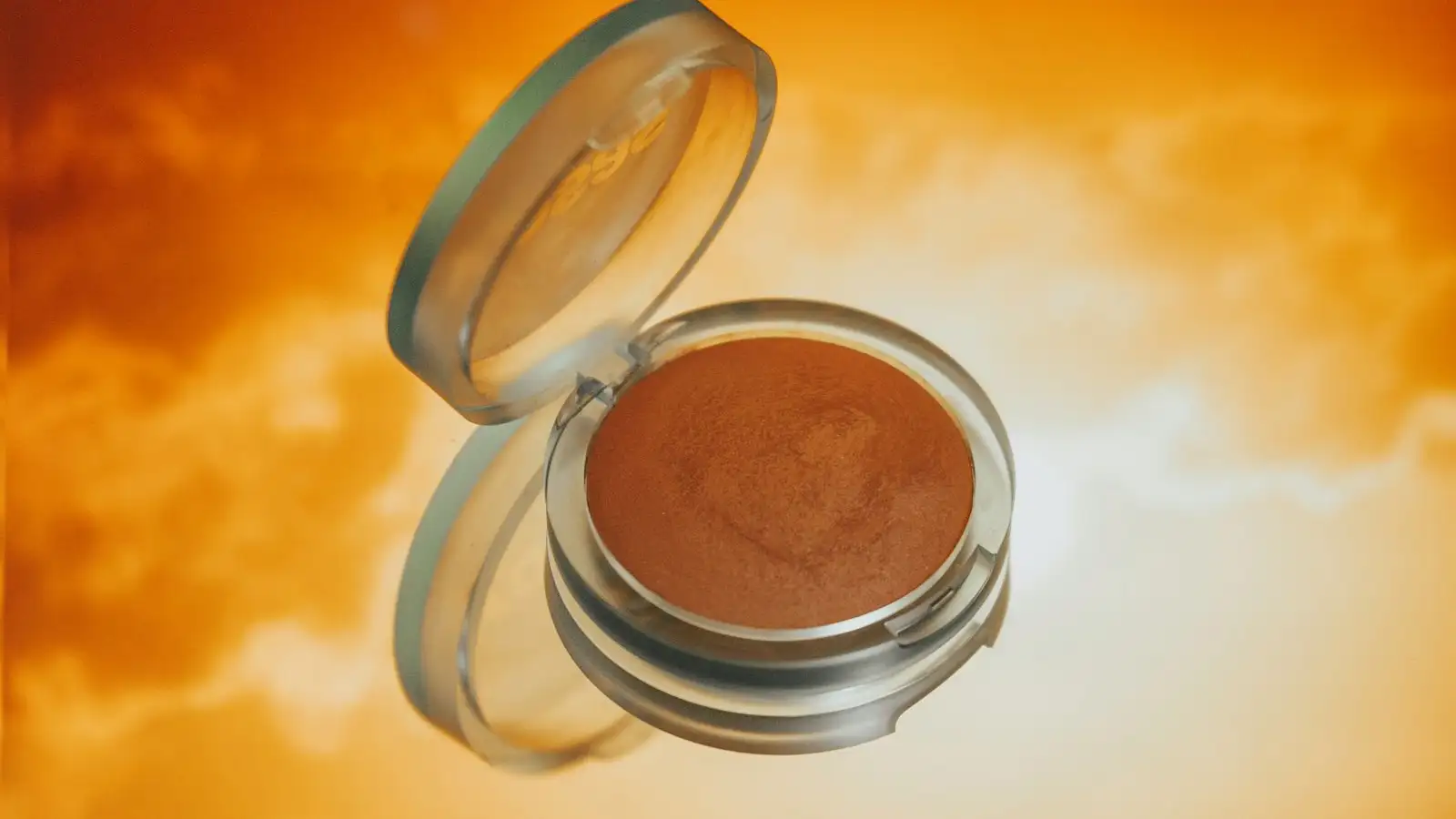
I learned that in a parked car, not at a counter. 1:40 in the afternoon, sun straight through the windshield, visor down, the rearview tilted toward me. Forehead lit up like a dinner plate. Cheeks fine. Chin fine. But the shine across the T-zone made the whole face look like it was sliding, so I did what I'd done a thousand times: opened the compact and pressed powder straight onto the oil.
Ride along for the next thirty seconds, because this is the part that stuck. The puff didn't glide — it grabbed. When I lifted it there was a faint darker ring on the powder where my forehead had been, and the center of my forehead had gone grey. Not lighter, grey. The rest of my face was still my face; that patch looked borrowed from someone else. Later that week I watched the same thing happen in reverse on a phone screen after a call, a soft tan smear across the glass, and I finally understood the two events were the same problem.
What oil is actually doing up there
Sebum isn't water, and foundation isn't waterproof paint. The film formers that hold pigment flat and even — the silicone resins and flexible polymers that set into a water-resistant layer are built to sit on a dry, prepped surface. Give them a layer of oil and they don't vanish, they soften. The film loosens, and pigment that was suspended evenly starts to travel: into pores, into the lines around the nose, onto a mask edge, onto the phone. That smear isn't sweat. It's your film letting go.
The part I took longer to piece together is that the color goes before the wear does. When the binder thins under the pigment, the ratio of pigment to filler shifts and the filler starts showing through. On medium-deep and deep skin, the filler is usually the pale, chalky fraction. So the shade fails in two directions at once — warmer where the oils in the formula are oxidizing, greyer where the powder is exposed. That's how one foundation can look correct on a cheek and wrong on a forehead in the same photograph.
The step most of us skip is the waiting
Prep matters less than what you do between prep and foundation. Cleanse, moisturize, then wait. If the film goes down on top of a moisturizer that's still tacky, you've built it on a slip layer, and the first hour of oil will finish it. I give it a full two minutes now, and I can feel the difference with my fingertips — the skin goes from wet to cool to just barely grippy.
On top of that, a gel or water-based primer built for oil control, patted thin across the T-zone only. Thick layers of anything are what leave a white film, and a white film under foundation on deeper skin is the whole ballgame. Sixty seconds to set before the base goes on. Nothing dramatic. It just delays the moment sebum reaches the film.
Blot first. Powder is the last resort.
Here's what replaced the compact-and-puff reflex. A thin tissue — the kind that goes translucent when you hold it up — pressed flat over the forehead, held for a count of three, lifted straight up. No dragging, no sweeping, no rubbing with the sleeve or the back of the hand. Press and lift, one area at a time. Forehead. Nose. Chin. A fresh piece for each, because a tissue loaded with oil is just moving the problem around.
Then look at it. A tissue that comes away grey-tan is telling you it took pigment with it, which means you pressed too hard or dragged. A tissue that comes away clear and slightly greasy is exactly what you want: oil gone, film intact.
Only after that does powder come out, and only on the spots that are actually shining. A light press with a barely loaded puff, tapped off first. Silica and clay do their job by absorbing oil, and they'll absorb every bit you give them — but the same property that kills shine is what turns deep skin grey in daylight and worse in flash. Less than you think. Pressed, not swept. If the powder is visible as powder, it's already too much.
Rebuilding a patch without changing its color
Touch-ups go wrong in two ways: too much product, or product on top of oil. You've handled the oil. Now take the smallest amount of foundation you can get out of the bottle — one pump is usually three faces' worth — and tap it into the thin, worn spot with a fingertip or a small dense brush. Tap. Don't pull. Build it back a whisper at a time and let each pass sit for a few seconds before deciding whether it needs another.
Two thin layers will beat one thick one every time, because thin layers dry down with the skin underneath them. Thick ones sit on top like a patch, and that's where the color mismatch shows up. A light mist of setting spray over the rebuilt area re-wets the powder and merges the layers; skip it and the new foundation can read slightly lighter than the old one for a few minutes.
And then leave the rest alone
The last piece, and the one I had to learn to stop doing: reaching for the whole face. My cheeks and jaw were never the problem, but every touch-up swept across them anyway, piling powder where there was no oil and flattening the only parts that still looked like skin. Now the T-zone gets the tissue and the powder, and the outside of the face gets nothing. Dry areas stay slightly dewy. It reads better in daylight, and it holds longer, because there's nothing there to break down.
Oil control was never about beating the oil. It's about keeping it away from the film long enough that the film can do its job — and keeping the powder off the places the oil never reached.

About the author
The Undertone
The Undertone is a byline for people who learned foundation on brown skin by swatching, mixing, and checking color in real light. They share a practical focus: if the depth and undertone are right, the formula will follow.
More about usRelated posts