How to Build Coverage on Mature Dry Skin Without Caking
Building coverage on mature dry skin without caking comes down to one shift: stop choosing a coverage level at the bottle and start layering it on the face. Coverage is only how much pigment and opacity ends up sitting on your skin — not how thick the liquid feels in your hand, not what the label promises, not what it costs. Once you treat coverage as a number of thin passes rather than a category, you can build sheer, medium, or full on the same face, in the same sitting, and stop short wherever the skin already looks even. Prep with enough slip, keep the finish away from flat matte, and hold the powder until the very end. Those three habits do more for a natural full-coverage look than any formula name on a box.
I learned that the slow way, standing at a bathroom window I now treat as equipment.
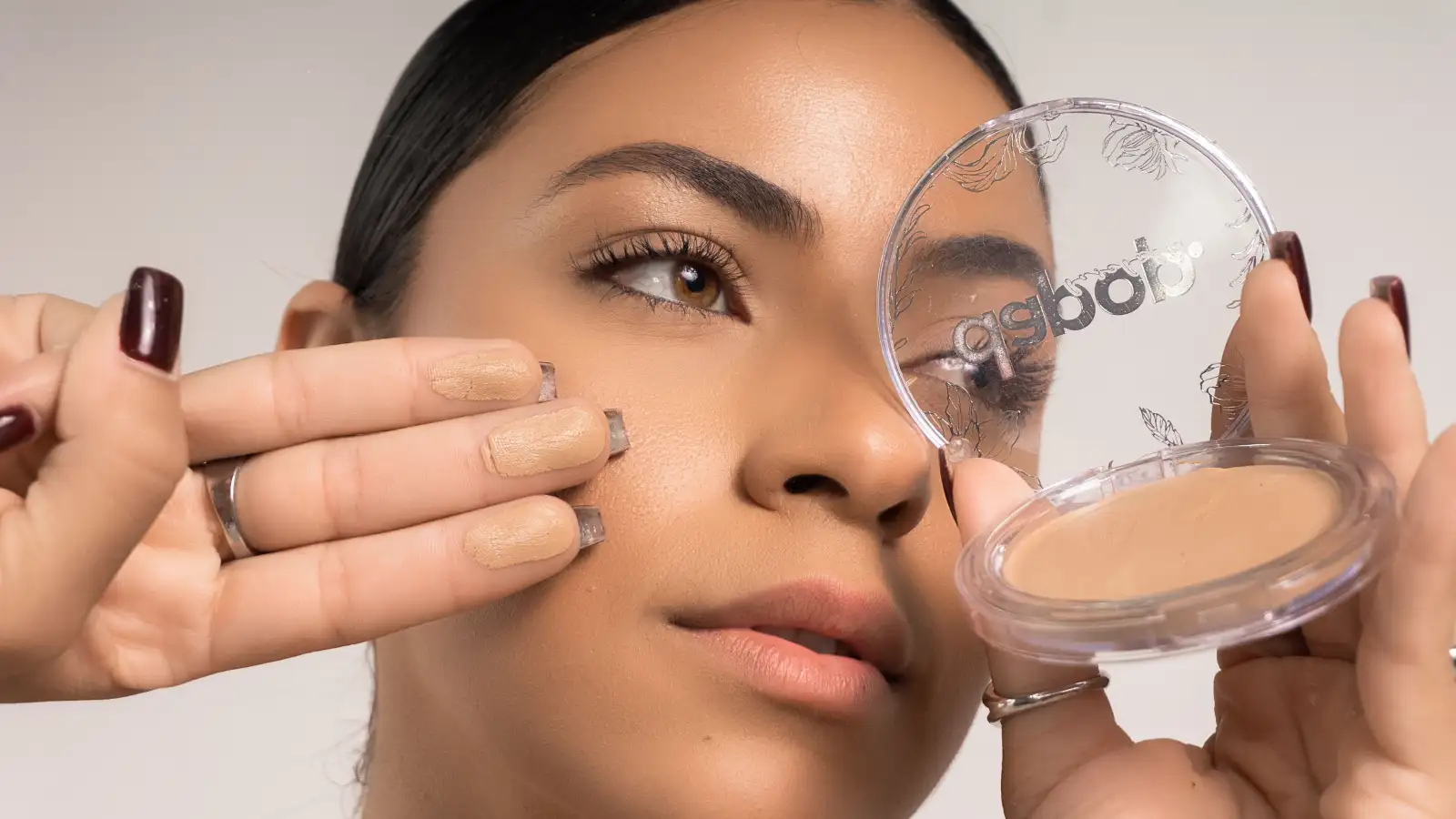
It's early, the light coming in sideways and completely unforgiving, and I've got a damp sponge in one hand and a thin smear of foundation on the back of the other. Not a stripe. A whisper. If I can still see the color of my own skin through that smear, it's a layer. If the product sits on top like paint on a wall, that isn't a layer — that's the thing that will crack across my cheek by two in the afternoon. That back-of-the-hand check is the whole article in miniature, and it's where I start every single time.
What mature dry skin is actually doing to the product
Dry skin drinks. That's the physical fact underneath every caking problem I've ever had. A foundation that sets quickly and matte sets while the surface is still pulling moisture out of it, and whatever it sets into — the fine lines around the eyes, the crease beside the mouth, the texture on the cheeks — is where it stays. Deeper skin adds a second problem on top: the more opaque and powdery the finish, the more likely it reads gray or chalky where the light hits. Ashiness isn't a coverage problem; it's a finish and powder problem. But it gets blamed on coverage, and then people go buy a lighter formula and lose the evenness they wanted in the first place.
So the goal isn't thinner coverage or thicker coverage. It's coverage that stays flexible.
The slip layer, before anything with pigment
I don't start with foundation. I start with what's under it, and the only question I ask is whether my skin still feels slightly tacky or has gone fully dry to the touch. If my moisturizer is still wet, the foundation will slide and separate and I'll blame the foundation. If my skin is tight and matte, the foundation has nothing to move with and it will crack. There's a window in between, and you find it by touching your own jaw, not by timing anything.
When I want a full-coverage finish that still looks like skin, I'll put a small amount of something slippery into the formula itself — a drop of liquid moisturizer, a drop of facial oil — and mix it on the back of my hand, though mixing changes coverage and finish too. It softens a formula that sets too fast. The tradeoff is honest: you lose some wear time, and on a humid day it can travel. I only do it when I need the coverage to sit down smooth, not when I need it to last twelve hours.
One pass everywhere, then stop looking at the whole face
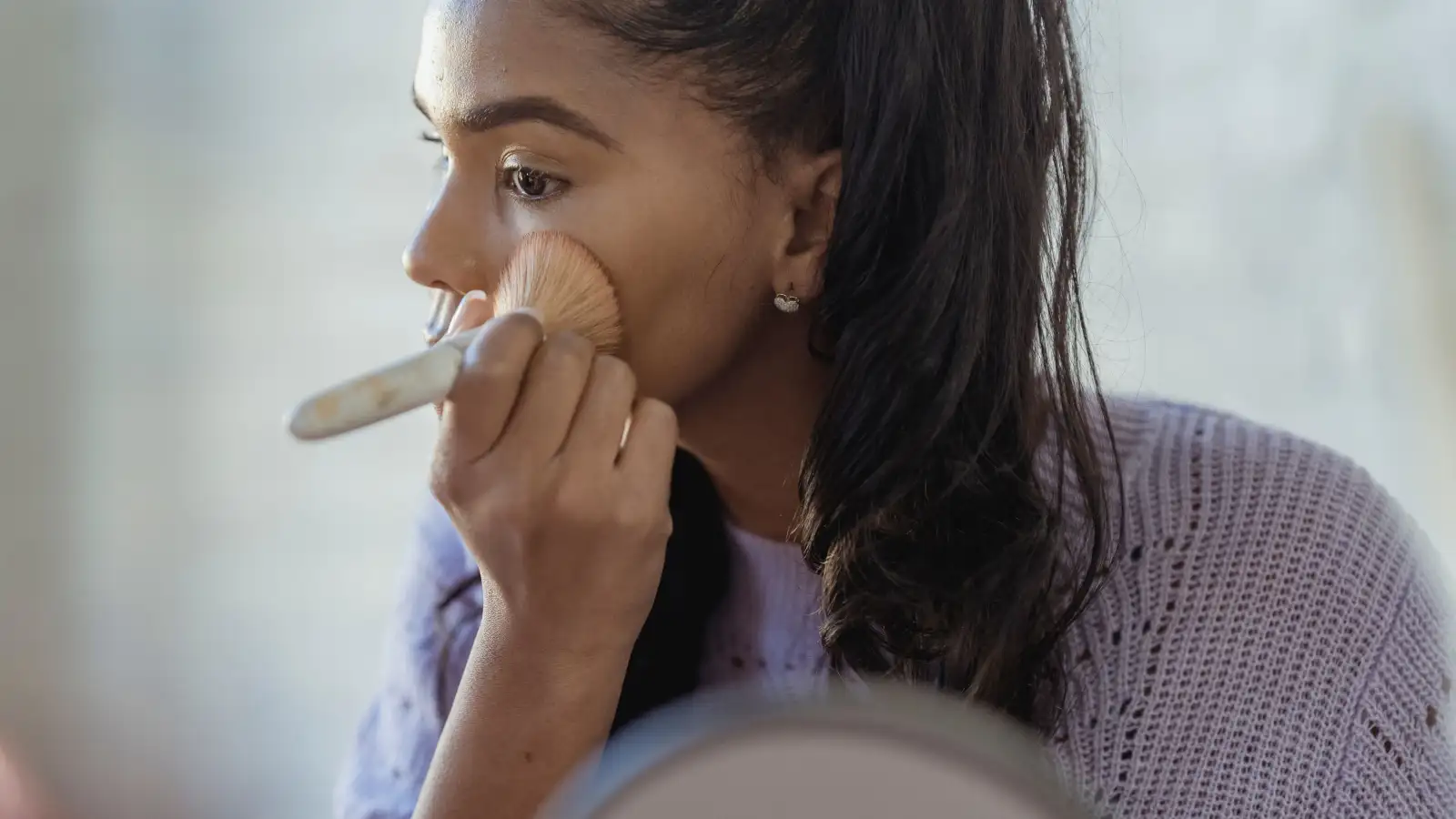
First pass is thin and it goes everywhere, and I press rather than sweep. A damp sponge — wrung out so it's barely cool to the touch, not dripping — pressed into the skin pushes pigment into the surface instead of dragging it across dry patches. Sweeping is what lifts flakes and leaves those little ridges along the cheek.
Then I wait. Two or three minutes, long enough to finish my coffee, because wet foundation and settled foundation are two different products and judging the wet one is how people end up adding a second full layer they didn't need.
Here's where the layering decision actually happens. I look at my face in that window light and I ask which zones are still uneven — for me it's the inner cheeks, a little around the nose, sometimes the chin. That's it. That's the only place the second pass goes. I tap it in with the same damp sponge, in a small circle, and I leave the perimeter of my face at one layer. The edges of the face are where thickness shows up first, and nobody is studying your jawline for coverage.
That single habit — building only in the center — is how a sheer or light formula gets to medium without ever reading heavy. Same product, same bottle, different placement.
Concealer is a coverage tool, not a second foundation
If the unevenness is concentrated, concealer does more work than another pass of foundation. I'll use it two ways. Under the foundation on the areas that need the most, so the foundation blends over it instead of sitting on top of a hard edge. Or on top, after, with a tiny brush and a stippling motion — press, lift, press — never a swipe. A pinpoint brush lets me put pigment exactly on the spot and nowhere else, which means I don't need full coverage across my whole face to get an even result.
That distinction matters more than any formula choice. Full coverage everywhere is a look. Coverage where it's needed is a technique.
Powder is the last step, and often not a full step
I used to powder almost immediately, because that's what you do. On mature dry deeper skin that's the fastest way to make good coverage look heavy and textured. Powder pressed into foundation that hasn't fully settled grabs unevenly and turns slightly gray in the light, and once it's there you can't lift it back off without starting over.
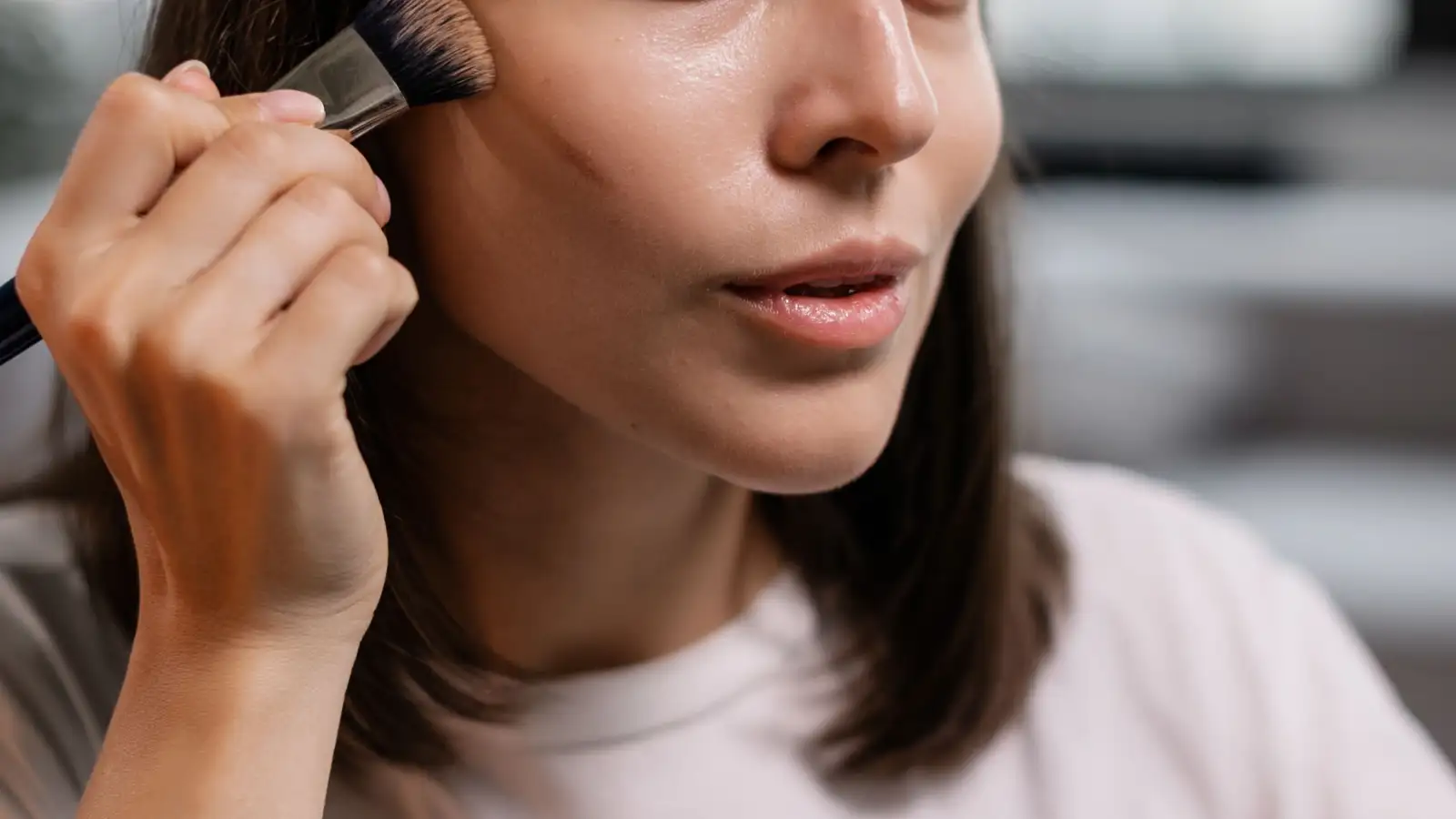
Now I wait. I let the base sit, I check it in daylight, and then I powder only where I actually get shine — usually the center of the forehead, the sides of the nose, sometimes the chin. A small amount, pressed with a velour puff rather than dusted everywhere with a big brush. Everything else stays unpowdered, because an unpowdered edge is what keeps the finish reading like skin rather than like a mask.
If the day is hot or long, I'd rather set with a fine mist than add powder across the whole face. It costs me a little wear time in the center and saves the texture everywhere else.
When it still cakes, and it sometimes will
No layering method fixes flaking skin. If the surface is actively peeling, more product makes it more visible, and the honest move is to take care of the flaking first and wear less coverage for a few days. Same with a formula that's simply too matte for you — you can thin it, mix into it, place it carefully, and it will still fight you in dry air. Some products don't layer well over others, particularly a water-based formula over a silicone-heavy primer, and that shows up as patchiness no technique will rescue.
What I've stopped doing is treating any of that as a failure of coverage level. It's almost never the level. It's the number of passes, where they land, how wet the skin was underneath, and whether the powder came out too early. Four things I can control, on a face I've been looking at in the same window for years.

About the author
The Undertone
The Undertone is a byline for people who learned foundation on brown skin by swatching, mixing, and checking color in real light. They share a practical focus: if the depth and undertone are right, the formula will follow.
More about usRelated posts