How to Make Foundation Work on Mature Dry Skin Every Day
Make foundation work on mature dry skin by treating it as a sequence, not a product search: prep until the skin is supple but not slick, press foundation on in thin layers only where coverage is needed, decide coverage and finish separately, set only the zones that actually move, and check the result in daylight and in the light where you will spend the day. When the face looks dry, patchy, or ashy, fix the layer that failed, whether prep, base, or set, instead of replacing the whole routine.
Stand with me at the bathroom window on a Tuesday morning in January. The tile is cold under my socks, the radiator ticks, and the light through the glass is flat and honest. I have a hand mirror in one hand and a damp sponge in the other. You are holding the foundation bottle, and I want you to look before we put anything on: the skin around my mouth is a little dull, my cheeks have texture that catches the light, and there is a gray cast at the jaw that disappears under the warm bulb over the sink. The faucet drips once and stops. That gray cast is what I plan around. On deeper, melanin-rich skin, dryness rarely announces itself as a neat little flake. It shows up as ashiness, a veil of gray, or a patch that will not reflect light. If I ignore it, a well-matched foundation can turn on me by noon.
Prep is about slip, not product count
I wash with a soft cloth and lukewarm water. No scrubbing, no hot water, no five-step ritual. I pat my face dry and leave it a little damp, then press in moisturizer until it feels supple. Then I wait. A minute or two is usually enough. If the skin still feels tacky, I blot it with a clean tissue. That wait is the difference between foundation that glides and foundation that grabs, because unsettled prep is a common reason the base goes patchy.
The goal is not wet skin. Wet skin makes foundation slide, and sliding foundation settles into every bit of texture. The goal is skin that feels cool and flexible, not slick. If I am going to use a primer, I use it only where I actually need help, like the center of my cheeks, and I give it time to set. Primer all over is another layer that can pill, especially on mature dry skin. I ignore the product count. The order matters more.
This is also where deeper skin needs a different look. Ashiness is not the same as flaking. A flake sits on top. Ashiness reads as a grayish film under the surface, and it can make a foundation look too light or too cool even when the depth is right. I treat that as a prep signal, not a reason to pile on more base.
Judge the foundation after it sets
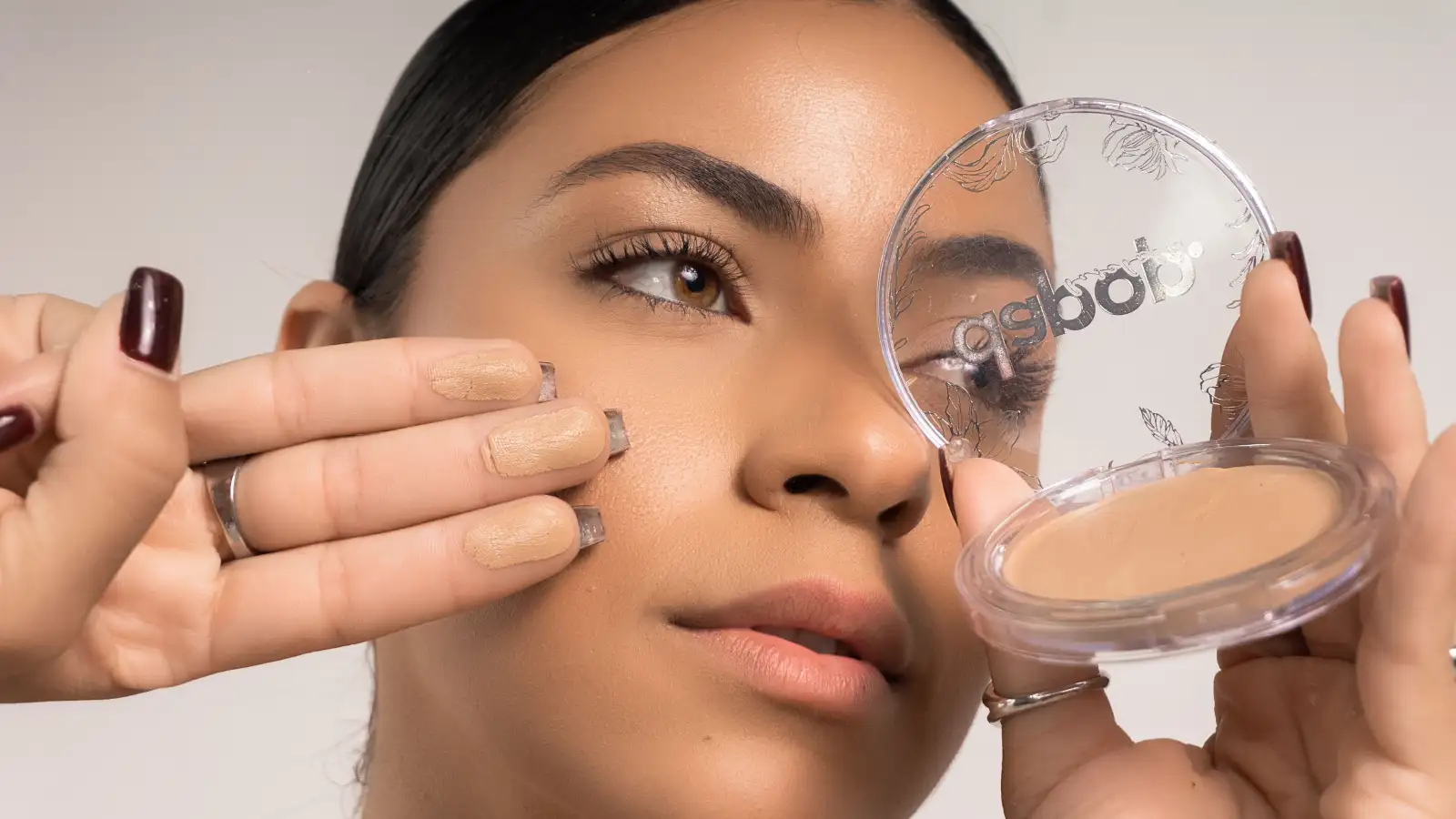
I swatch on the jaw, not the back of my hand. The hand is a different color and a different texture. I put a thin stripe along the jaw and another near the mouth, then I leave it alone for about ten minutes. Some formulas look right when wet and shift after they set. On deeper skin, that shift can read as gray or chalky rather than simply darker.
I also check how the formula feels, not just how it looks. A foundation that feels comfortable at application can look drier after it sets if the base system pulls moisture or the powder layer is too heavy. I want something that stays flexible. If it sets tight, my cheeks will show every bit of texture by the afternoon.
Coverage and finish are separate decisions. Coverage is how much pigment goes on the skin. Finish is how the surface reflects light. A higher-coverage foundation does not automatically have to be matte, a sheer foundation can still look dry if it sets hard, and a dewy finish does not mean the formula is hydrating. I can want medium coverage and a satin finish at the same time. When I forget that, I end up buying around the wrong problem.
If the depth is close but not exact, I mix. A tiny amount of a deeper or lighter foundation on the back of my hand can adjust the shade, but I test the mix on my jaw and let it sit. Mixing changes coverage and finish too. It is not a free fix.
Apply thin, then press, then stop
I put a small amount on the back of my hand, about a pea-sized amount for one cheek and the jaw. I press it in with a damp sponge, starting at the center of my face where I want the most coverage. I do not buff. Buffing lifts texture on dry skin. Pressing keeps the layer thin.
Then I stop and look. Most days I need a second thin layer only on the cheeks, chin, and around the mouth. That is also where mature dry skin tends to separate first, because those areas have less surface oil and more visible texture. A thin layer can move with the skin. A thick layer sits on top and cracks.
I leave the outer cheeks and temples lighter. That keeps the face from looking flat and makes the coverage look more like skin. If I need more around the nose, I use what is left on the sponge, not a fresh pump. Around the mouth, I use one thin pass and then press with a clean finger. The mouth is where too much product shows up first.
Set only what moves
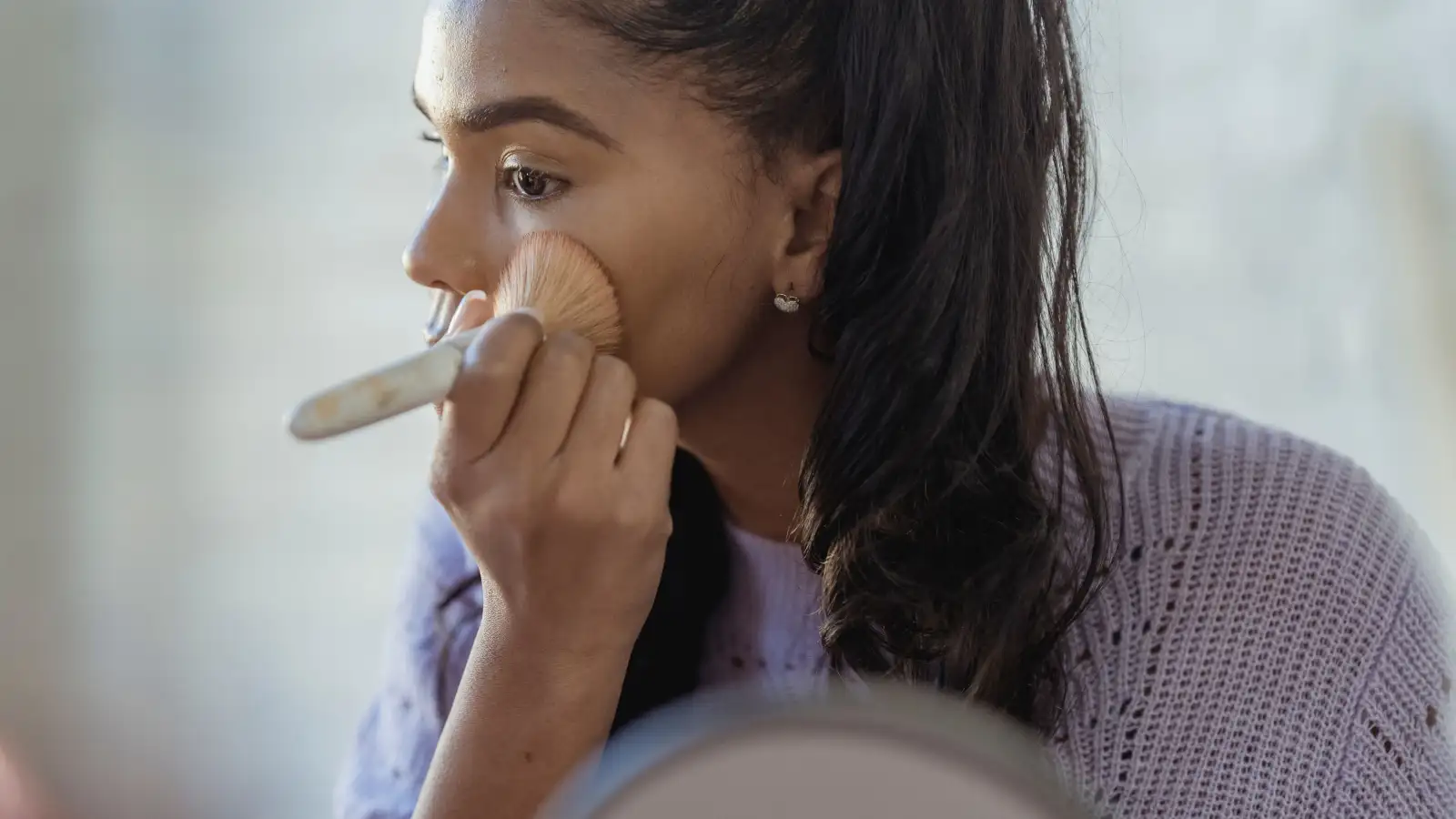
I do not powder my whole face. I use a small brush, tap it off twice, and press powder only where makeup actually moves: the sides of the nose, the chin, and sometimes the line between my lower lip and chin. If the area around my mouth is dry, I skip powder there unless it is creasing. Powder is not a requirement. It is a tool for a specific zone.
A heavy powder layer is one of the fastest ways to make mature dry skin look drier than it is, and white setting powders can flash back ashy on deeper skin. It pulls the surface matte, then the foundation starts to look like a separate layer sitting on top. If I want a softer finish, I use less powder and a fine mist of setting spray. If I spray too much, I press the excess with a damp sponge. I do not soak the face.
This is also where comfort can fool me. A foundation can feel fine when I finish my makeup and then look tight an hour later. That does not always mean the foundation is wrong. It can mean the base underneath was too heavy, or the powder on top was too much. I check before I blame the bottle.
Check the light you will actually be in
I take the hand mirror to the window first. Daylight shows ashiness faster than any bathroom bulb. I turn my chin left, then right, and look at the jaw and the area around my mouth. If the foundation looks gray there, I do not add more foundation. I check whether the skin underneath is dry, whether the shade is too cool—gray from the first swipe is usually undertone, not oxidation—or whether the powder has gone on too heavy.
Then I check the light where I will spend the day. At my desk, the overhead light is a cool tube. It is not flattering, but it is honest. If I am going to be under that light for six hours, that is the light that matters. Store lights and warm vanity bulbs can make a mismatch look fine. They can also hide the gray cast that shows up in daylight.
I do not judge by phone flash alone. Flash can exaggerate a white cast from powder, and it can make a normal finish look shinier than it is. Daylight and the real room light are the two checks I trust.
When it fails, find the layer
Troubleshooting starts with the layer that is failing, not with a new routine. If the foundation rolls or pills, the prep is too heavy or it has not had time to set. If it separates on the cheeks and chin, I probably used too much product or too much primer in those zones. If it clings to texture, I need less foundation and less powder, not more. If it looks gray, I check prep, shade, and setting in that order.
If the face feels tight but looks fine, the base or the powder is pulling too much. I mist, press, and skip powder the next day in that area. If the foundation looks dry after it sets, I do not add powder to fix it. I remove that patch with a little moisturizer on a tissue, press a thin layer back on, and leave it alone.
There are limits. If a foundation is simply too matte for my skin, no prep trick will turn it into a satin finish. I can mix it with something more flexible, use less of it, or save it for a different day. That is not failure. That is matching the formula to the day.
The daily sequence I actually use
- Wash with a soft cloth and lukewarm water. Pat dry, leaving a little dampness.
- Press in moisturizer until the skin feels supple. Wait a minute or two. Blot any tacky spots.
- Put a small amount of foundation on the back of my hand. Press it on in a thin layer, starting at the center.
- Add a second thin layer only where I need coverage, usually the cheeks, chin, and around the mouth.
- Set only the zones that move, with a light touch of powder. Skip the dry patches unless they are creasing.
- Check at the window, then under the light where I will spend the day. Fix the failing layer, not the whole face.
By the time I leave the bathroom, the goal is not a full-coverage mask. It is skin that still looks like skin in daylight. When that works, the foundation stops being the thing I notice. That is the point.

About the author
The Undertone
The Undertone is a byline for people who learned foundation on brown skin by swatching, mixing, and checking color in real light. They share a practical focus: if the depth and undertone are right, the formula will follow.
More about usRelated posts