Why Your Prep Makes Mature Dry Skin Foundation Patchy
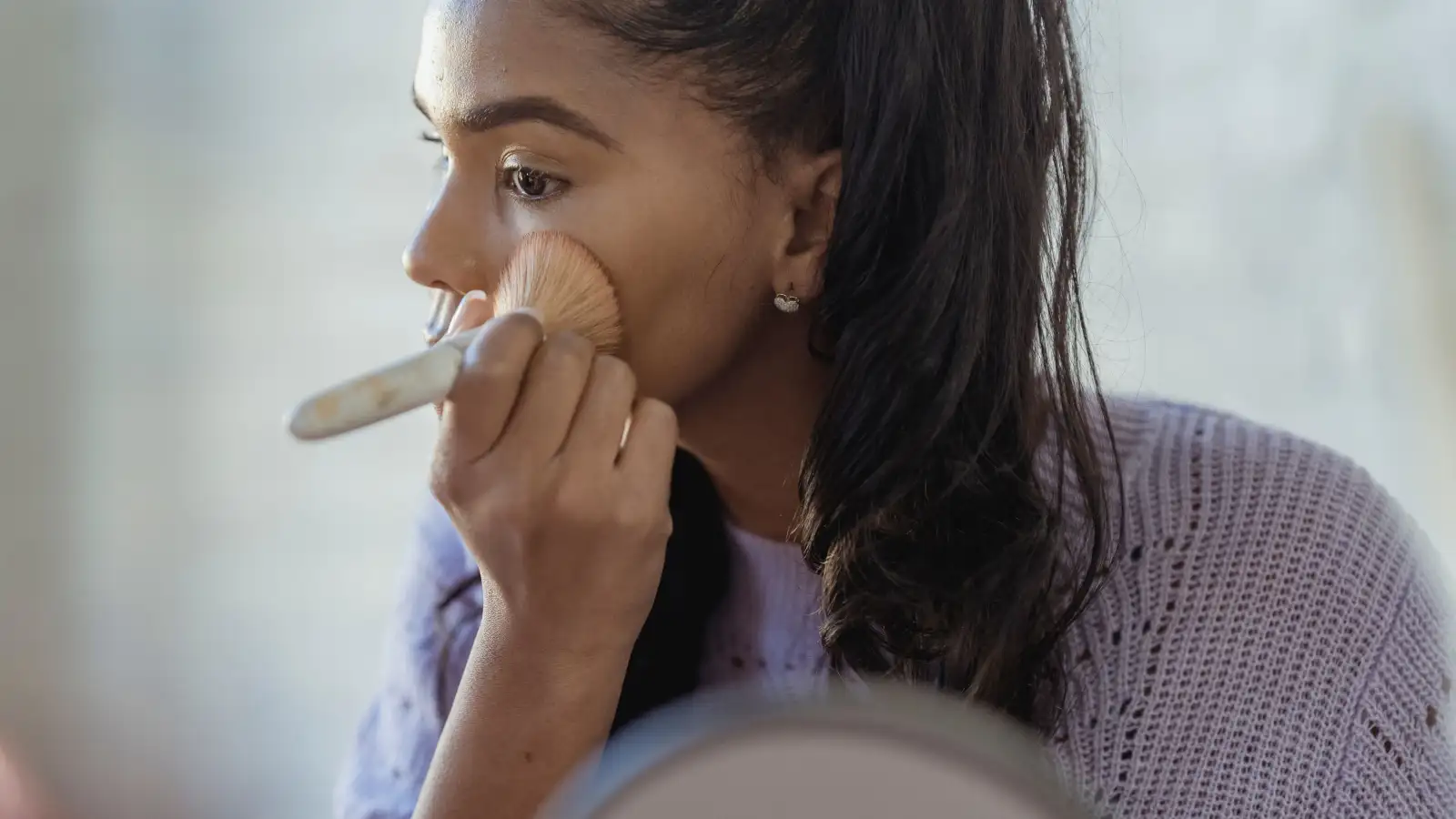
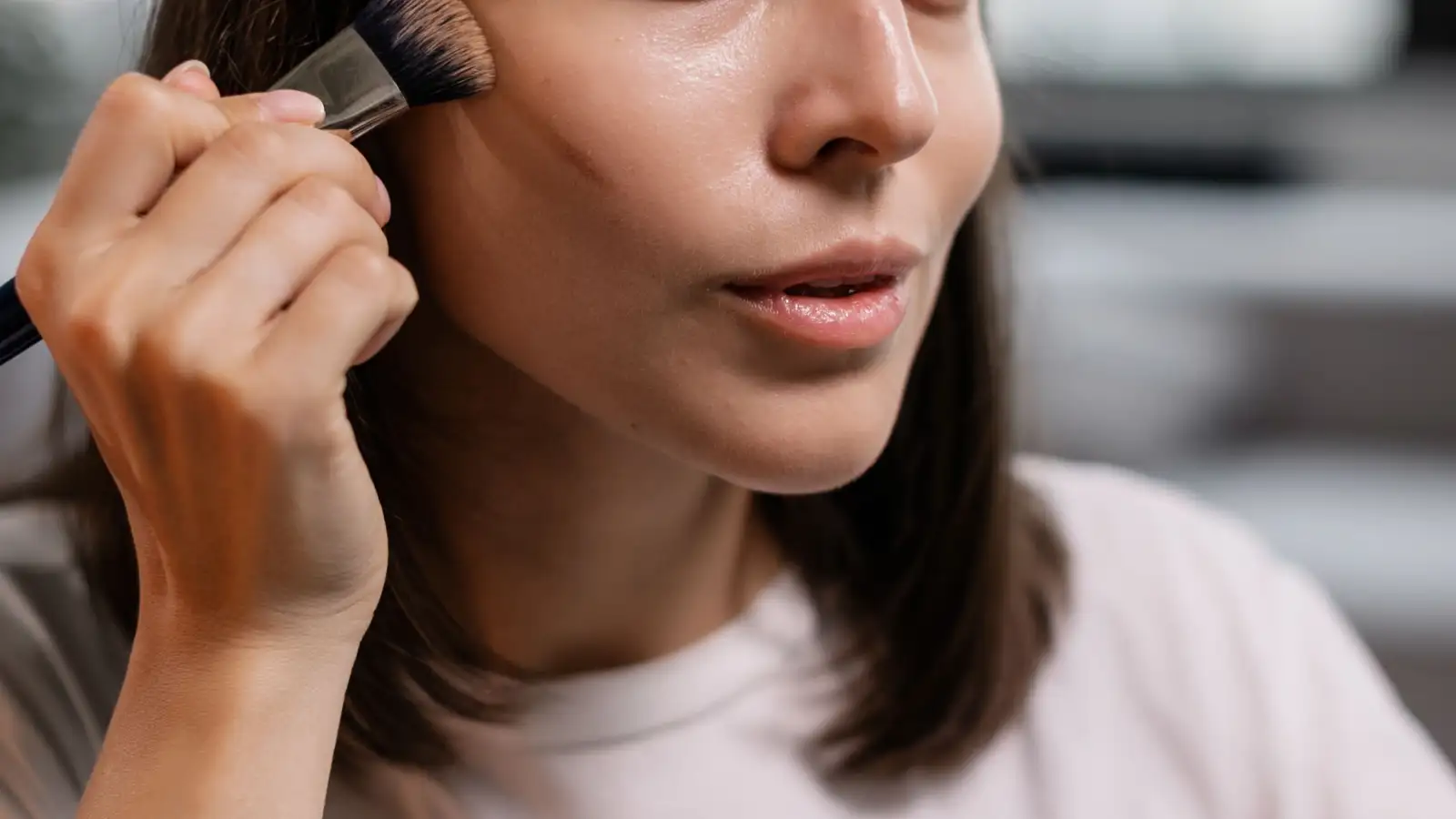
Patchiness on mature dry skin is usually not a foundation problem. It is a stacking problem in the ten minutes before the base goes on: a watery layer that never dried, a heavier cream pressed over it too soon, and then a primer added on top because the first two didn't feel like enough. Foundation lands on that wet, uneven film, grabs at it, and lifts first in exactly the places you were trying to cover. Fixing the order, keeping each layer thin, and giving the moisture a few minutes to settle does more for a smooth base than any new bottle will.
I keep a cheap kitchen timer on the bathroom counter, and most mornings it is doing more for my base than the foundation is. The scene is always the same: a north-facing window, a mirror I've stopped arguing with, and a damp sponge in my hand at 7:45, pressing base into a cheek that looked smooth thirty seconds earlier and now shows every dry edge. For a long time I read that as a foundation problem. New bottle, new formula, same stripes across the top of the cheekbone. It was the ten minutes before the base doing it the whole time.
Three jobs, not three products
When I look at a prep routine now, I don't see a shelf. I see three jobs, and they conflict if you stack them wrong.
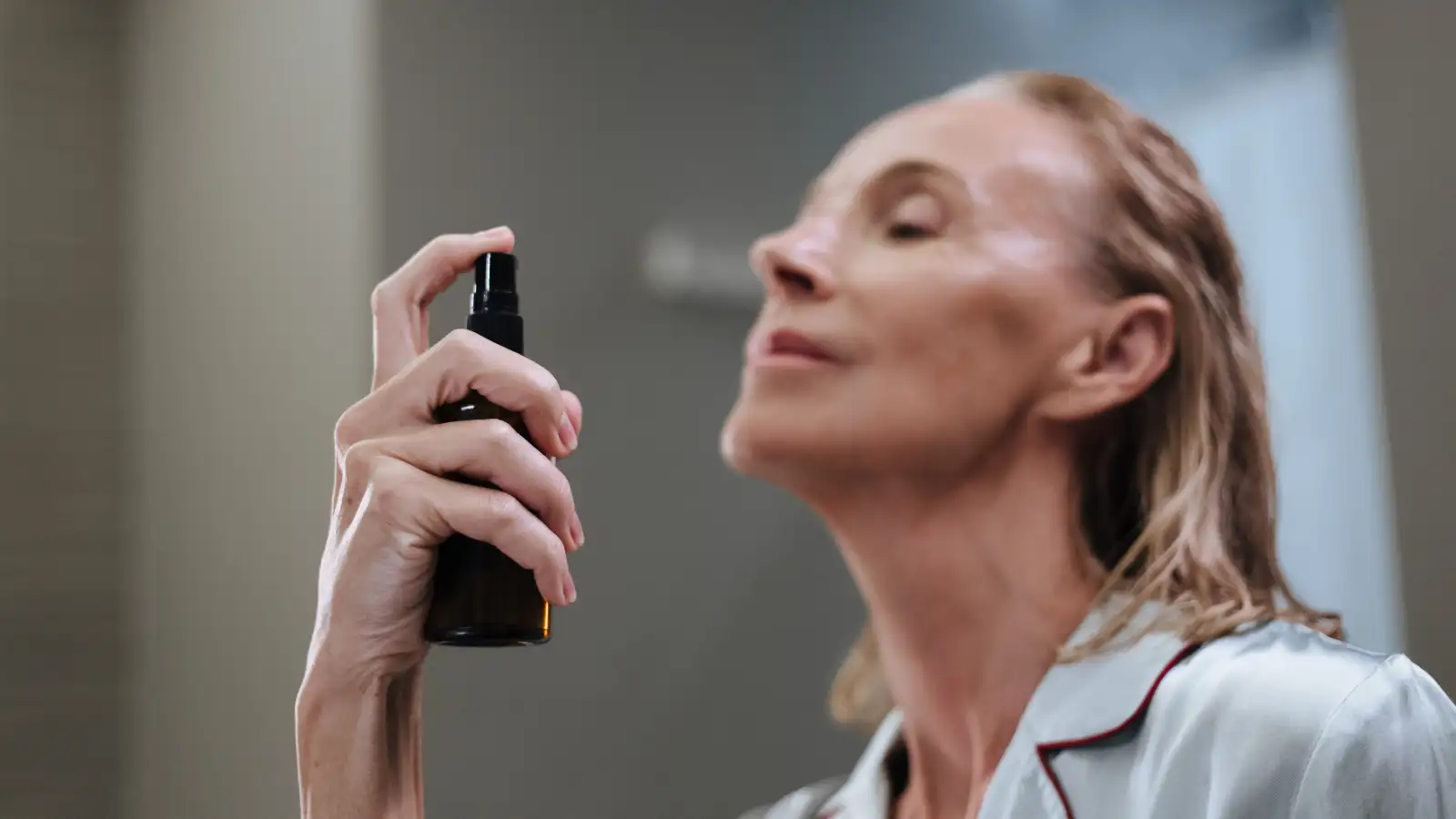
The first job is water. Something thin and watery goes on first, while the skin is still slightly damp from washing, because that layer is mostly there to get moisture into the surface rather than to sit on it.
The second job is slip and cushion. That's the cream or the oil-based layer, and it does two things: it softens the dry patches so pigment can move across them, and it gives the foundation something to glide on instead of something to catch on. On mature skin this is the layer that matters most, and it is also the layer people overdo, because dry skin asks for more and more cream feels like more help.
The third job is the film, which is what a primer is. A film either grips the foundation or lets it slide, and it sits on top of everything underneath. That's the whole problem in one sentence: whatever is under the film is what the film is made of.
Slip is not moisture
This is the distinction I wish someone had handed me years ago. A layer can feel slippery and still add no moisture at all. You get glide for about twenty minutes, the foundation goes on beautifully, and then it settles into the dry patches and every flake stands up. Slippery is a feeling. Moisture is what stops dry skin from pulling pigment off the surface. If I only have time for one thing, it's the moisture layer, not the smoothing one.
What those minutes actually look like
I wash, and I pat rather than rub, leaving the skin a little damp. Thin watery layer on while it's damp, not after. Then the cream, and I use less than my instinct says, warmed between my fingers first so it spreads instead of sitting in a lump on my cheek. Then the timer goes on for three or four minutes while I do something else — brush my teeth, put on earrings, find my keys.
That pause is not fussiness. It's the difference between foundation going onto skin and foundation going onto product. And I check with the back of my hand before I trust the mirror: press it against my jaw, pull it away. If it comes away shiny and tacky, the layer is still wet and the base will roll. If it comes away dry and smooth, I'm ready.
Three or four minutes is what my skin wants. Yours might want two, might want six in January. The number is not the point. The point is that the layer has stopped moving before the next one starts.
The gray that shows up on deeper skin
Here's the part that took me longest to see, because it doesn't look like patchiness. It looks like the wrong shade.
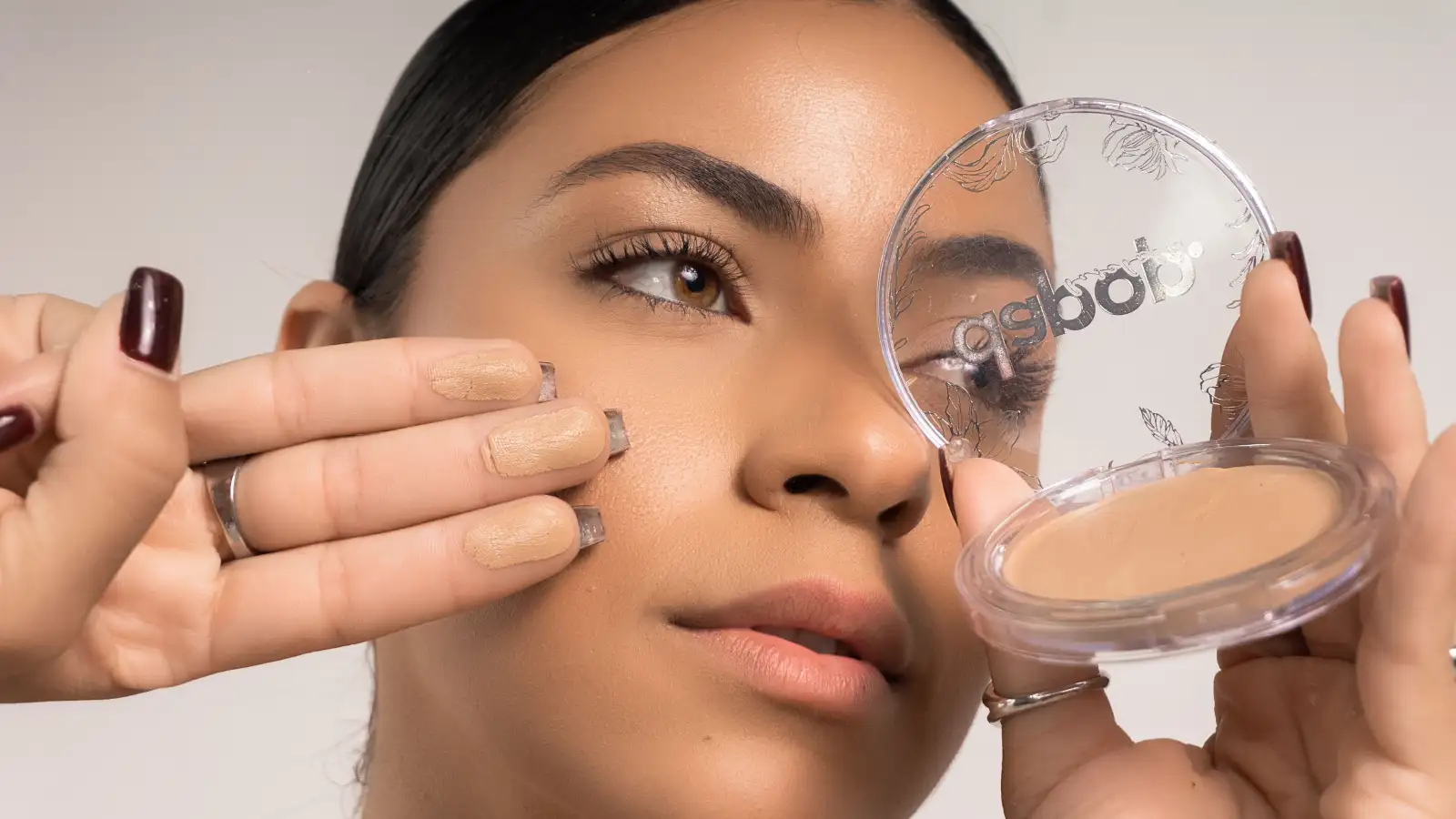
A rich, heavy moisture layer leaves a film. On deeper skin that film is lighter than the skin underneath, and it doesn't disappear when foundation goes over it — it changes what the foundation reads as. The base looks correct at the jaw and slightly off everywhere else, and the whole face goes a shade flat, ashy, faintly gray. I spent a small fortune on deeper foundation shades before I understood that I was looking at my moisturizer, not my match.
The check costs nothing. After the moisture has set, before any base, walk to a window with real daylight. Not the bathroom bulb, not the ring light. Look at the jaw and the side of the cheek. If there's a pale veil sitting on the surface, that is what you're about to put foundation on top of, and the foundation will amplify it rather than cover it.
When I see that veil, I don't add anything. I press the excess in with warm hands, or I take a tissue and blot the shine without stripping the layer, or I simply use half as much cream tomorrow. That's it. The shade was never wrong.
Primer is optional, and pilling is information
I went years treating primer as a required step, the way you treat a seatbelt. It isn't. Some faces do better with fewer layers, and mature dry skin is often one of them, because a film over an already-rich prep creates a boundary that nothing wants to cross.
Pilling is the tell. Those little rolled balls that appear when you rub your jaw — that's not a bad primer, that's friction finding something to grab, especially when a silicone film sits over a rich cream. It means the layer underneath never set, or there's too much of it. Adding a primer to fix pilling is like adding a coat of paint to a wet wall.
I test before I commit. After the moisture sets, I rub a small circle on my jaw with a clean fingertip for two or three seconds. If anything balls up, foundation will do exactly the same thing across my whole face. If the fingertip slides clean, I can add a film layer or skip it. Most days I skip it, and most days the base is better for it.
The scrub morning trap
I used to exfoliate on the mornings I wanted the smoothest base, which was logical and completely backwards. A harsh scrub lifts flakes and leaves the surface temporarily rougher, and on mature skin the dryness shows more, not less, for the next several hours. Then the foundation goes on and every raised edge catches light.
If I want a smoother start, the scrub happens the night before, and the morning is only moisture. Nothing abrasive within a few hours of base. That single change removed more ashiness from my cheeks than any primer ever did.
The jaw and the neck get the same treatment
My face prep used to stop at my chin. Then I'd wonder why the base ended in a visible line along the jaw, a clean edge where the product stopped being supported by anything.
The jaw and the neck are drier than the center of the face on most of us, and they're the first place a mismatch shows because they're right next to bare skin. So they get the same thin watery layer, the same cream, the same wait, the same daylight check. I do the neck first now, so the face doesn't get more than its share, and I blend the base down past the jaw rather than stopping at it.
When prep isn't the answer
I won't pretend layering fixes everything. Some foundations are so pigmented or so fast-setting that they will grab a dry patch no matter how well the skin underneath is prepared — in that case the fix is application, pressing with a damp sponge instead of sweeping with a brush, or using less. Humid summer days want less moisture than a heated house in February. And a genuinely flaky patch may need several days of consistent care rather than a better ten minutes this morning.
What I can say is that every time I've been ready to blame the foundation, the honest answer was sitting three inches below it in the form of an unsettled layer. Get the order right, keep each one thin, and let it stop moving. The base was fine all along.

About the author
The Undertone
The Undertone is a byline for people who learned foundation on brown skin by swatching, mixing, and checking color in real light. They share a practical focus: if the depth and undertone are right, the formula will follow.
More about usRelated posts