Your Foundation Pills Because of Formula, Not Texture
Foundation pills because the layer underneath and the layer on top were never built to bond — most often a silicone-heavy formula pressed over a water-based prep, or a water-based foundation laid over a silicone film — and the friction of application rolls that mismatch into little balls. It is a compatibility problem between two products, not evidence that textured skin cannot wear a smooth foundation.
I figured that out at my own kitchen table, not in a store. North window, overcast morning, the kind of light that tells the truth. I had a pea of moisturizer on the back of my hand, waited maybe ten seconds because I was in a hurry, then pumped foundation on top and started spreading it with two fingers. It went on fine for about three seconds. Then it started to drag, and when I looked down there were these small gray-tan curls sitting on my skin like eraser shavings. I wiped them off and did it again, slower, and got the same thing. Third time I used more product, which made it worse.
For a while I thought the problem was my face. That is the story I told myself, anyway — that my cheeks were too textured, pores too visible, skin too uneven to hold a smooth base. So I exfoliated harder. I bought a primer that promised to blur. I switched to a formula the bottle called smoothing. The pills came back every time.
Then I read the back of the two bottles side by side.
Two films that never merge
Silicone-based products work by forming a film. That is the whole idea. Dimethicone, cyclopentasiloxane, the various siloxanes — they spread, they level, they leave a slick surface that light bounces off evenly. Water-based products carry pigment in water, often with a little film former of their own, and they dry down by evaporation.
Put a silicone film on top of a water-based layer that has not fully set, and the two do not interlock. They stack. The top one slides. Under a sponge or fingertips, the slick layer grabs the layer beneath in patches and rolls it, and what you see along your jaw is the physical evidence of two films refusing to merge.
Reverse it and you get the other failure. A water-based foundation over a heavy silicone prep does not always pill — sometimes it beads. Little separated dots, pigment sitting in the pores with nothing in between. In a photo it reads as patchy wear. In the mirror at two in the afternoon it reads as foundation giving up in specific neighborhoods.
Same root cause. Different symptom. Neither one is about your skin texture.
How I check what I actually own
I do not read the whole ingredient list anymore. I read the first five or six items, because that is where the carrier lives.
If water is the first ingredient and the next few are glycerin, butylene glycol, or an alcohol, that is a water-based product. If dimethicone or cyclopentasiloxane shows up in the first three, that is a silicone product and it will behave like one no matter what the front of the bottle says. Plenty of things marketed as water-based still have silicone near the top, and plenty of things marketed as silicone-free still have a siloxane somewhere in the middle. The front label is marketing. The order of the first five ingredients is the part that decides how the layer behaves.
So I match them — the rule I unpack in how skin prep can cause foundation pilling. Water prep under water foundation. Silicone prep under silicone foundation. That single change fixed more of my application than any tool or technique I have picked up since.
The rubbing is half the problem
Here is the part that took me longest, because it is about my hands and not about the products.
Pilling needs friction. A mismatch alone will separate eventually, but if you press the product in and leave it, you often get a slightly uneven finish rather than visible rolls. If you keep working it — sweeping, buffing, going back over an area that already looks done — you are handing the top layer a chance to grab the bottom layer and ball it up.
I count to three now. Dot the foundation on cheeks, forehead, chin. Press with a damp sponge, one area at a time, and stop. No return passes, no buffing out the edge of a spot I have already covered. If I need more coverage in one place, I press a small amount on top with the tip of the sponge and let it sit. The moment I start sweeping, I can feel the drag change under my fingers, and drag is the warning.
Give the layers a minute
Hybrid formulas break the clean binary, which is why they are both useful and annoying. They have enough silicone to feel smooth and enough water to feel light, and that middle position means set time matters more, not less. A hybrid over fresh moisturizer will still slip. A hybrid over a silicone primer will still bead if the primer has not dried down.
The test I use is unglamorous: touch the back of my hand. If the layer still feels cool and tacky, it is not ready. If it feels like the surface of a magazine cover — smooth, slightly dry, no transfer — it has set. On a humid day that can take noticeably longer than on a dry one, and with the heat running in January it happens faster than you would guess. I do not time it with a clock anymore. I feel for the tack.
Where texture actually comes in
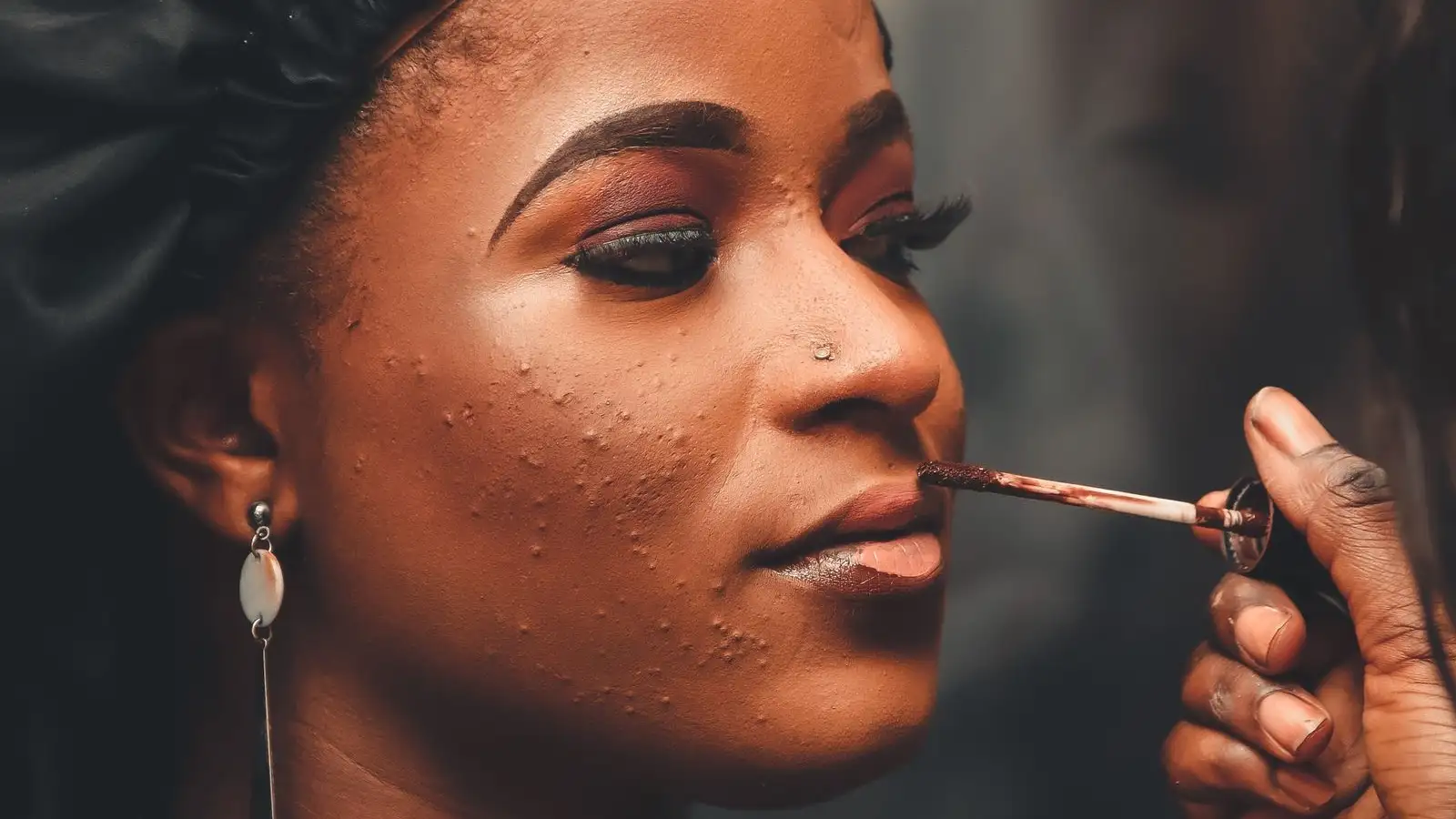
Texture does not cause pilling. It amplifies the visibility of it. A pilled patch on a smooth cheek reads as a small smudge. The same patch on a cheek with scarring or large pores reads as an entire area that failed, because the rolls collect in the depressions while the flat skin around them stays bare. That is why so many of us with textured skin conclude the problem is us — the evidence shows up concentrated exactly where we were already self-conscious.
But I have watched a matched system go over that same cheek and settle into the texture instead of fighting it. Not invisible. Settled. There is a difference, and it is the difference between a formula that bonds to what is under it and one that just sits there waiting for something to grab.
What I would check first, in order
If you are pilling right now, before you buy anything, do this on the back of your hand rather than your face. It is a cleaner read, and you can compare two combinations side by side in five minutes.
- Prep, wait, foundation. Does it pill? Then check the carrier of both products.
- Swap one of the two for something with a matching base and repeat.
- Change your hand, not the products: press instead of sweep, and see how much of the pilling disappears.
- Add a wait between layers and repeat again.
Most of the time the answer shows up in the second or third pass, and it costs nothing.
One caveat, because there always is one. Humidity, sweat, how much you apply, and whether your skin is dry or oily that week all shift the outcome, and a system that holds in February can misbehave in July. Nothing here is a permanent verdict.
What I have stopped doing is treating a pill as a judgment on my skin. It is a chemistry note. Something in the stack does not want to bond with something else in the stack, and I get to decide which one moves.

About the author
The Undertone
The Undertone is a byline for people who learned foundation on brown skin by swatching, mixing, and checking color in real light. They share a practical focus: if the depth and undertone are right, the formula will follow.
More about usRelated posts