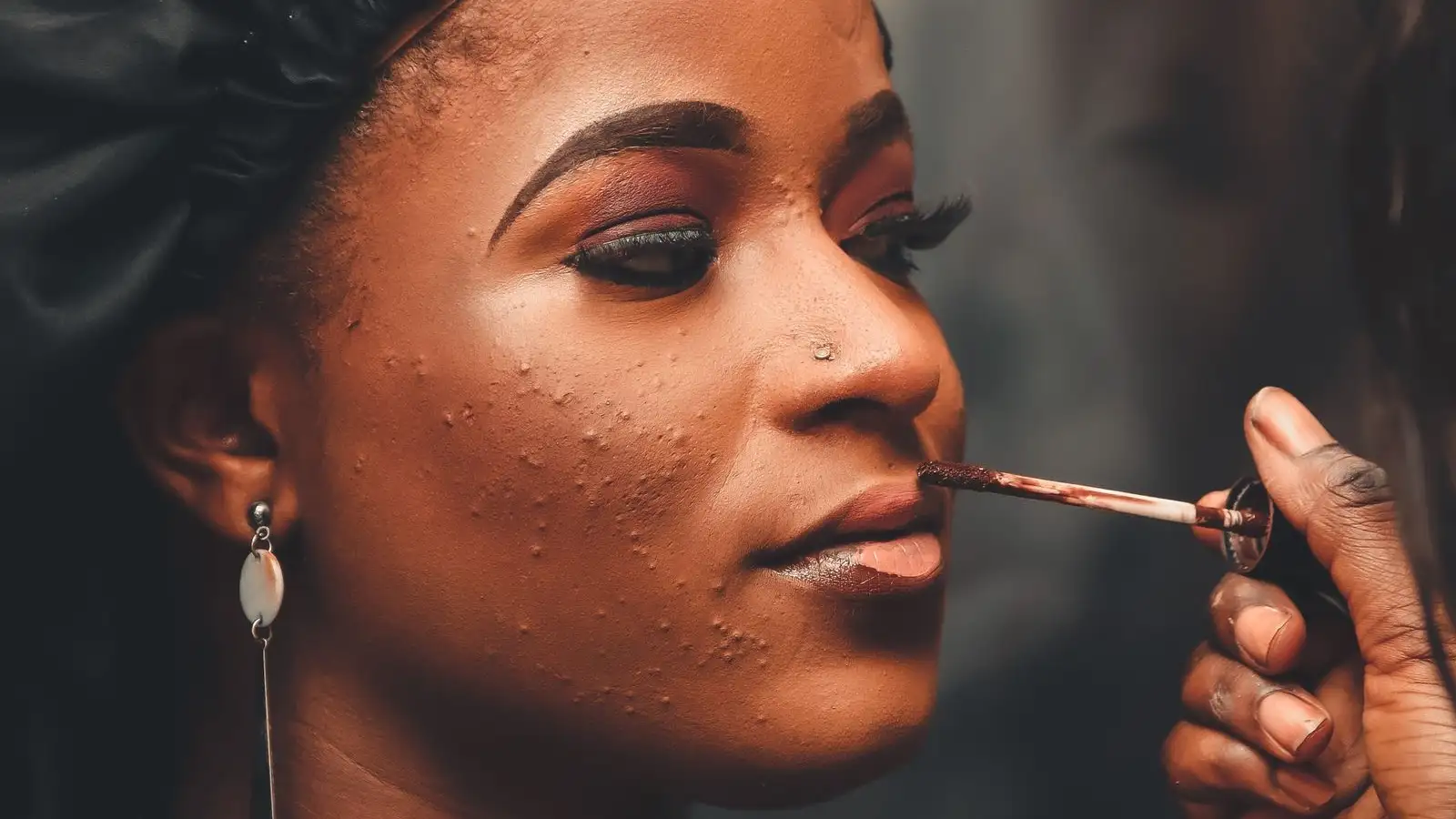
Your Skin Prep Routine May Be Causing Foundation Pilling
Foundation pills because of what's underneath it, not because of the foundation itself. Prep is a smoothing and compatibility step — one thin layer that helps the next one sit flat — and it turns into a pilling problem the moment it becomes a stack of mismatched bases or a wet film that never got a chance to set. Fewer layers, each one allowed to actually dry, matched by base type, will stop most of the rolling and patchiness that gets blamed on the bottle.
My mirror sits on the windowsill instead of over the sink, and that's deliberate. The window gives me the flat gray light of an early morning with no warm bulb forgiving anything. Last winter I stood there with a damp sponge in one hand and watched a brush stroke lift the foundation off my cheek in little gray curls, like the shavings off the end of a pencil eraser. I rubbed one between my fingers. It wasn't dry skin. It was the same color as the moisturizer and primer I'd put on nine minutes earlier, rolled into a ball. That ball is what people call pilling, and once I saw it as a film lifting rather than skin misbehaving, the whole thing got easier to fix.
What the little rolls are telling you
Foundation is a film. It needs something to bond to, and it needs to be left alone long enough to bond. When the layer beneath it is still wet, or when that layer is a surface the foundation can't grip — a slick silicone pad, a powdery sunscreen residue, a serum that never fully dried — the makeup sits on top instead of settling in. Then a brush, a sponge, or even your own fingers drag across it and the film lifts. It doesn't tear. It rolls. That's the difference between pilling and separation: separation splits and patches, pilling curls up and moves.
Once I understood that, I stopped responding to pilling the way I used to, which was to add more moisture. Adding product to a film that's already failing just gives it more material to roll up. The fix is upstream: fewer films, and films that agree with each other.
Count what's actually on your face
I did an honest count one morning and got to six. A hydrating serum. A moisturizer. A sunscreen. A pore-filling primer down the center of my face. A color-correcting primer on the cheeks. Then foundation. Six films stacked on top of each other in under ten minutes, most of them still wet when the next one landed. I had been reading pilling as a sign that I needed a better foundation. What I actually had was a layering problem.
Now it's three on a normal day. Moisturizer, sunscreen, foundation. Four if I'm going somewhere that photographs. That's it. The difference in how the foundation sits isn't subtle — it's the difference between something that looks painted on and something that looks like skin.
The order matters less than people think. What matters is that each layer is thin and that it's finished before the next one starts. A pea-sized amount of anything spread across the whole face is more than most of us use.
Water, silicone, oil — pick a lane
Every prep product is built on one of three bases: water, silicone, or oil. The name on the front of the bottle tells you nothing; the first few ingredients tell you everything. Water is usually listed first in water-based products. Silicone shows up as anything ending in -cone or -siloxane. Oils are obvious.
Water goes with water. Silicone goes with silicone. What fights is a water-based foundation over a heavy silicone primer: the foundation can't grip a slick surface, so it slides, and if you try to buff it into place it pills instead. The reverse is just as bad — a silicone foundation over a watery, fast-drying layer grabs unevenly and looks patchy by noon.
Silicone primers do something real. They blur the look of pores and fine lines for the length of a day, and on the center of the face that can be worth having. But they are a film, and a thick one. Press a small amount into the areas you actually want smoothed, don't spread it across your whole face, and don't put it on top of sunscreen that's still wet. If your foundation already has a silicone base, you likely don't need the primer at all — you're just thickening a film that was already there. And if your skin runs very oily, a mattifying primer can genuinely help; if it runs dry, that same primer is the thing most likely to leave you with rolls under the brush. It depends, and it depends on your face, not on a rule.
The tackiness test, and why timing does most of the work
You can't judge a layer by looking at it. Touch it. Press a clean fingertip to your cheek. If it comes away with a slight drag, it's still wet. If your finger slides, it's still wet. If your finger comes off clean and the skin feels like skin, it's set.
Humidity changes the clock. In July I wait longer than I do in February, sometimes twice as long, and I've stopped pretending that isn't true. The instinct to hurry is what gets people. You put on moisturizer, then sunscreen thirty seconds later, then primer, then foundation, and you have essentially mixed four products on your face with a sponge. They don't fail separately. They fail together.
If I'm short on time, I cut a layer instead of cutting the wait. Three products applied properly beat five applied in a rush, every single time.
Sunscreen is the layer people forget to blame
Sunscreen is the hardest-working product in the routine and the most common cause of a foundation that won't behave. Mineral formulas leave a film of particles on the surface — that's how they work — and some of them sit there ready to lift under a brush. Fluid chemical formulas tend to settle down more like a moisturizer. Neither one is wrong. What's wrong is putting a silicone primer or a rich foundation on top of sunscreen that hasn't finished drying.
The rule I use: whatever the sunscreen's base is, the next layer has to be able to sit on it. If the sunscreen feels slick and slightly oily after ten minutes, a water-based foundation is going to skate. If it feels powdery and matte, a rich cream foundation is going to grab in patches. Match the texture, wait for the set, and half of your bad foundation days evaporate before you leave the house.
A practical note on coverage: sunscreen needs to go on generously to do its job, which is exactly why it's the hardest layer to get right. Don't thin it to solve a pilling problem. Fix the layer above it instead.
Exfoliation isn't a prep step
There's a lot of advice out there saying to exfoliate before makeup so it won't pill, and I'd be careful with that. Exfoliation is a skin-care decision with its own timeline and its own risks, and it isn't a step that changes how a foundation behaves an hour later. What it can do is leave the surface temporarily flakier, which gives the film more edges to catch on — the dry-patch problem behind foundation clinging to dry patches on deep skin. From a cosmetic standpoint, prep exists to make the next few hours smoother — it isn't a texture-removal step and shouldn't be treated as one.
The half-face test
When I want to know which product is causing a problem, I stop guessing and run a comparison. One side of my face gets the full routine. The other gets moisturizer and foundation, nothing else. Both sides get the same foundation, the same amount, the same tool. Then I go live my day and check at the four-hour mark, in the same window light.
The pilling side tells me which layer is the problem far more reliably than any amount of thinking about it. Usually it's the one I added most recently — the primer I bought because someone said it was necessary, or the extra serum I layered in because my skin felt tight that week. Almost every time, the plain side looks better, and I have to admit that the thing I added for insurance was the thing doing the damage.
Check in daylight, too, not by the bathroom bulb. The bulb flatters a film that's already failing; the window doesn't.
What I actually do now
Moisturizer, thin, all the way to the hairline, then two or three minutes to set. Sunscreen, enough to matter, then five. Primer only on the center of the face, pressed in with a fingertip, and only if the foundation I'm using isn't already silicone-heavy. Foundation pressed with a damp sponge rather than buffed with a brush, because pressing lifts less. And if I see a roll forming mid-application, I stop. I don't smooth it, I don't add more product, I don't reach for setting spray to melt it back down. I lift it with a tissue and start that small area over, because once a film starts to roll, everything you add to it rolls too.
Powder is the same conversation. Pressing setting powder into foundation that's still wet grabs the film and drags it. Give the foundation a few minutes first, then powder only where you actually need it.
Two films that agree will outlast five that don't. That's the whole routine, honestly.

About the author
The Undertone
The Undertone is a byline for people who learned foundation on brown skin by swatching, mixing, and checking color in real light. They share a practical focus: if the depth and undertone are right, the formula will follow.
More about usRelated posts